



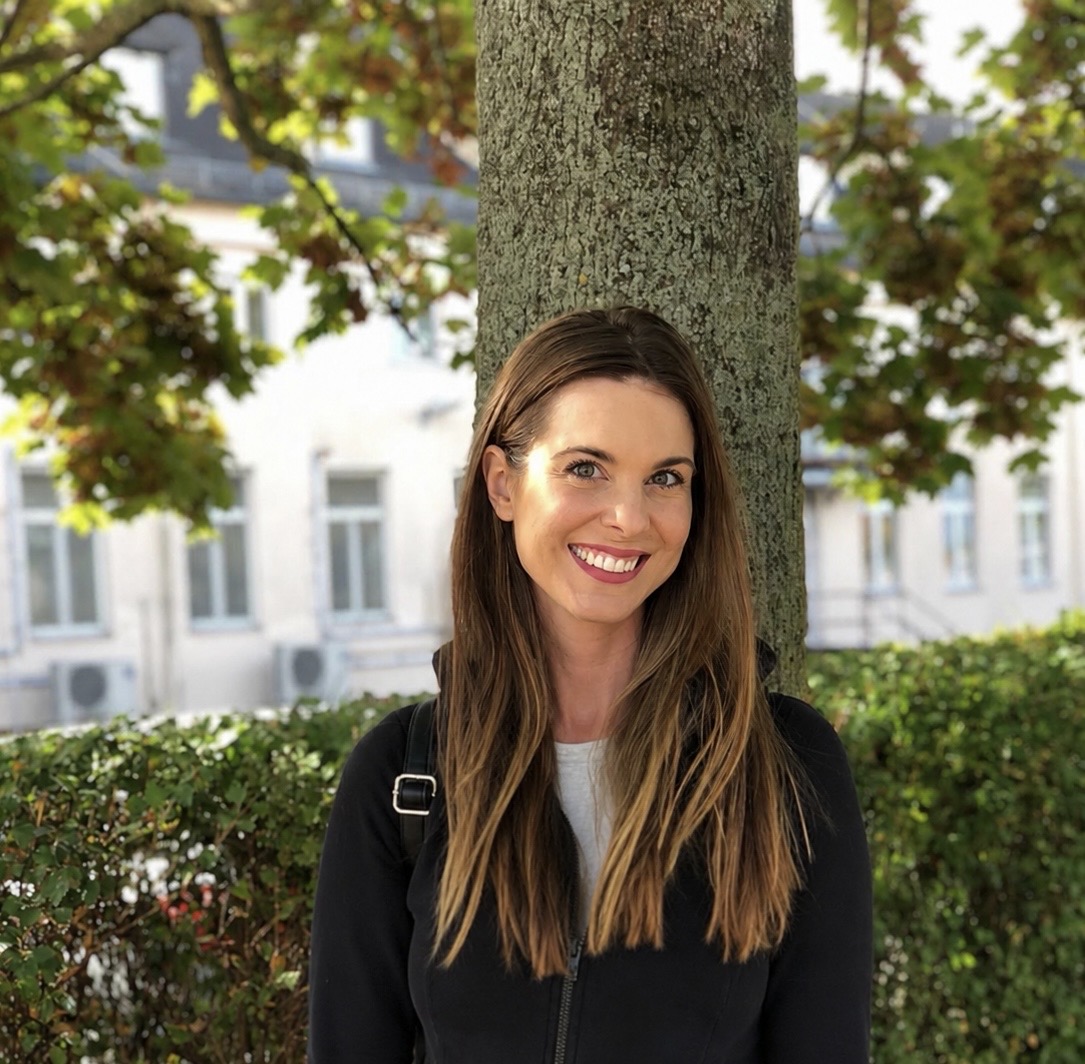
“Because of this experience, I will definitely be more patient and continue to encourage the use of AAC, while also respecting where my patients are in the grieving process.”
– Katie Mann, SLP
No voice and a very eager Doberman
While dogs respond to a variety of things (whistles, clickers, bacon…), there’s one thing dog owners need their canine companion to respond to:
Their voice.
Without the ability to say your dog’s name or tell them to “stay” while you open the door to greet the Amazon delivery driver, you risk mayhem.
Especially if they’re in the middle of being trained on those commands!
Katie Mann, a speech-language pathologist and owner of a Doberman who’s one of the “goodest boys in the universe,” experienced this firsthand.
One Friday morning, she woke up with acute laryngitis, leaving her completely voiceless.
It felt like random punishment.
“Was it bad karma from hitting the ‘close door’ button on Dr. D even though I saw him jogging toward the elevator at end of shift? Or was it poor vocal hygiene from screaming my lungs out last night to the midnight release of Taylor’s 12th studio album, Everlore? Who’s to say…”
Whatever the cause, Franklin the Doberman could care less about Katie’s laryngitis.
As punctual as ever, he approached Katie — Lamb Chop plush in mouth — ready for his morning training session.
But without a voice, her entire training system was gone.
She needed a new plan.
Turning to AAC to save the day
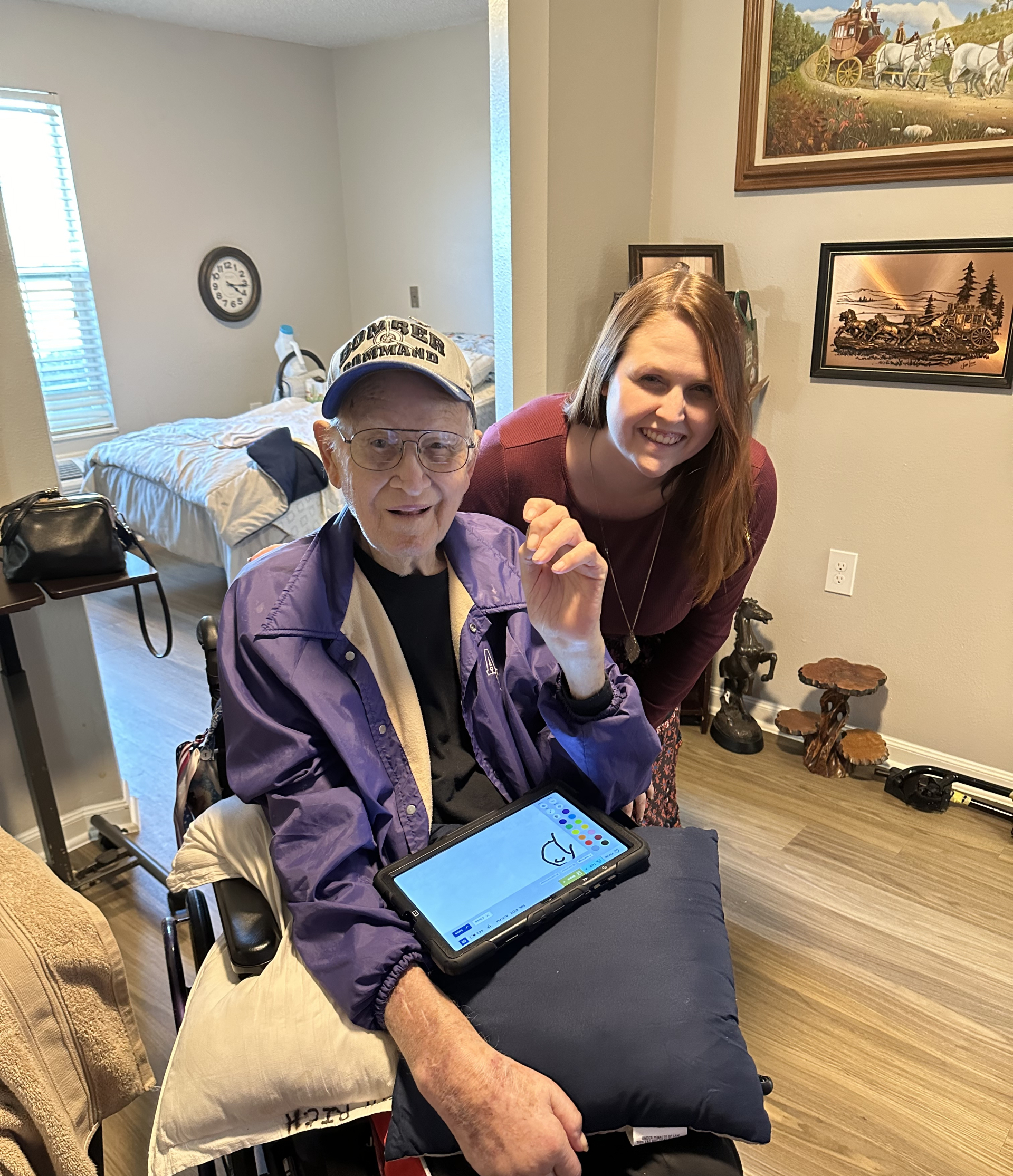
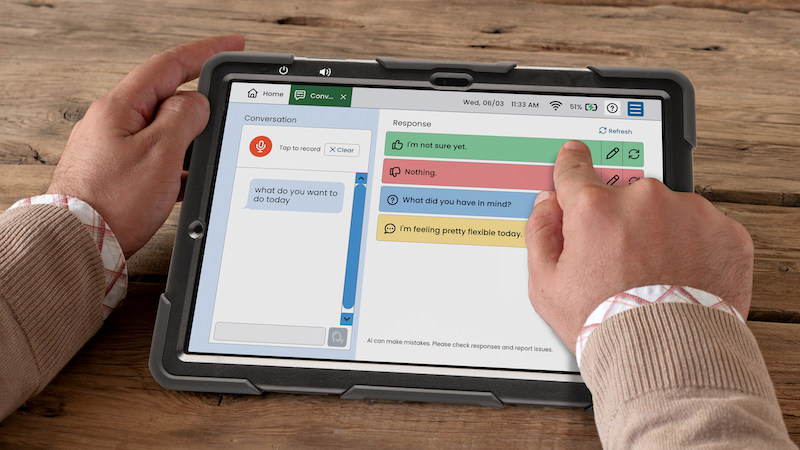
As part of the Lingraphica Certification Program, Katie had a TouchTalk loaner device on hand.
She grabbed it.
Still half asleep, she tapped the Draw app and sketched an adorable dog sitting down. She turned it toward Franklin, and he stared.
She tapped repeatedly and added the letters S-I-T.
Franklin kept staring.
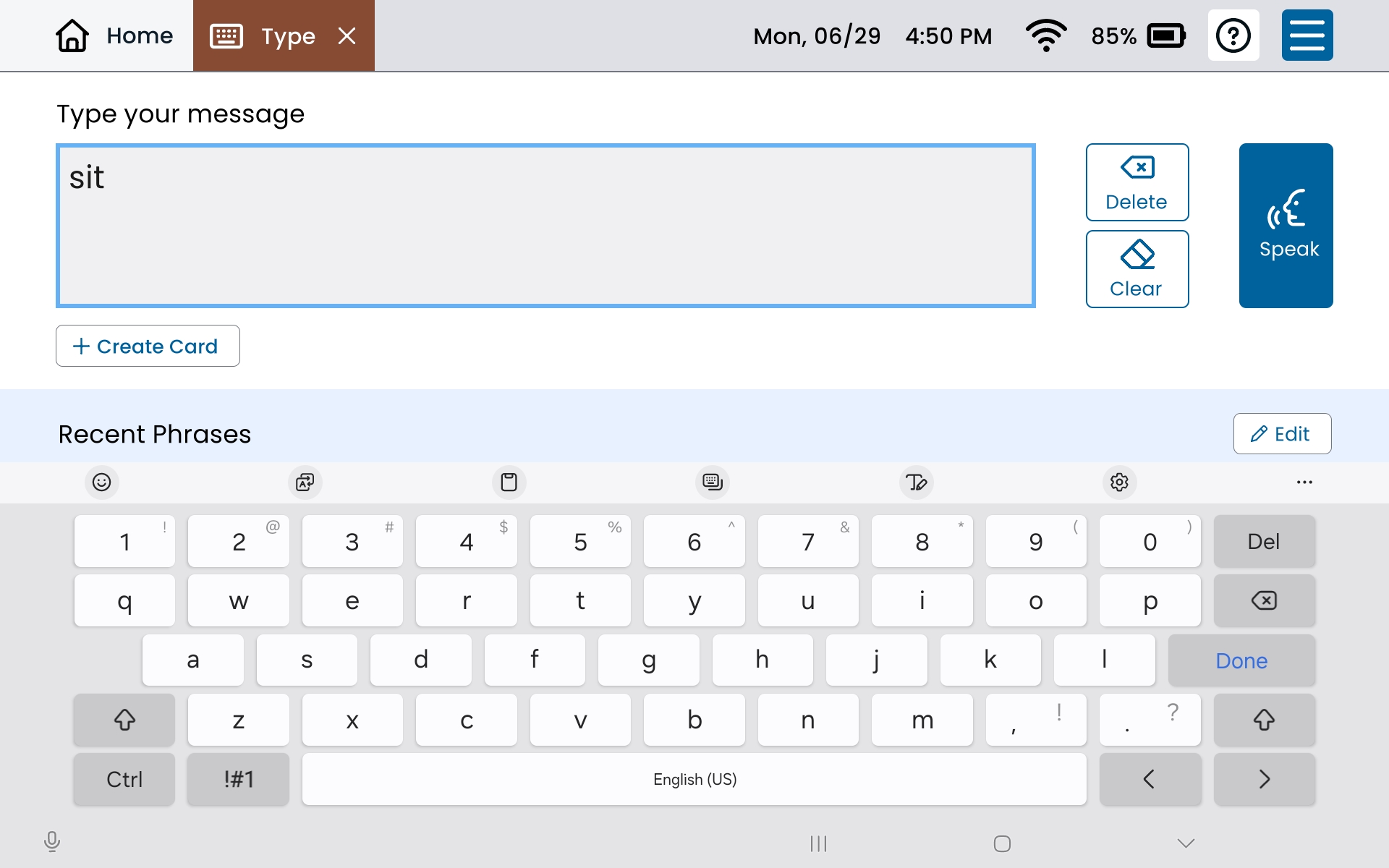
After a pause (and a much-needed first sip of coffee), she tried again — this time using the Type app.
She entered “sit” and tapped Speak.
Jenny — the name of the synthesized voice Katie selected — delivered the command.
Franklin hesitated…then slowly sat.
Katie wasn’t convinced. “Could Franklin just be tired?”
So, she tried a more complex command:
“Spin.”
This time, Franklin responded immediately!
“He flawlessly executed the most controlled 180-degree spin that would put 2026 Westminster Kennel Club Dog Show Doberman, Penny, to shame,” Katie shared.
And then, as Katie puts it: many well-deserved scritches followed.
Customizing her AAC device in real time
Soon, Katie realized that typing each command wouldn’t be practical for an entire training session.
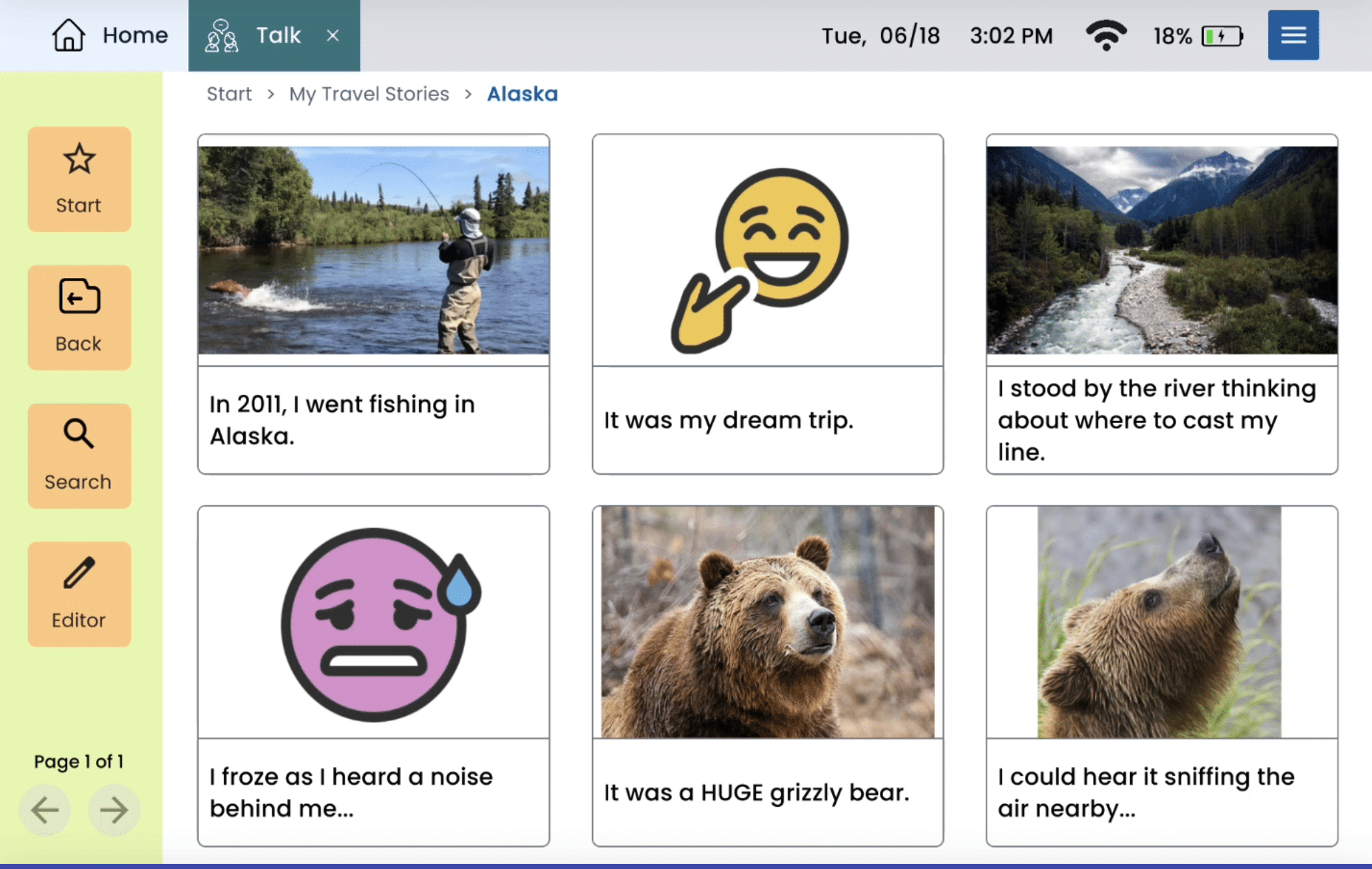
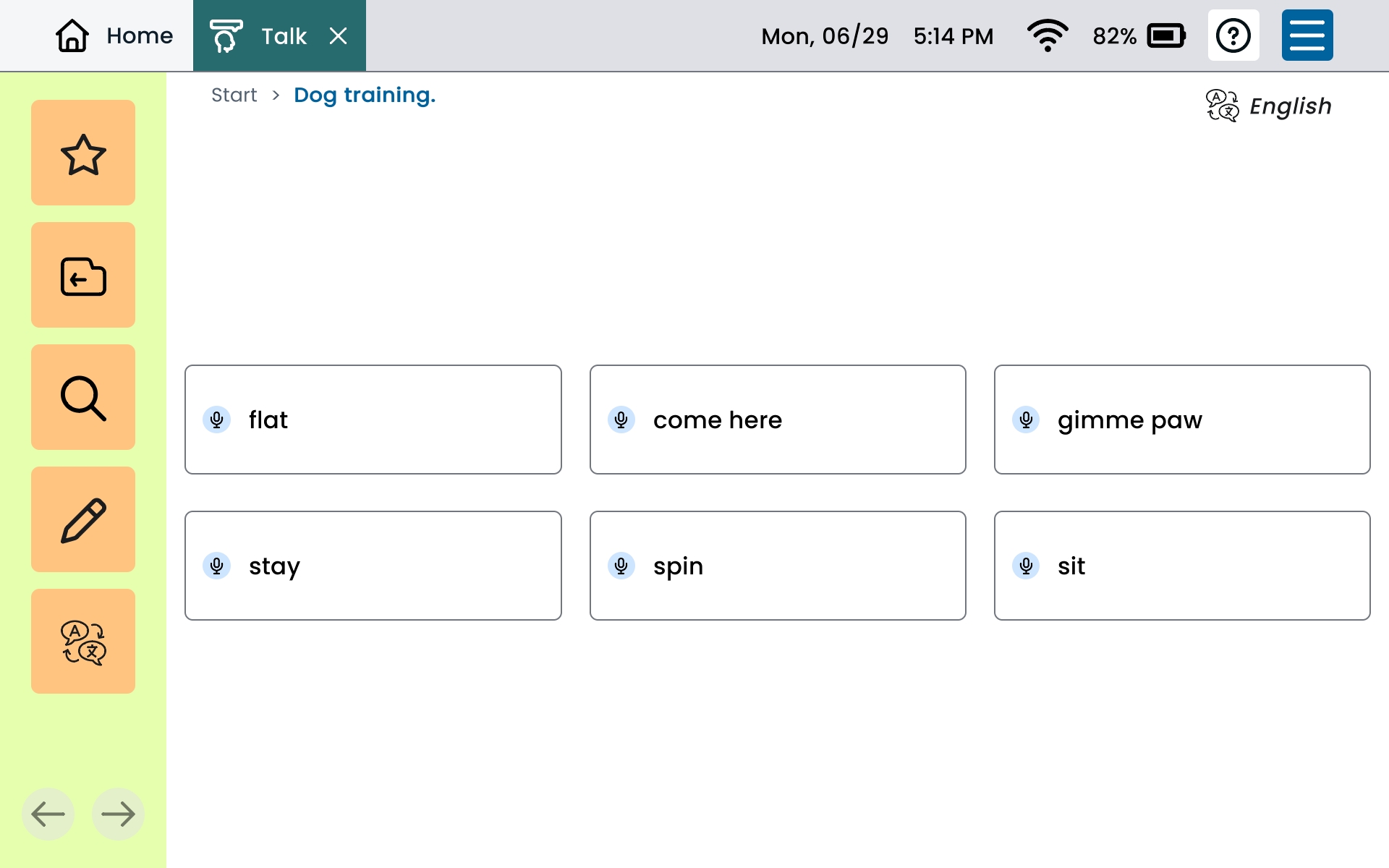
Remembering her free device demo with Lingraphica’s Clinical Education team, Katie shifted to using the Talk app.
She created a folder with familiar commands: sit, stay, spin, come here, and more.
With treats in hand, she moved through each one.
Franklin followed along, responding to each command with grace and precision.
“I could not have been more proud,” Katie shared.
Within minutes, she had rebuilt her training system — using AAC.
The unexpected sting of missing her voice
After their training session, Katie felt accomplished (and we’re certain Franklin knew he was the best boy).
But one thing bothered her.
Franklin had responded to “Jenny’s” voice. Not hers. And Jenny, for all her synthesized reliability, was not Katie.
That stung a little.
“No offense to Jenny, but she didn’t have the same excited inflection when she told Frank ‘He was the goodest boy in the entire universe.’”
That’s when it hit her…
The next time laryngitis struck, she didn’t have to settle for Jenny. She could message bank her own voice — including her enthusiasm for Franklin’s training wins.
“The next time laryngitis strikes, I’ll be ready,” she thought.
What using AAC for a day taught Katie
Communicating exclusively with her Lingraphica TouchTalk gave Katie new insight into what it means to rely on AAC — and what her patients may be experiencing every day.
“It reminded me that while we often become excited about giving patients new ways to communicate, or even frustrated with the effort it takes to use AAC, we have to remember that they are likely also grieving the loss of their natural speech at the same time.”
The experience shifted how she approaches AAC with her patients—not just as a tool for communication, but as part of a much more complex emotional experience.
And Franklin, for his part, continues to show up ready for training — still very much the “goodest boy in the universe” — no matter how the commands are delivered.