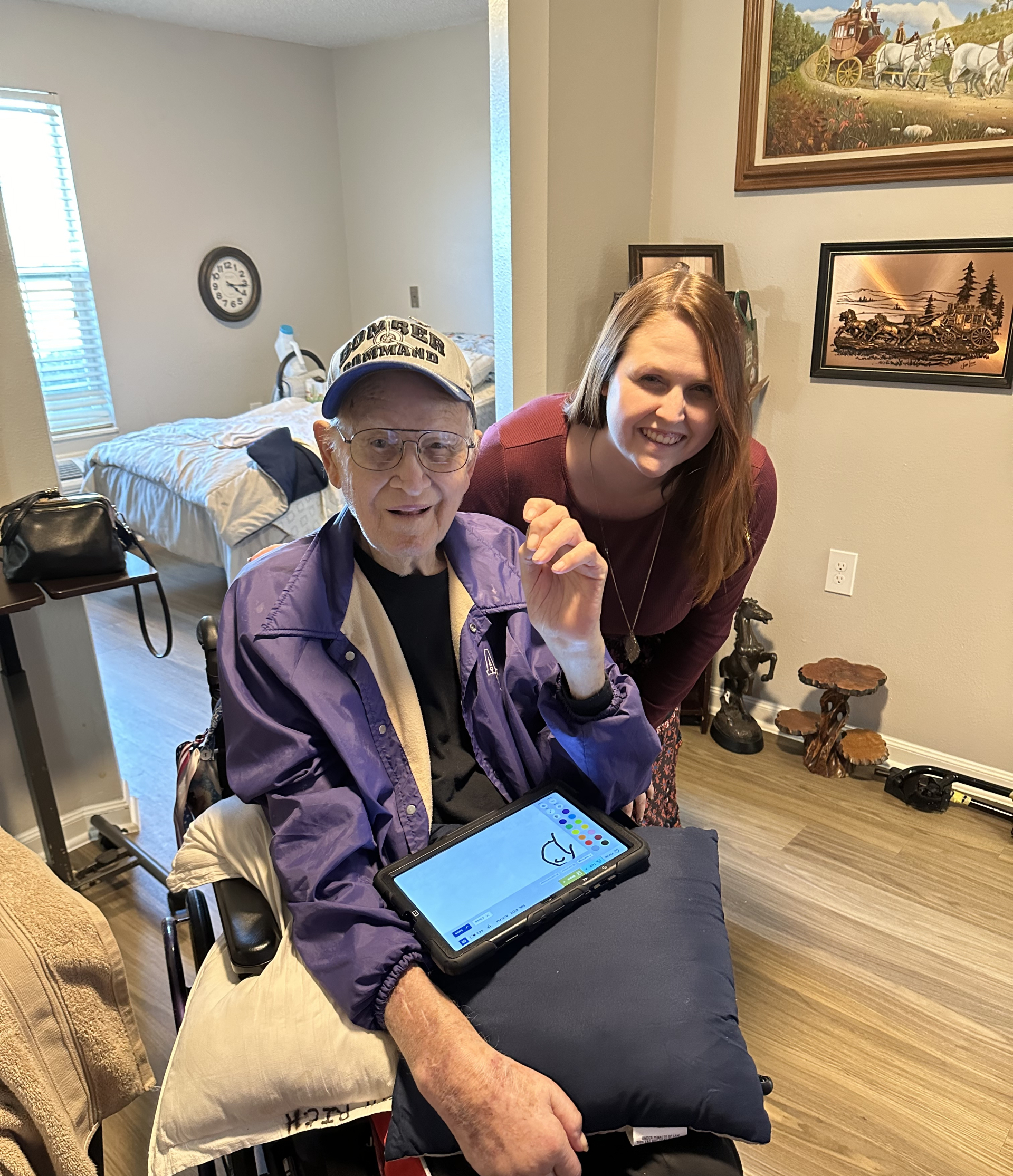



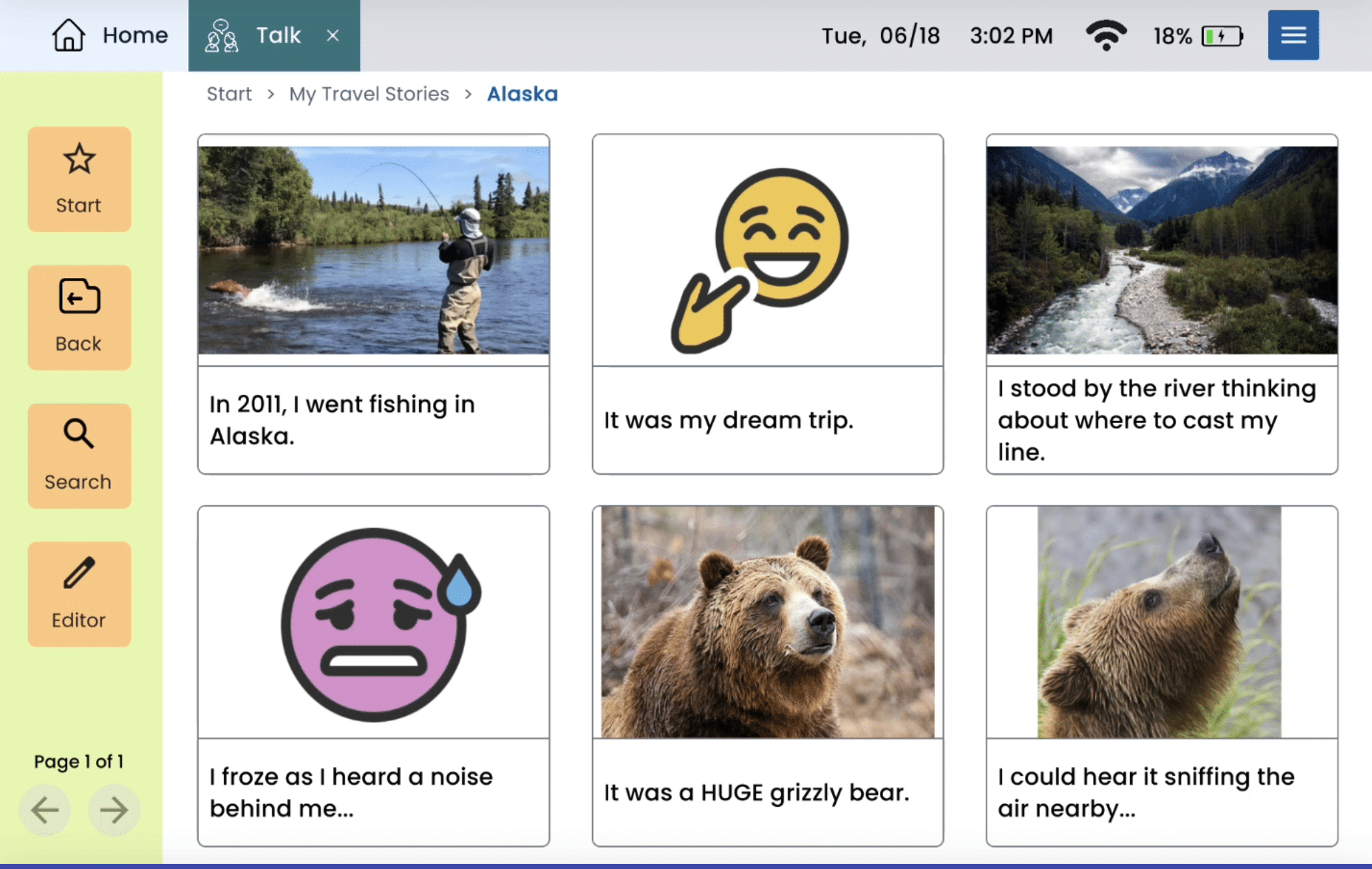



“One of the things about this that’s very important is my [primary progressive] aphasia. I may forget about things. So these things…I can remember them by going through these pictures [on my Lingraphica device].”
— Joseph McCarty, living with primary progressive aphasia
A life shaped by language, technology, and adventure
Joseph McCarty has always been drawn to stories — both telling them and capturing them.
He lives in Bellingham, Washington, a place he describes with deep affection: forests, mountains, islands, and even the occasional orca sighting. He’s long loved travel and photography, with a particular eye for the kinds of details others might miss, like light through trees, the curve of a trail, or a fleeting moment worth holding onto.
Language also shaped much of Joseph’s career. He worked in IT, where strong communication skills and a sharp memory mattered every day.
“I had to have an encyclopedia in here,” he told us, pointing to his head.
For most of his life, words, memory, and storytelling were part of how Joseph moved through the world. Then that began to change.
When words became harder to reach
Around 2014, Joseph was diagnosed with primary progressive aphasia (PPA), a neurodegenerative condition that gradually affects a person’s ability to use and understand language.
At first, the changes were subtle. If a word didn’t come to mind, Joseph leaned on a familiar tool: Google. Drawing on his problem-solving instincts from years in IT, he used the world’s biggest search engine to help him find the words he couldn’t easily access.
For a while, that worked.
But as his PPA progressed, Joseph found himself relying on Google “more and more and more” — until even that stopped being helpful. What had once been a workaround became another source of frustration.
Finding a new way to hold onto communication and memories
In August 2023, about nine years after his diagnosis, Joseph’s speech-language pathologist recommended that he try a Lingraphica communication device.
He began a free trial and quickly started exploring what the device could do at home between therapy sessions.
With support from the Lingraphica team, Joseph added personal photos and vocabulary to his device and organized them around the rhythms of his daily life: morning, afternoon, and evening.
Those folders quickly gave him the words he needed for everyday conversations, whether he wanted to talk about visiting his favorite barber or remember to make the bed (without needing a reminder from his wife!).
Before long, Joseph discovered something even more meaningful: he could upload photographs from his travels and record himself talking about them.
Now, when he taps on a photograph, his story can play back in his own voice.
Sharing stories in his own voice
Joseph shared that he worries about losing memories over time because PPA is progressive. Recording his voice alongside the moments he’s captured gives him a way to hold onto them — and to revisit them later, even if recalling them becomes more difficult.
“One of the things about this that’s very important is…my aphasia [is progressive],” he shared. “I may forget about things. So these things [memories]…I can remember them by going through these pictures. […] And it’s also important for my wife. She likes to know when something happened.”
One story Joseph shared with us was about a bike trip he took with a friend from Santa Rosa, California, to Victoria, Canada.
During one of our calls, Joseph pulled up a folder on his device labeled “Big Bike Adventure.” Inside were photos from the trip. As he tapped through them, each one played back a recording in his own voice, helping him share what happened along the way.
It wasn’t always perfectly smooth. Sometimes he paused or mixed up a word on the recording. But as he moved through the photos, it was clear how much the stories meant to him.
At one point, he shared how he and his friend rode north against the wind — going against everyone’s advice. It made the trip slower, but it gave them more time to take in the scenery along the way.
Even through the screen, you could see how proud he was to share it.
Today, Joseph uses his device in a similar spirit: to slow down, revisit meaningful moments, and keep sharing the stories that matter to him.
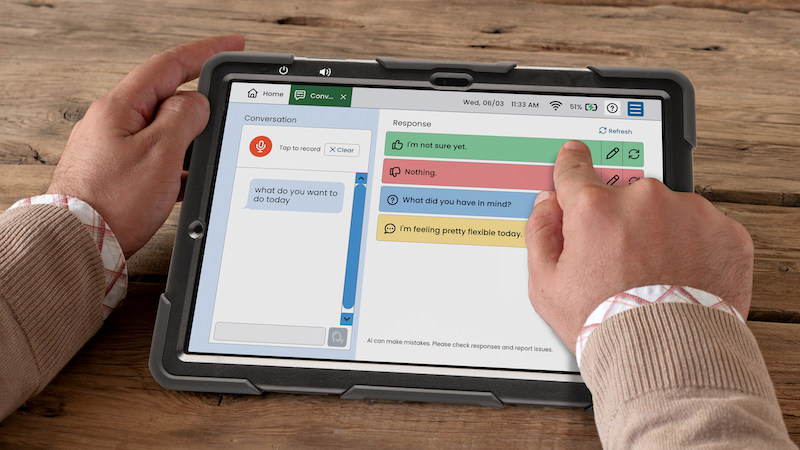
He’s also begun using Lingraphica’s Scenes tool to support communication in a different way. Instead of needing to search for the right word or build a full sentence, Joseph can use his personal photos as a starting point.
By tapping on different parts of an image, he can quickly express what he wants to say or keep a conversation moving.
More than a communication tool
Joseph’s device supports his communication, but its impact goes beyond that.
It gives him a way to return to the moments that matter to him. He can revisit them in his own voice, even as his memory and speech change over time. Whether he’s organizing parts of his day or sharing a story from a trip, the device helps him stay connected to the life he’s built.
With primary progressive aphasia, communication needs change. Joseph knows that.
Today, his device helps him keep conversations going, even when words don’t come easily. And when he wants to revisit a memory or share a story, he has a way to do that too—in his own voice.