




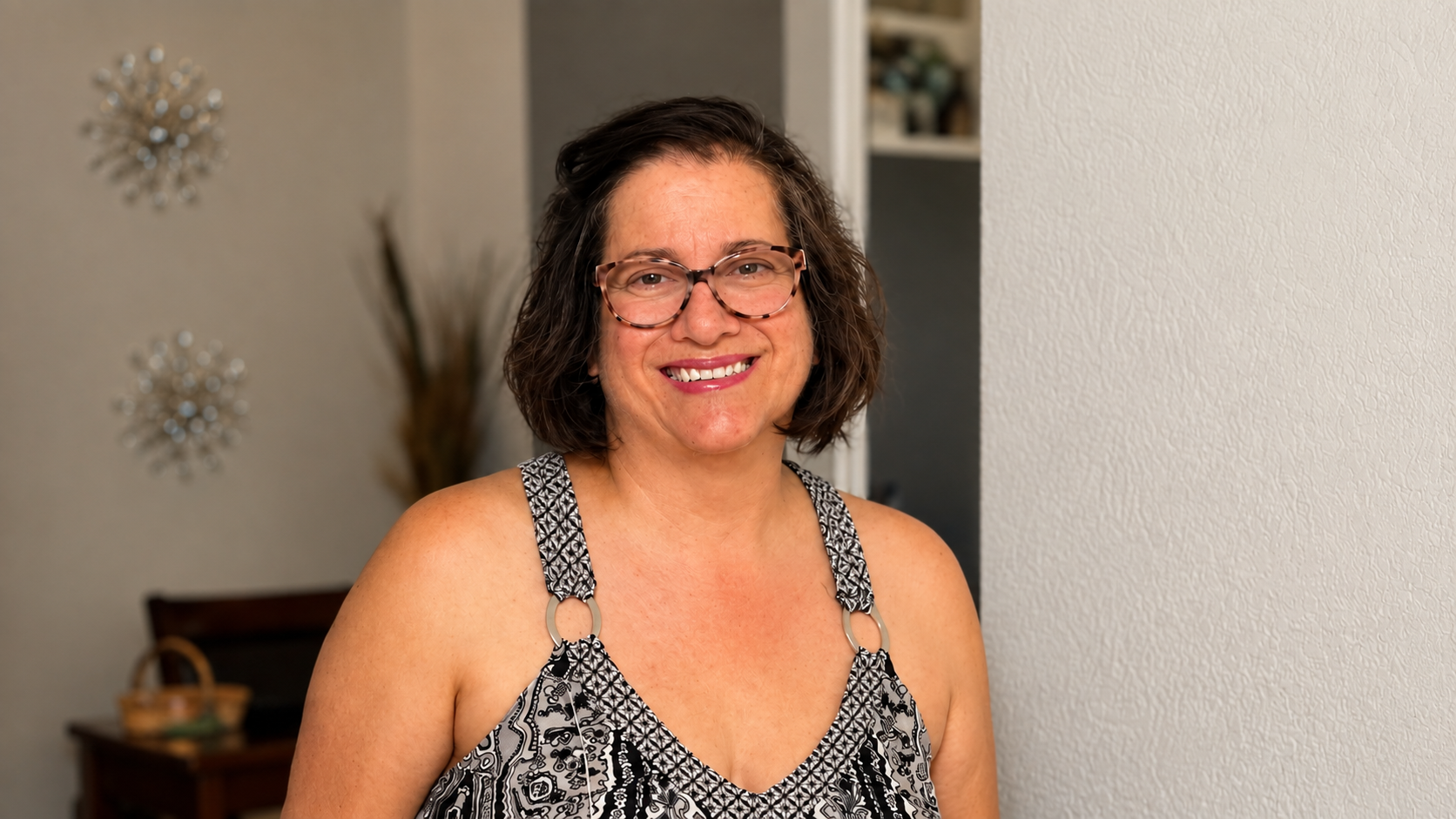
“You can still live a somewhat normal life with Parkinson’s. You just have to have the right tools to be able to communicate.”
— Iris Rodriguez-Cavallo
When Parkinson’s began affecting her voice
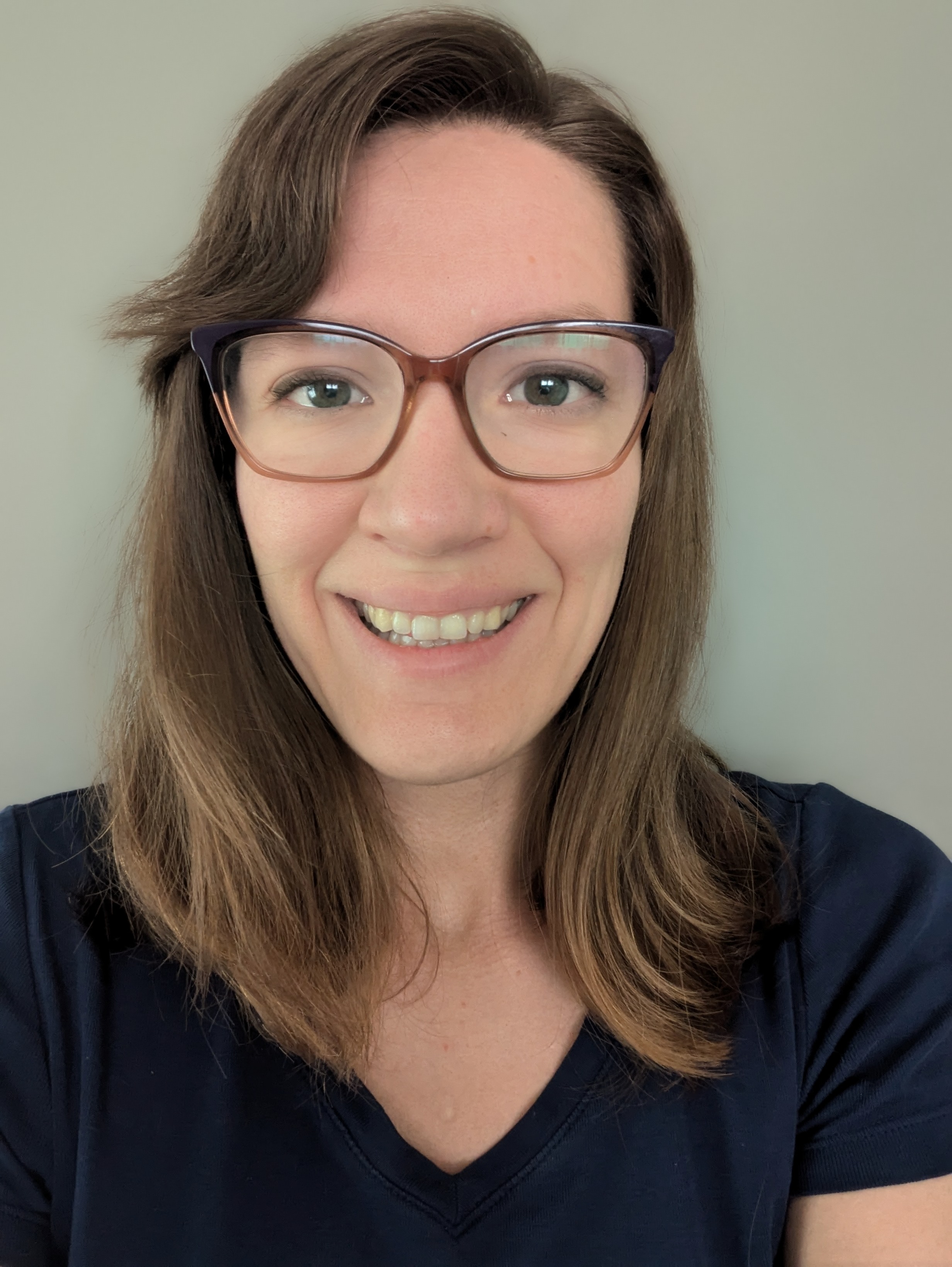
Iris Rodriguez-Cavallo has always been someone with something to say — whether in English, Spanish, or with a strong New Jersey accent.
But when Parkinson’s disease began affecting her voice, communication became exhausting…and at times, impossible. Iris’ voice grew quieter. People rushed her. And misunderstandings became increasingly common.
“Communication is key with everything. People don’t understand that communication is an art,” Iris said. “And you have to be very patient with the person receiving the information and make sure they understand.”
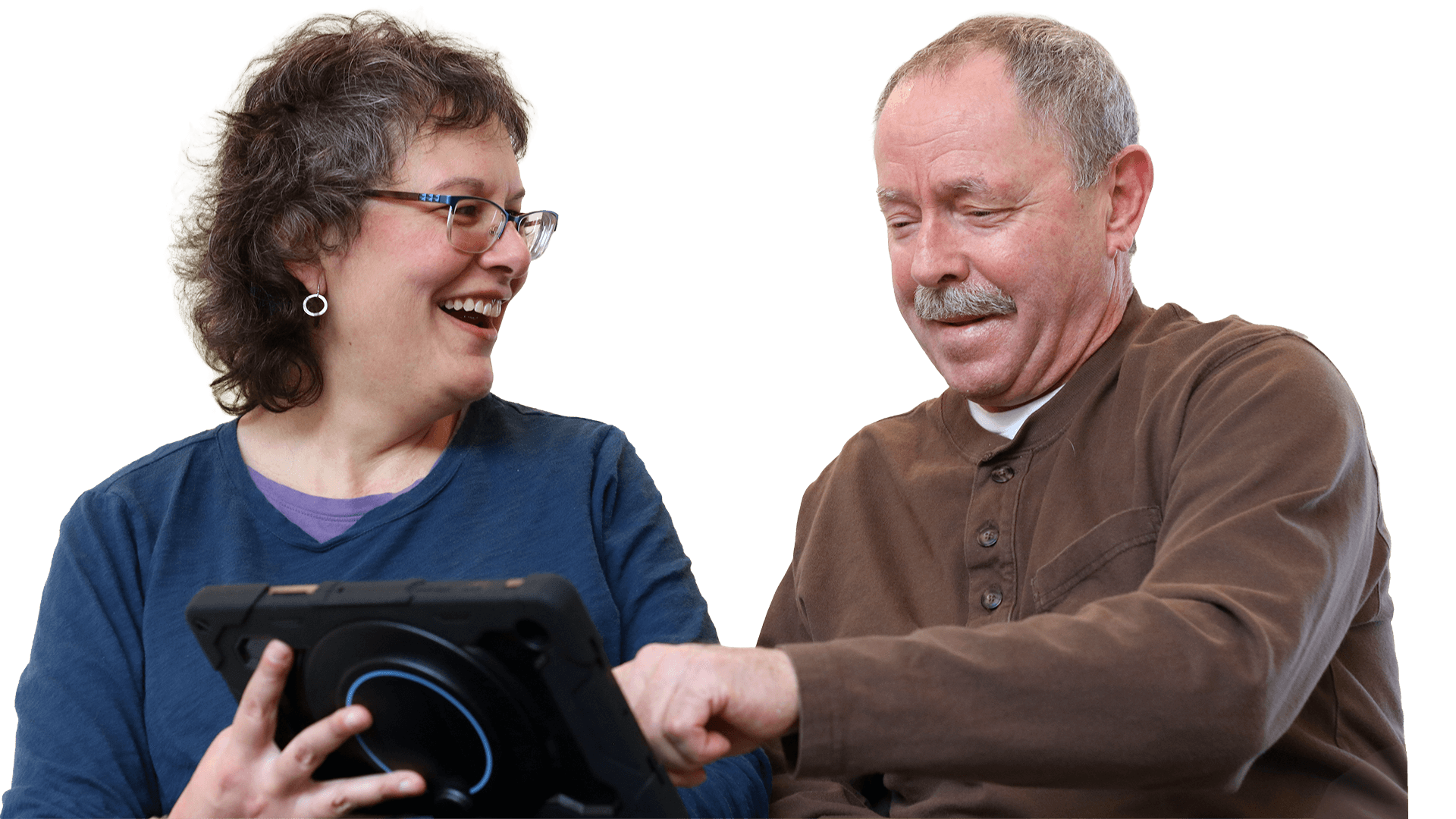
Like many people living with Parkinson’s, Iris was already working hard to maintain her speech. She was attending virtual SPEAK OUT! practice sessions with The Parkinson’s Voice Project when she learned about Lingraphica through an informational flyer.
“I was at a point where I couldn’t talk very well. And I was frustrated because I needed a way to communicate more effectively,” she shared. “When I found this, I was like, ‘Wait, this is excellent!”
With her Lingraphica device in hand, Iris felt confident she could always express what she needed — especially when her voice wasn’t coming out the way she wanted.
When communication couldn’t wait
That need became urgent during one of the most difficult experiences of her life.
After undergoing deep brain stimulation (DBS) surgery, Iris found herself in the intensive care unit in serious distress. She hadn’t been given the correct dose of her Parkinson’s medication after surgery, and the timing of her medication had been wrong, too.
As a result, she experienced seizures and struggled physically — all while unable to communicate with the people responsible for her care.
Unfortunately, Iris’ experience in the hospital isn’t unique to her. Research shows that up to 50% of adverse events that occur in hospitals are preventable — and people with communication difficulties are even more likely to experience these events (Bartlett et al., 2008).
“It was the worst feeling ever,” she shared. “Unfortunately, I’ve had two friends who had Parkinson’s and died because of the hospital not knowing about their medication. […] I was afraid they were going to kill me.”
Then, Iris remembered she had brought her device to the hospital.
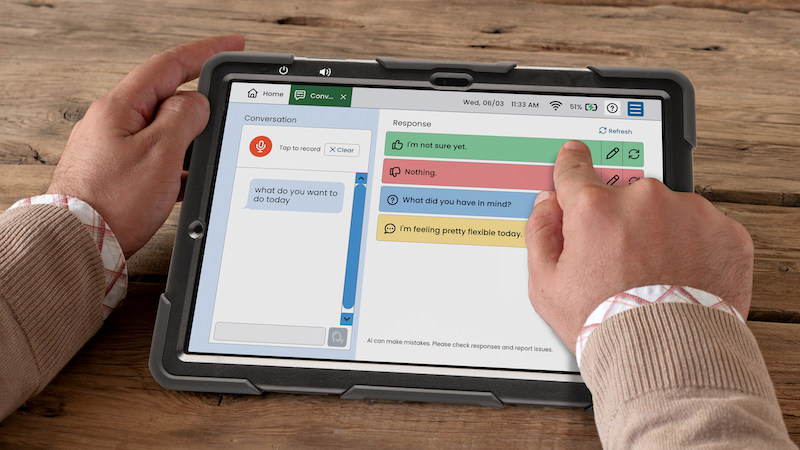
Using her Lingraphica device, Iris was able to advocate for herself in ways that weren’t otherwise possible. She asked to speak with the charge nurse and made sure her team understood her medication schedule. Then, she requested visits from speech, occupational, and physical therapy so she could jumpstart the rehabilitation process.
And she could finally share her basic needs — like when she was thirsty, hungry, or needed to get out of bed.
“If it wasn’t for my Lingraphica device, I would’ve been in sheer disarray,” Iris says.
Finding a better way to communicate and practice speaking every day
Since recovering from her hospitalization, Iris continues using her Lingraphica device in everyday life.
Before doctor’s appointments, she programs what she needs to say ahead of time — so even if speaking becomes difficult, she can still communicate clearly.
At restaurants, she taps a message that says, “Please be patient with me while I order.” This helps set expectations and makes interactions smoother.
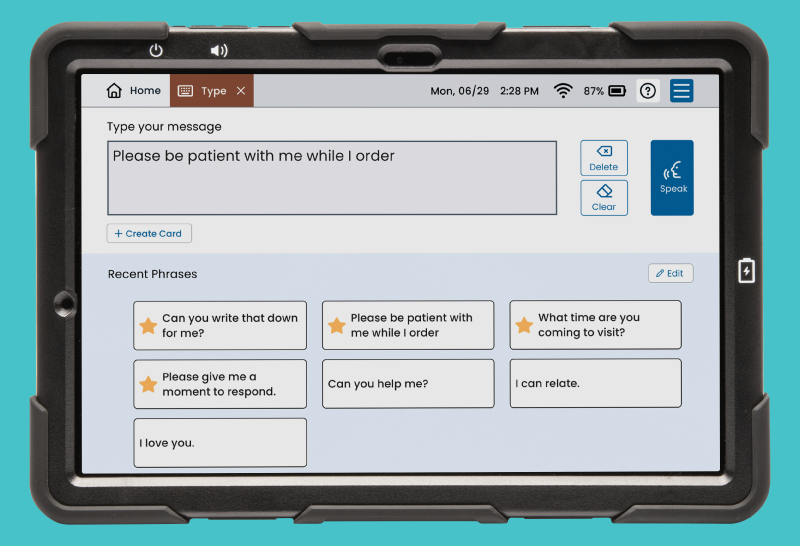
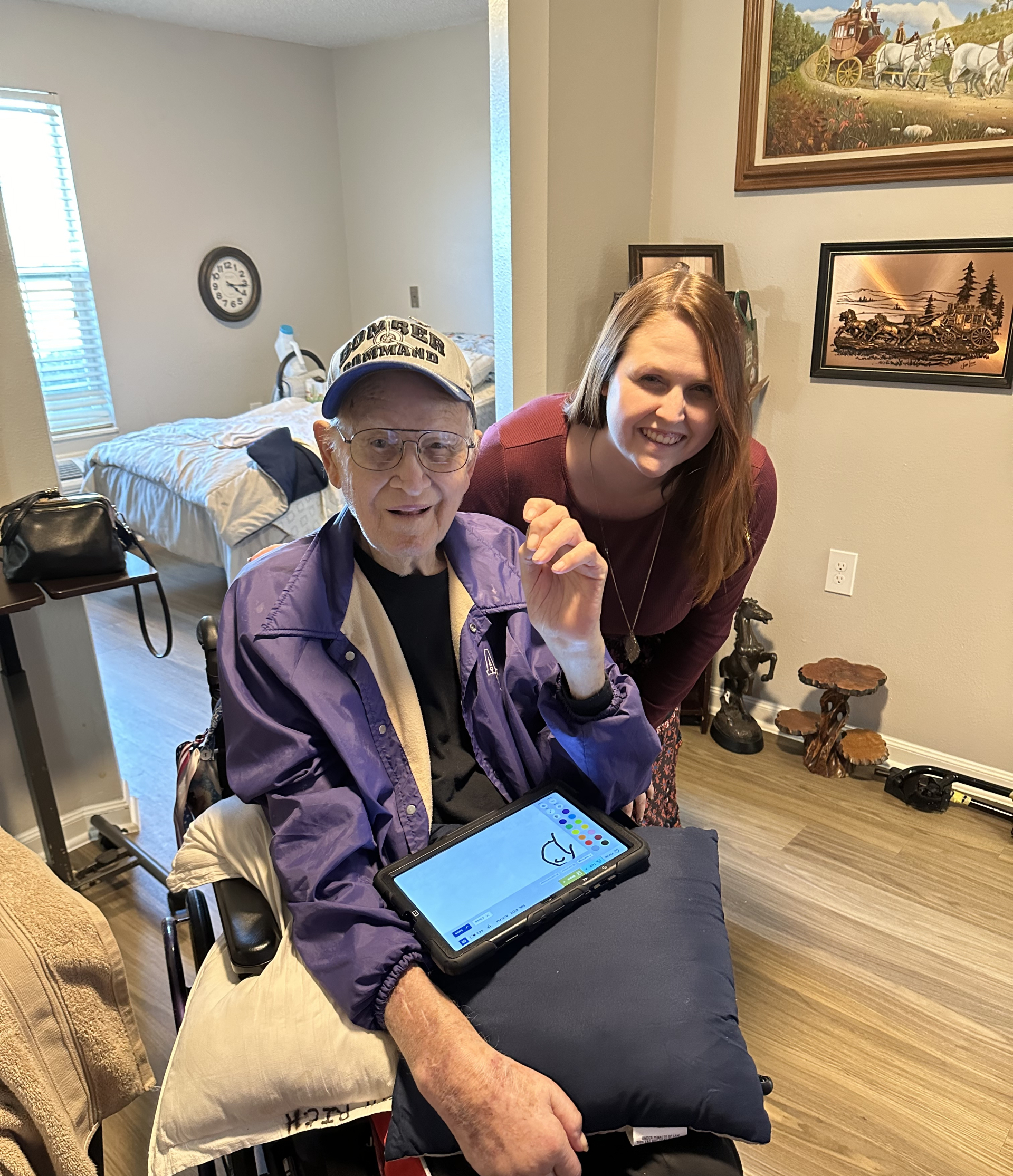
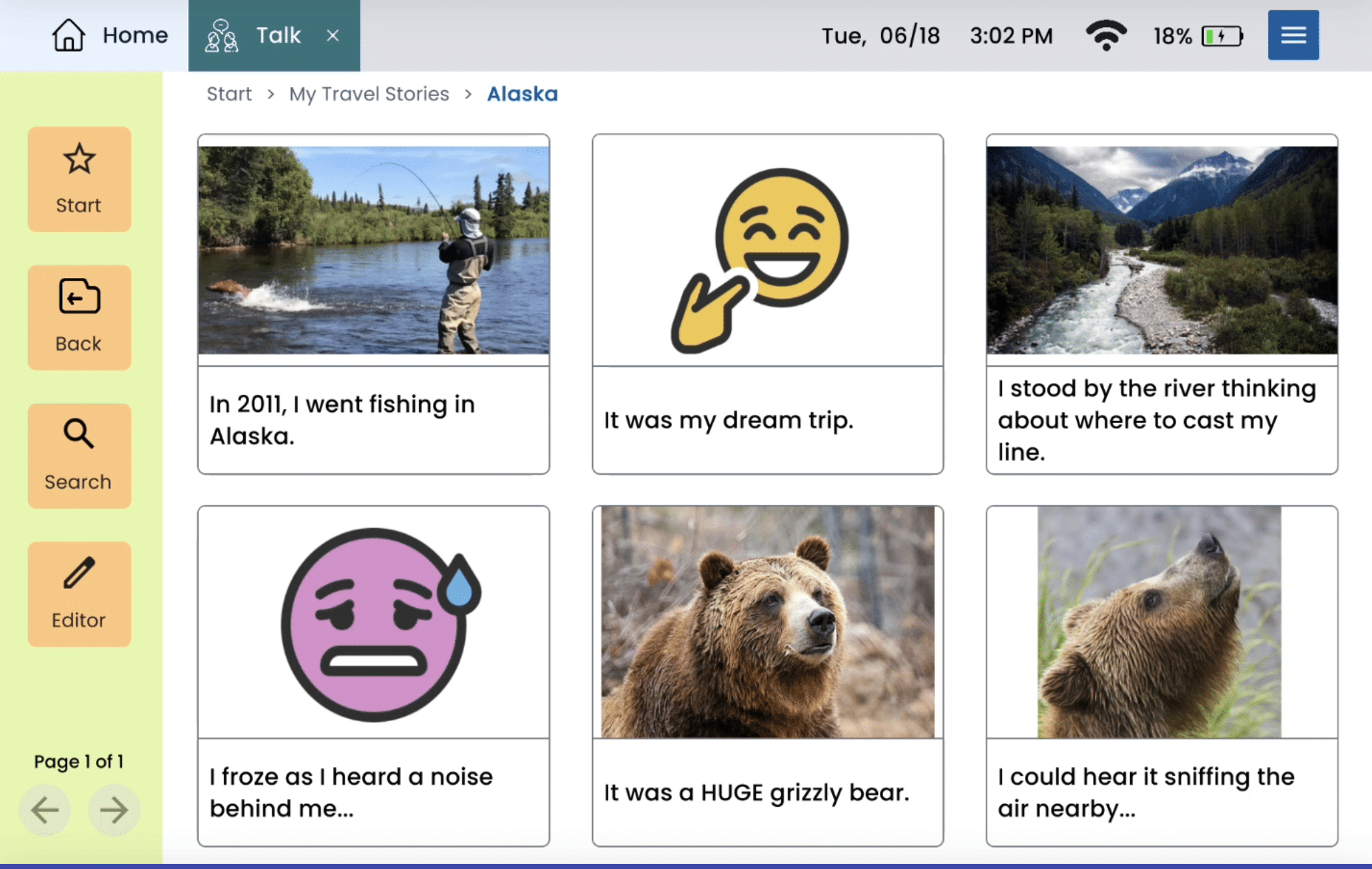
“I switch back and forth between the Type, Talk, and Draw tools depending on what I need to get done,” Iris says.
She also uses Lingraphica’s Therapy app to keep up with her speech therapy exercises at home. This helps her maintain her voice between therapy sessions, especially when she’s not able to attend her regular SPEAK OUT! groups.
Each tool gives her more control over how she expresses herself — especially during unpredictable “off” times when her PD symptoms worsen.
Holding onto her voice
One of the most meaningful ways Iris uses her device is by recording her own voice as part of her pre-programmed messages. She’s proud of her New Jersey accent — it’s part of who she is. And she wants to preserve it.
“I record my voice so they can hear my voice when I no longer can speak,” she shared.
As Parkinson’s disease progresses, that possibility is something she’s aware of — but not defined by. For now, recording her voice is a way to hold onto it, and to make sure the people she loves can hear it, too.
Finding purpose through advocacy
Iris doesn’t keep her experience with Parkinson’s disease to herself. She talks openly about her communication device, and encourages other people with Parkinson’s to find tools that work for them.
“I’m trying to advocate for people with Parkinson’s to have a voice,” she said. “If I can inspire someone to use the device…that would be awesome for me.”
She even helped connect Lingraphica with the Parkinson Association of Central Florida, encouraging us to sponsor their Walk for Parkinson’s event — where she showed up with the perfect amount of enthusiasm. (Our team even affectionately nicknamed her “Lingraphica’s Cheerleader.”)
For Iris, her advocacy work with Parkinson’s disease is about helping others feel seen and supported — and showing them that communication challenges don’t mean losing your voice.
“When you get a disease you have no control over, you feel a little bit like…where’s my purpose?” she shared. “And this gives me purpose.”