




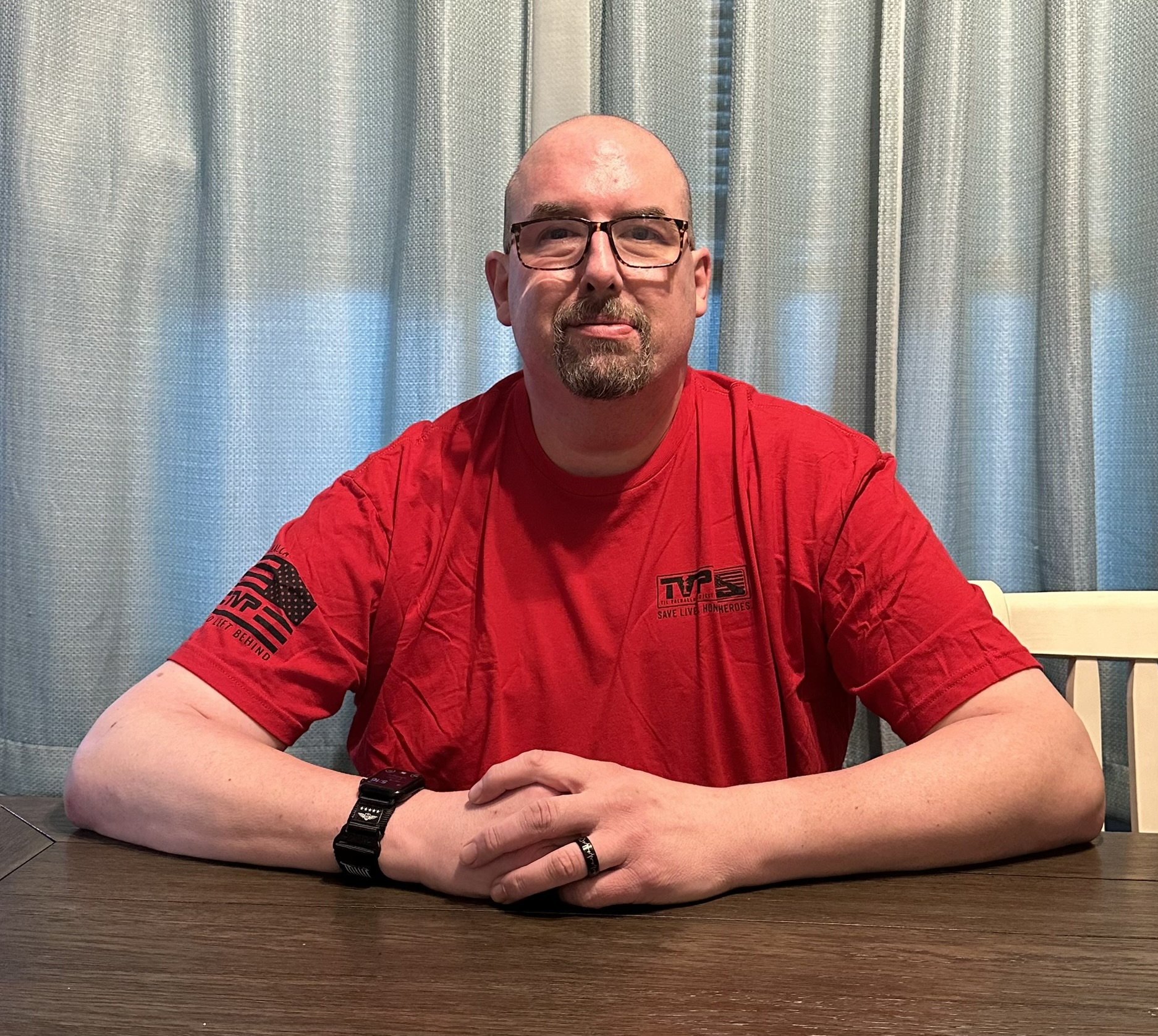
““I feel thankful every day that I got a chance to try a Lingraphica device. It has been a game-changer for me.”
– Mike Jankowski, stroke survivor
A family tradition of serving the community
For Mike Jankowski, helping others was a way of life. He joined the rescue squad as a freshman in high school, following in the footsteps of his parents and siblings.
“Both of my parents were on the squad. I’d been going down to the squad since I can remember with my parents to help out. And my brothers and my sister joined when we all turned fifteen. It’s been a family affair. […] I made it all the way up to Captain. I loved every minute,” Mike shared.
He’d spent over 30 years as a first responder — serving his community and leading his EMS and fire squad — when life took an unexpected turn.
When words become difficult
In 2022, Mike had a stroke that left him with aphasia and right-sided weakness. Suddenly, the man who had spent decades communicating in emergencies found himself struggling to get any words out.
Every conversation felt aggravating, particularly when it came to speaking to the very professionals he once worked closely with.
“It was frustrating, to say the least,” Mike shared. “The best way I can explain it is…the only way I would be able to communicate with doctors and nurses in hospitals was if my wife was there. Luckily, she could read my mind 90% of the time. There were times no one had any idea what I was trying to say because I couldn’t get it out.”
Discovering AAC after two years with aphasia
For two years after his stroke, Mike continued to struggle during conversations because of his aphasia. And like many other stroke survivors, he didn’t realize communication devices existed to help people just like him.
It wasn’t until he attended one of Lingraphica’s virtual Join In Aphasia sessions and saw another stroke survivor talk about their device that he first learned about AAC (augmentative and alternative communication).
As soon as the contact information for Lingraphica’s team was featured on the screen, he immediately sent an email.
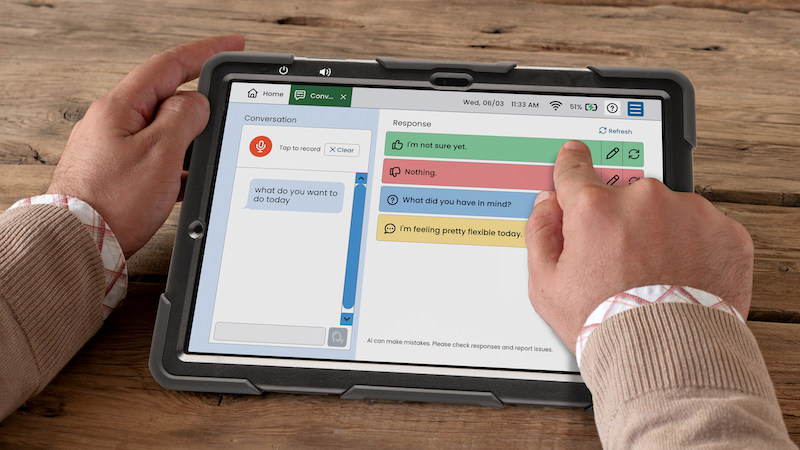
With the support of Lingraphica and his wife, Mike finally got set up with a Lingraphica AAC device.
And remember how frustrated he would feel during medical appointments? That changed with just one helpful pre-programmed message:
Mike embraces the endless possibilities with AAC
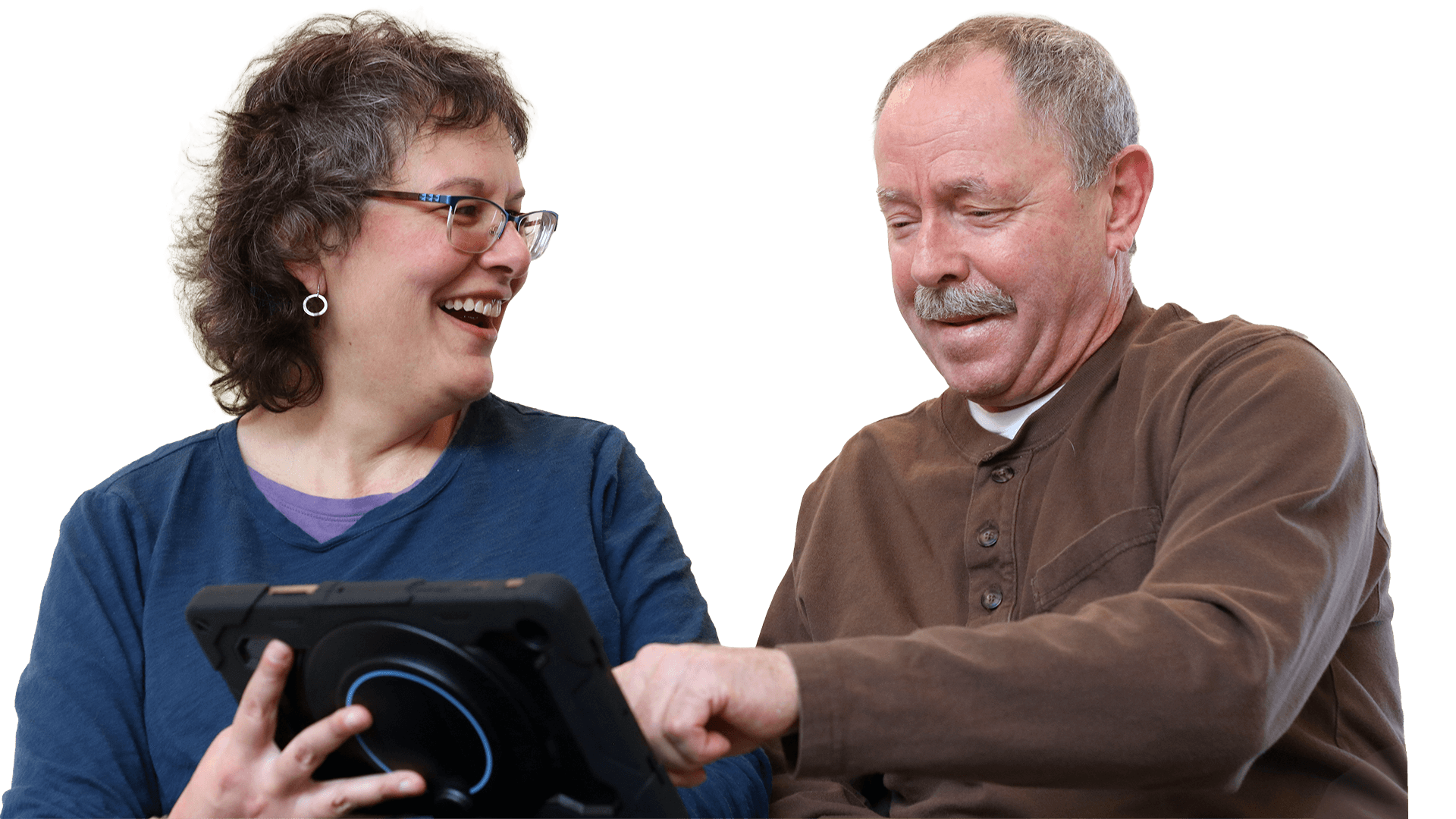
Mike’s device is so much more than…well, a device. It’s like a friend he can rely on to speak for him when aphasia stops his words from flowing.
“My device goes with me everywhere…I call it ‘my buddy,’” Mike laughs. “It doesn’t matter if I am running out with my wife to go to a store for two seconds and coming home, he’s with me.”
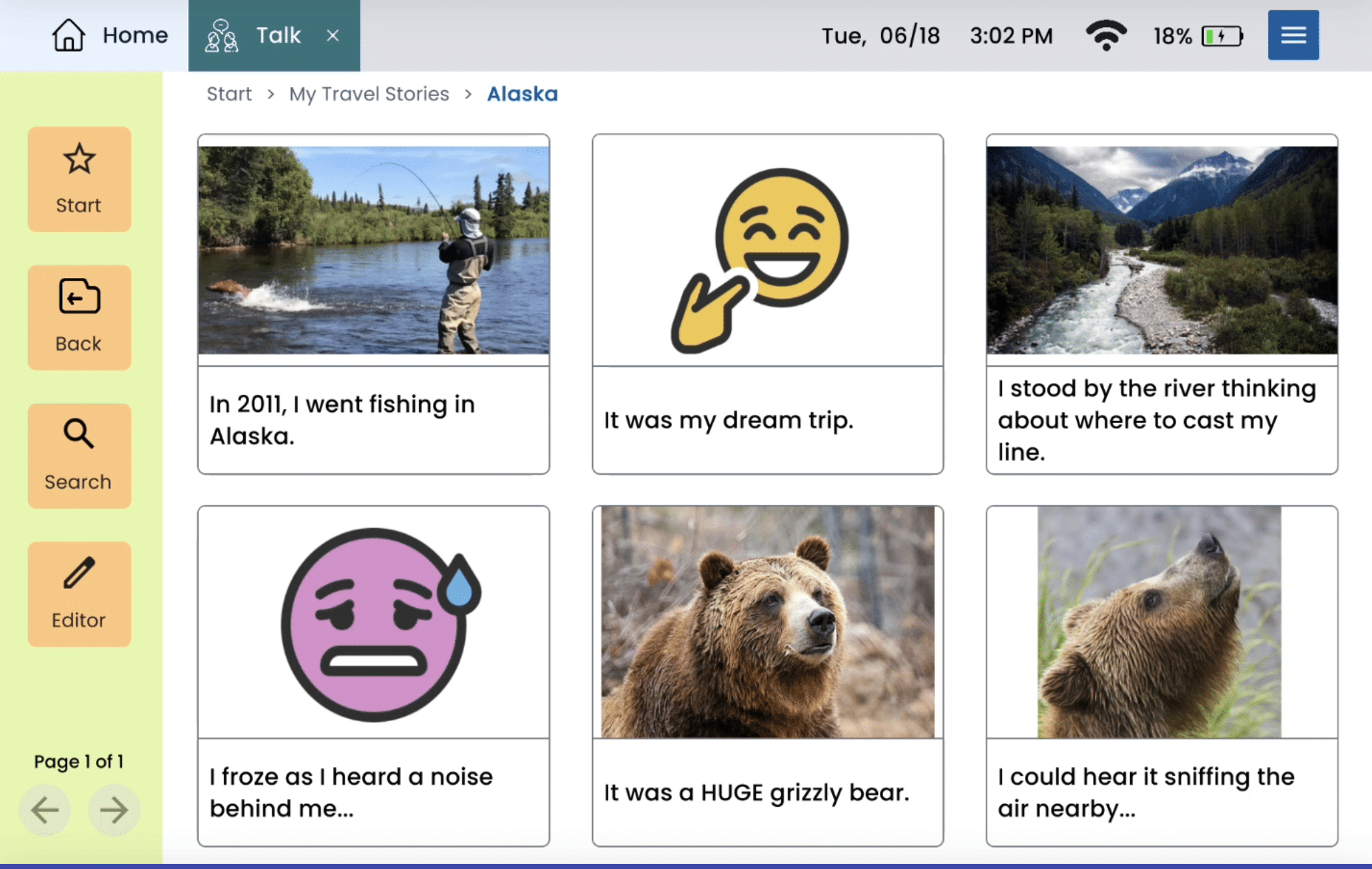
Mike has made his AAC device his own by adding personalized messages for every situation:
- emergencies
- self-advocacy (i.e. “Can you please slow down?”)
- daily routines
- movies
- and so much more
“As far as what you can do with this [device], it’s beyond anything that I can explain,” Mike says. “There are so many possibilities.”
Finding community and educating first responders about AAC
Mike’s aphasia journey hasn’t stopped with his own stroke recovery. He remains a frequent friendly face amongst the Join In community, including a group that’s just for Lingraphica device users.
“We call it a ‘coffee and chat,’” Mike explains. “We’re all device users, and we just help each other. We go, “Hey, did you know that you can do this on our device?”
Here’s Mike’s reaction during a Join In session where he discovered how AAC can make family movie night easier:
And, of course, Mike hasn’t forgotten his roots as a first responder.
Now, he uses his experience to educate EMS and fire squads about aphasia and AAC. He serves as a National Aphasia Association Ambassador and is part of the EMS Task Force.
He hopes that one day, AAC will be as accepted as other types of assistive technology are.
“If you break your leg, you get crutches. If you have trouble seeing, you get glasses. If you have trouble talking, you can use this device. I’m just hoping someday that everybody will understand. No one would say ‘don’t use your crutches or glasses.’”
Today, Mike continues to answer the call and serve others — just in a different way. With his Lingraphica device by his side, he’s not only communicating more easily, but also helping others better understand aphasia and AAC.