





Involving care partners in aphasia rehabilitation: 5 tips for SLPs
Published on Dec 14, 2019

Care partner involvement is a strong predictor of success in aphasia therapy. But as an SLP, approaching a reluctant or overwhelmed family member isn’t always straightforward. This article offers five practical strategies for engaging care partners early, and explains why their role becomes especially critical for AAC users.
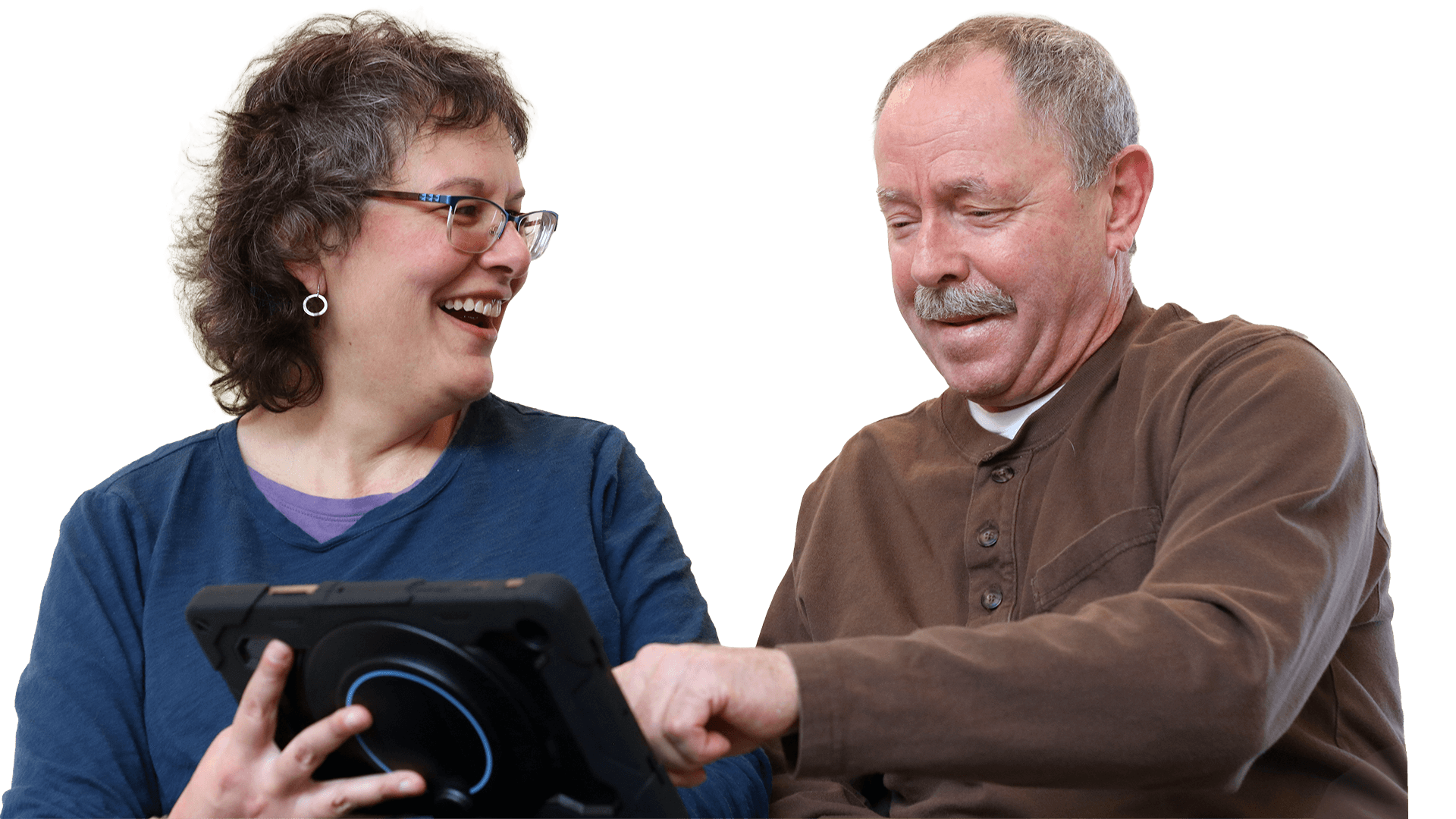
Many speech-language pathologists (SLPs) can recall a patient with aphasia who was particularly successful in therapy. One thing these patients often have in common is an involved family member or care partner. And this isn’t just anecdotal; the standard for aphasia treatment is moving toward including family and loved ones.
The Life Participation Approach to Aphasia (LPAA) states that all people affected by aphasia are entitled to receive care. It also places an emphasis on life participation goals. For most people, that includes conversation with their family and care partners.
5 tips for engaging care partners in aphasia therapy
Although SLPs know that an involved care partner is ideal, it can be a difficult topic to approach if the care partner is reluctant. Some tips for getting off to a good start include:
- Presume positive intentions. Always begin with the assumption that the care partner wants to help their loved one. They might be scared, busy, and overwhelmed — but keeping them in a positive regard sets the stage for a successful therapeutic relationship.
- Set the expectation of attendance and participation. Let the care partner know that therapy will work best if they are in the room and participating from the start of your sessions together.
- Acknowledge their expertise. Some care partners might want to “stay out of the way.” Remind them that although you are the SLP, they know the patient best. Ask for their help with things you can target in therapy, such as family information or biographical details.
- Teach specific strategies that will improve communication. Many care partners think that speech therapy is only for the person with aphasia. You can provide training in techniques geared toward them, such as Supported Conversation for Adults with Aphasia. By giving them concrete strategies, you make them a more important and active part of the therapy process.
- Give them space to grieve. The care partner is going through their own adjustment process. Acknowledging the impact that aphasia has on both the person with aphasia and the care partner can go a long way in building trust and engagement.
Care partners and AAC
Involving family is important for people with all types and severities of aphasia — but it becomes even more critical for people with severe aphasia, especially when an AAC device is involved.
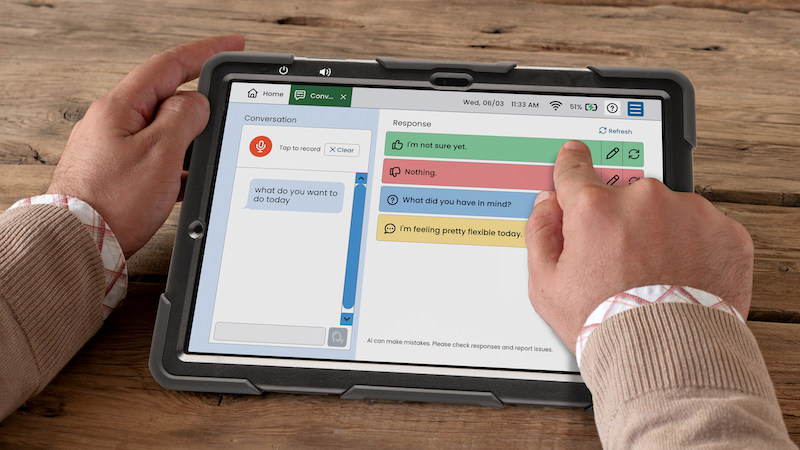
Some people will always need partner support to successfully use an AAC device. This can be as simple as charging the device and turning it on in the morning. For others, it means helping navigate through the device.
Partner-dependent use does not mean someone is not a good candidate for AAC. It does mean that the care partner’s participation is essential to success. Encourage and empower the care partner to provide the support their loved one needs.
About Contributor
 Lingraphica Team
AAC Experts
Lingraphica Team
AAC Experts
Lingraphica helps people with speech and language impairments improve their communication, speech, and quality of life. Try a Lingraphica AAC device for free.
Contributors
Lingraphica Team
AAC Experts
Categories
Subscribe to newsletter
Share