




Research Summary: The role of AAC in aphasia rehabilitation
Published on Jul 17, 2020

Research suggests that the way AAC is currently used in aphasia rehabilitation may be holding patients back — and the case for changing that approach is stronger than many clinicians realize. According to Dietz et al. (2020), introducing AAC earlier and more broadly can improve language recovery while ensuring people with aphasia always have access to communication. This summary breaks down what the evidence shows and how to apply it with a Lingraphica device in clinical practice.
About this research summary
This summary of “Revisiting the Role of Augmentative and Alternative Communication in Aphasia Rehabilitation” (Dietz et al., 2020) was written by Dr. Richard Steele, a senior researcher at Lingraphica who retired in 2024. It reflects his interpretation of a published research study and is intended for educational purposes.
Research findings and clinical best practices may change over time. These summaries are generally maintained as part of our educational archive and are not routinely updated. We encourage readers to review the original research publication and consult current evidence when applying findings in clinical practice.
Speech-language pathologists with clinical or patient questions about AAC are invited to consult with our SLP Clinical Education team.
Key Takeaways
- AAC should be introduced earlier and more broadly in the post-stroke journey.
- AAC should focus beyond basic wants and needs to increase life participation and connection.
- Combining traditional interventions with AAC can address needs today while also working to enhance language abilities for the future.
- Use AAC to increase ability while focusing on participation – these goals are not mutually exclusive.
Exploring the research
This article examined the role that AAC can play in aphasia rehabilitation. The researchers acknowledged persisting problematic trends that exist with aphasia and AAC, including:
- AAC being used primarily to support basic needs
- Only giving AAC to people with the most severe aphasia
- Prioritizing traditional therapy only, instead of integrating AAC alongside therapy
However, recent research and publications have highlighted the need for a more integrated approach to using AAC, including ASHA’s Communication Bill of Rights, Janice Light’s Four Purposes of Communication, and the Life Participation Approach to Aphasia (LPAA) framework. Each of these acknowledges that AAC can have a positive impact in a variety of communicative settings that are meaningful to people with aphasia beyond basic wants and needs. These include maintaining social closeness, participating in life activities, and sharing personal identity, attitudes, and feelings, among many others.
The authors stressed that using AAC alongside traditional interventions allows as much language rehabilitation as possible while focusing on life participation. Incorporation of AAC also ensures there is a “backup” communication plan.
While the focus of AAC is often on its compensatory function, clinicians can also focus on using AAC to enhance abilities, including self-cueing. This helps mitigate any concern of “learned non-use” and promotes language recovery due to the coupling of the language and visual processing networks in the brain.
Finally, the article argued for the earlier introduction of AAC. Because AAC is still often seen as a “last resort” by clinicians and patients alike, many are hesitant to move forward due to a seeming sense of permanence of the recommendation. If AAC were introduced earlier and more broadly, it would no longer carry this association. This would help dispel the myth that AAC is permanent and only for people who will not recover their speech. Furthermore, introducing AAC earlier can increase communicative confidence by providing a known backup plan.
Incorporating the Research into Clinical Practice with Lingraphica
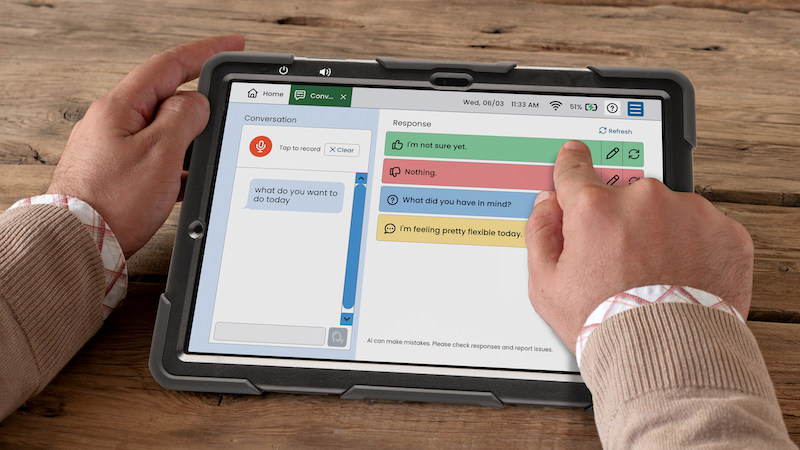
A Lingraphica AAC device is an excellent tool to put these authors’ suggestions into action. Because Lingraphica’s devices are simple to program and use, you can incorporate a client’s life participation goals immediately.
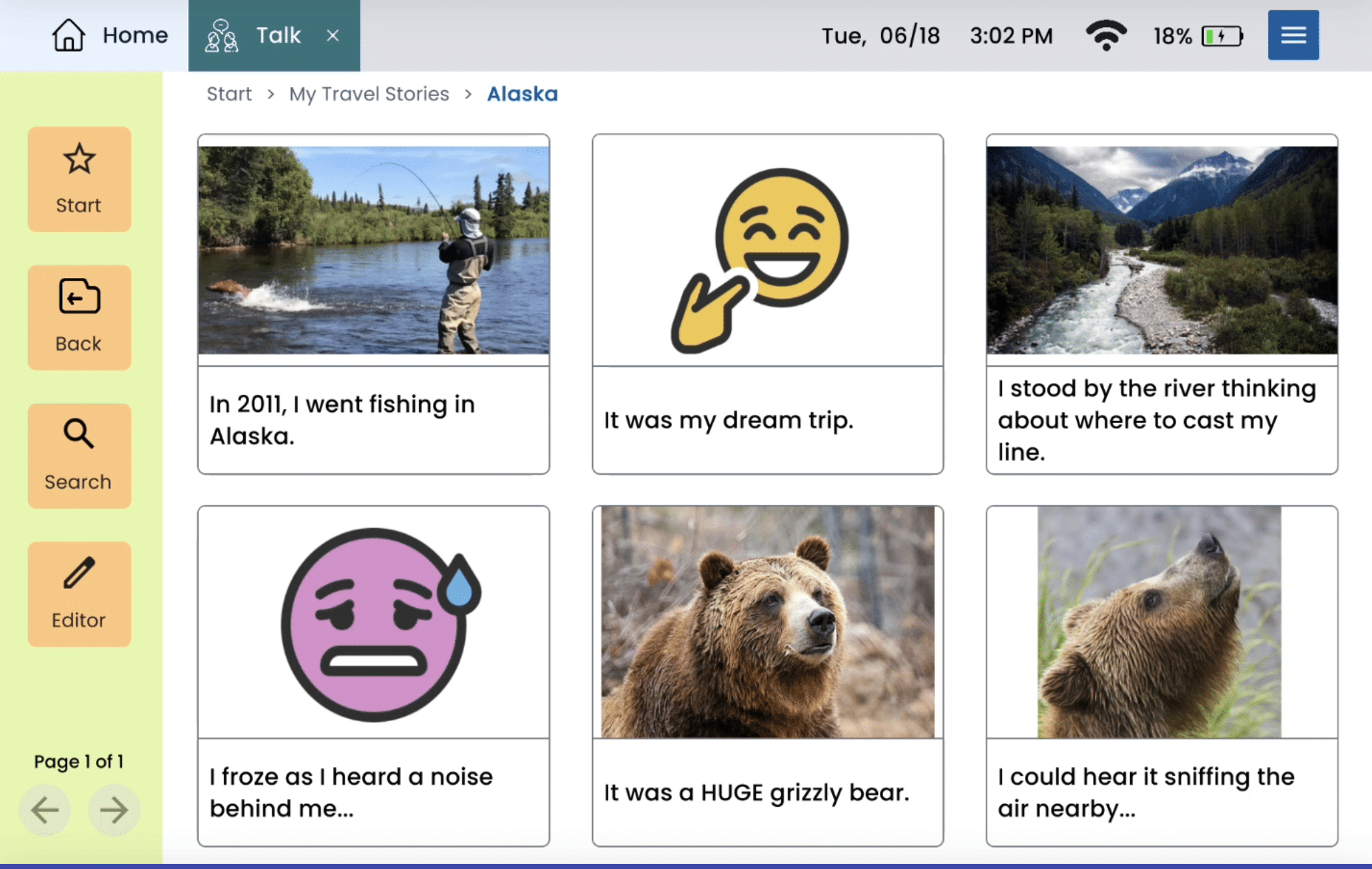
If you are using a device with a client, start right away with adding in vocabulary for meaningful, personal topics – family, a hobby, or independence in the community. Even though the devices come pre-programmed with thousands of images and phrases, this research suggests that your clients will be more successful with topics that are personally relevant. Lingraphica’s team can assist with customization suggestions and programming.
With the combination of a picture, written text, and verbal output, Lingraphica devices are built to enhance language abilities and be a tool for self-cueing. The Therapy tool even features built-in mouth position videos for an additional way to self-cue. When using a device with a patient, encourage them to identify images or to try to repeat what the device says, depending on your patient’s skills and abilities.
Finally, keep in mind that it’s never too soon to try a device with your patient. Lingraphica offers dedicated clinical support and loaner devices for AAC trials in acute care, inpatient rehabilitation, and post-acute rehab settings. This means you can start normalizing the use of AAC as a “backup voice” and building communication confidence right away.
It’s important to stress to your patients that an AAC device does not have to be forever, and it’s not replacing their speech — it’s just one tool available to them during their aphasia rehabilitation journey.
References
Dietz, A., Wallace, S. E., & Weissling, K. (2020). Revisiting the Role of Augmentative and Alternative Communication in Aphasia Rehabilitation. American journal of speech-language pathology, 29(2), 909–913. https://doi.org/10.1044/2019_AJSLP-19-00041
About Contributor
 Lingraphica Team
AAC Experts
Lingraphica Team
AAC Experts
Lingraphica helps people with speech and language impairments improve their communication, speech, and quality of life. Try a Lingraphica AAC device for free.
Contributors
Lingraphica Team
AAC Experts
Categories
Subscribe to newsletter
Share