




How to determine AAC device readiness: a guide for SLPs
Published on Oct 15, 2019

It’s not always easy to know when — or how — to introduce AAC. This article walks through the most common myths SLPs and client families encounter, what actually makes someone a good AAC candidate, and resources for when you’re not sure how to get started.
Is your patient ready for an AAC device?
If trying AAC feels daunting, you’re not alone. You might feel unsure about when to start, how to introduce AAC to your client, or how to address objections from your client’s loved ones.
Good news: Lingraphica is here to help, even if it’s your first time considering AAC for a client.
Start with a simple question: is there a gap between what your client wants to communicate and what they’re actually able to communicate? If the answer is yes, then AAC may be helpful.
Addressing common AAC myths
Before introducing AAC, you may need to address some common concerns from your client and their family.
Myth #1: “AAC will prevent my family member from talking.”
This is a common fear, but it’s not grounded in any research. Using AAC does not mean you’re “giving up” on speech or language recovery. In fact, studies have shown the opposite:
- When introduced early in aphasia rehab, AAC provides access to communication while simultaneously improving language recovery outcomes (Dietz et al., 2020).
- AAC helps maintain functional communication and active life participation for people with neurodegenerative diseases (Fried-Oken et al., 2015).
- There’s no evidence to indicate that AAC inhibits speech. In 89% of cases, AAC intervention actually improved speech production for children and adults with developmental disabilities (Millar et al., 2006).
Furthermore, many people are able to repeat what the device says — even when they cannot initiate speech on their own. This can be a useful tool for self-cuing speech.
Make sure your client and their loved ones understand that AAC is an additional tool in aphasia therapy, not a replacement for speech.
Myth #2: “It’s too soon to try AAC” or “let’s focus on traditional therapy first.”
There is no minimum amount of time post-stroke, or after any other diagnosis, that’s required before introducing AAC. Early AAC introduction can lead to improved outcomes.
Consider this question: how long is it acceptable for any client to go without a reliable method of communicating? It may help to think of an AAC device like a walker: it’s good to introduce it early, so it can provide support right away while the user works to rebuild their skills.
Myth #3: “AAC is too complicated” or “I don’t understand technology.”
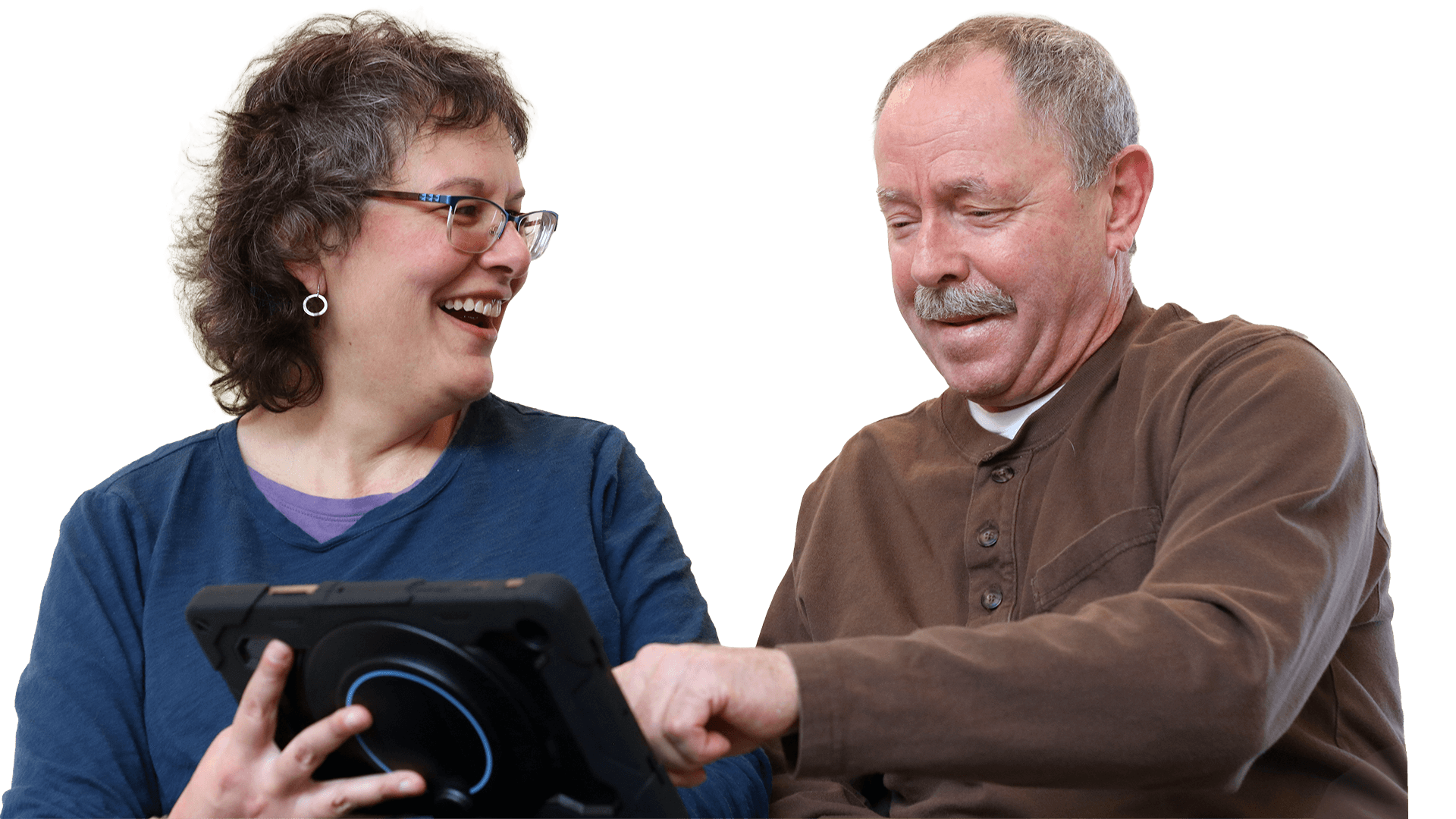
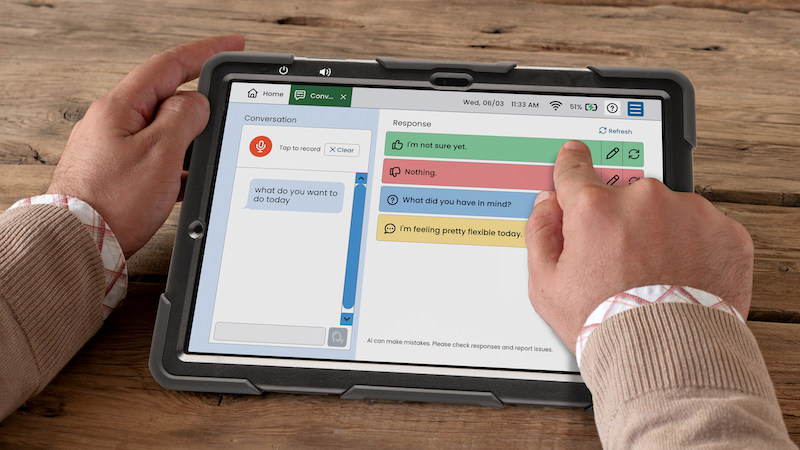
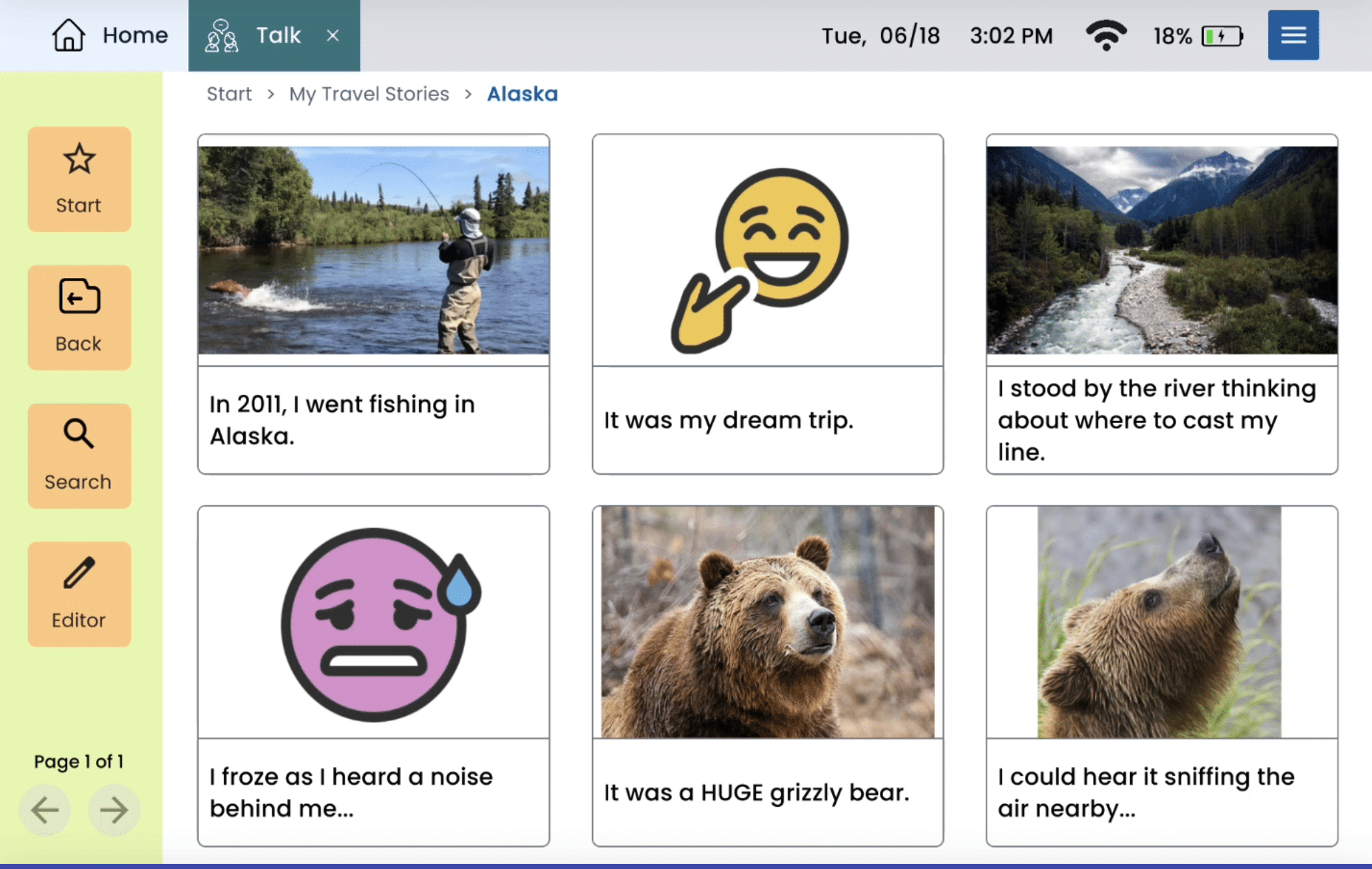
Reassure your client and their loved ones that using an AAC device is almost as simple as touching a picture. Lingraphica devices are built to be intuitive and easy to use.
Lingraphica also provides free lifetime tech support and communication coaching, to ensure Lingraphica device users and their families are comfortable and successful with their AAC device.
Signs your client may be a good AAC candidate
So, what does a strong Lingraphica AAC candidate look like?
Here are the key indicators:
- Moderate or severe expressive speech or language impairment — even if this only occurs in one specific situation, such as at the doctor’s office or with unfamiliar communication partners
- Mild to moderate speech or language impairment that is expected to worsen over time (such as in primary progressive aphasia or Parkinson’s disease)
- A family member or communication partner available to support and encourage use, or a very self-motivated AAC user who is committed to regular device practice
- Ability to access a device through direct selection or simple accessories such as a mouse, joystick, or stylus
If this list seems short, that’s intentional. There are very few requirements for AAC. If your client is hesitant about technology or doesn’t seem motivated, that often changes once they see how simple the device is and how quickly it can be personalized around communication that is meaningful to them.
Remember: trying an AAC device is just that — trying it. You, your client, and their care partners can make a final decision after the free AAC trial. Throughout the trial process, you’ll be supported by a Lingraphica SLP and a dedicated team. Our team can provide evidence-based clinical guidance, customization assistance, and device training for your client and their loved ones.
Talk your AAC questions over with a Lingraphica SLP
Not sure if your client is a good candidate, or just want to think through a case with someone? Schedule a free call with our SLP Clinical Education team. They’re available to answer clinical questions, help you identify candidates, and support you through the AAC trial process.
References
Dietz, A., Wallace, S. E., & Weissling, K. (2020). Revisiting the role of augmentative and alternative communication in aphasia rehabilitation. American Journal of Speech-Language Pathology, 29(2), 909–913. https://doi.org/10.1044/2019_AJSLP-19-00041
Fried-Oken, M., Mooney, A., & Peters, B. (2015). Supporting communication for patients with neurodegenerative disease. NeuroRehabilitation, 37(1), 69–87. https://doi.org/10.3233/NRE-151241
Millar, D. C., Light, J. C., & Schlosser, R. W. (2006). The impact of augmentative and alternative communication intervention on the speech production of individuals with developmental disabilities: a research review. Journal of Speech, Language, and Hearing Research, 49(2), 248–264. https://doi.org/10.1044/1092-4388(2006/021)
About Contributor
 Lingraphica Team
AAC Experts
Lingraphica Team
AAC Experts
Lingraphica helps people with speech and language impairments improve their communication, speech, and quality of life. Try a Lingraphica AAC device for free.
Contributors
Lingraphica Team
AAC Experts
Categories
Subscribe to newsletter
Share