





- 1. Try naming practice
- 2. Read something familiar aloud
- 3. Practice automatic phrases
- 4. Use music and singing
- 5. Practice in real-life moments
- 6. Respond gently when communication breaks down
- 7. Add structure with apps and tools, if it helps
- 8. Keep practice short and consistent
- 9. Practice with others, not just at home
When it comes to supporting your loved one with aphasia exercises at home, we have some good news: You don’t need a whiteboard, a timer, or a stack of flashcards.
Some of the best aphasia exercises at home happen in the middle of ordinary life, like over breakfast, during a favorite song, or on a slow walk through the house, naming things as you go.
While aphasia therapy builds the foundation, what happens between sessions is what keeps that foundation strong. But navigating aphasia, especially for the first time, can be challenging.
If you have a loved one living with aphasia at home and aren’t sure how you can help, keep reading!
Here are some simple, no-pressure ways to practice at home — for people with aphasia and the care partners who support them.
1. Try naming practice
Naming is one of the most flexible exercises there is. You can do it anywhere, with almost anything.
Pick a room and name what you see. Go through a grocery list. Look at family photos and name the people in them. Remember to start simple and keep it low-pressure.
If the word doesn’t come right away, try offering a small cue. This can be the first sound of the word, a description, or two choices to pick from. The goal is to keep the conversation moving, not to get every word exactly right.
2. Read something familiar aloud
Reading aloud can support speech rhythm and word finding, especially with material the brain already half-knows by heart. A favorite nursery rhyme, a go-to recipe, a short headline, or a page from a beloved book all work well.
Familiar text feels easier to reach for, which makes it a good option on harder days. If pausing helps, pause. If listening first feels better before trying it solo, that’s fine, too. There’s no wrong way to do this one.
3. Practice automatic phrases
Some phrases come up so often in daily life that they are worth practicing on purpose. These might include:
- Good morning
- Thank you
- How are you?
- I need a break
- I’m hungry
- Please wait
These are some of the most useful phrases to practice for a person with aphasia because they build confidence in the exact moments people need it most: like greeting a neighbor, answering the phone, or asking for help.
When phrases like these start to feel automatic again, that ease shows up everywhere else, too.
4. Use music and singing
Odds are, there’s at least one song you or your loved one knows by heart. Whether it’s serenading “Sweet Caroline” with Neil Diamond or some motivational “Don’t Stop Believin’” by Journey, this is a fun way to get some words out.
A lot of people with aphasia find that singing feels easier than speaking. Rhythm and melody help the brain reach words that speech alone can’t quite get to. Sing along together to a favorite song or hum the melody. Say the words with a little rhythm underneath them. This doesn’t need to feel like an exercise at all.
If music is already something the person enjoys, this might be the easiest one on the list.
5. Practice in real-life moments
Everyday moments are already full of communication practice, they just don’t always get counted that way.
One speech-language pathologist (SLP) who worked in a long-term brain injury rehabilitation facility shared a story about a woman in her 20s recovering from a traumatic brain injury (TBI) after a car accident. That fall, her goal was simple: order a grande pumpkin spice latte on her own at Starbucks. A few weeks later, she walked into the clinic holding two lattes — one for herself, one for her SLP.
That’s the kind of goal that gives practice a real purpose. Other everyday moments that count just as much:
- Making a shopping list together
- Talking about a show you both watched
- Asking for something specific at home
- Telling someone about your day
Keep it light and fun, and remember to give your loved one time to communicate. Sometimes, being out in public to practice communicating can cause a bit more stress, which can slow things down — and that’s okay.
6. Respond gently when communication breaks down
Breakdowns happen. They’re part of aphasia, not a sign that anything is going wrong.
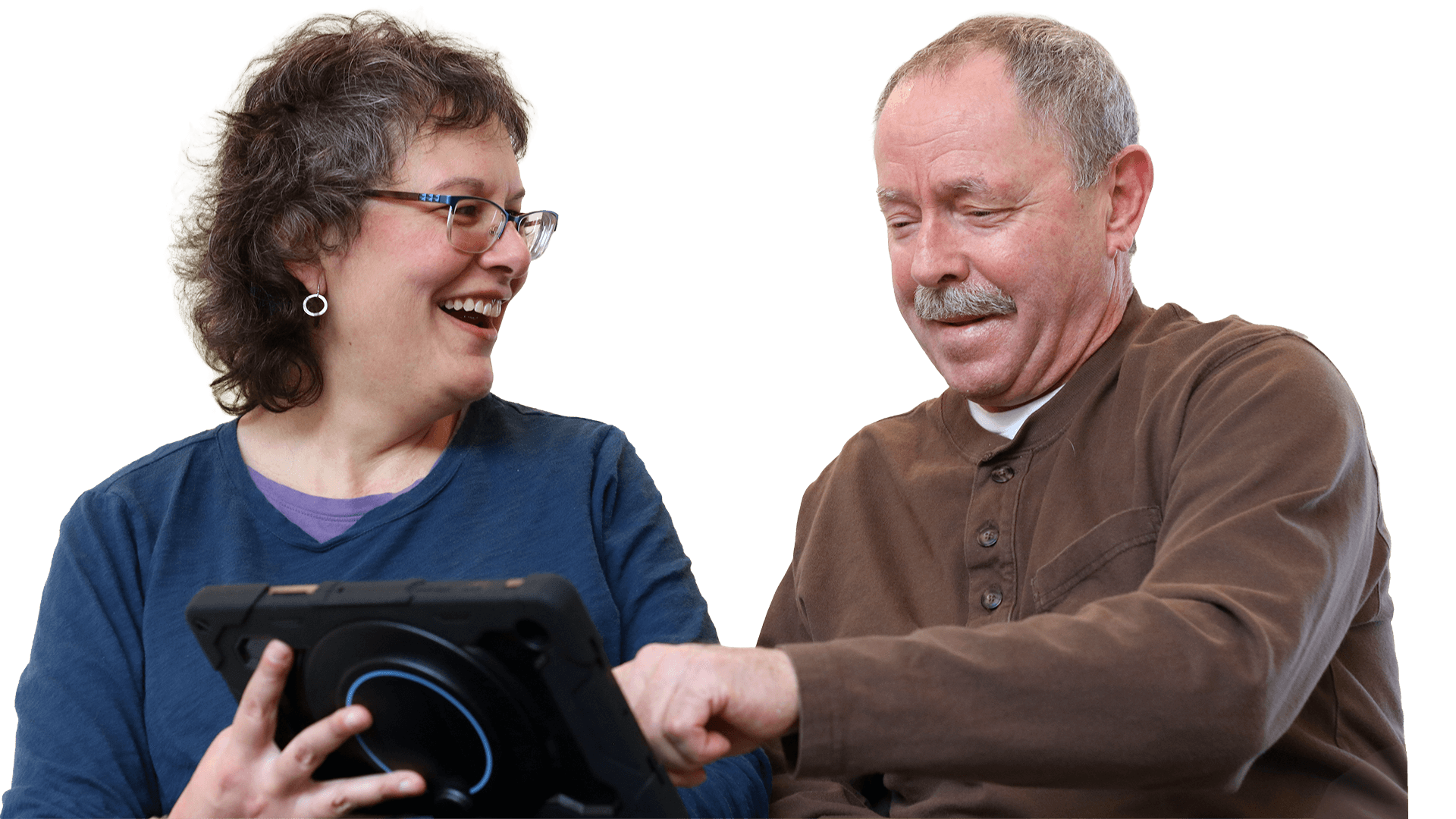
When a care partner is figuring out how to help someone with aphasia practice, the hardest skill to learn is usually staying calm, giving extra time, and focusing on the message rather than the exact words. A cue, a different way to phrase your question, or just a few extra seconds of quiet can be enough.
Corrections can wait. What matters in the moment is that the person feels heard. Celebrating effort, even when the words don’t land perfectly, matters more than getting it right.
7. Add structure with apps and tools, if it helps
Some days call for simple, low-key practice. Other days, more structure helps, and that’s exactly what a few tools out there are built for.
TalkPath Therapy is an app that offers guided exercises for people with aphasia to work through independently at home between sessions or wherever it fits.
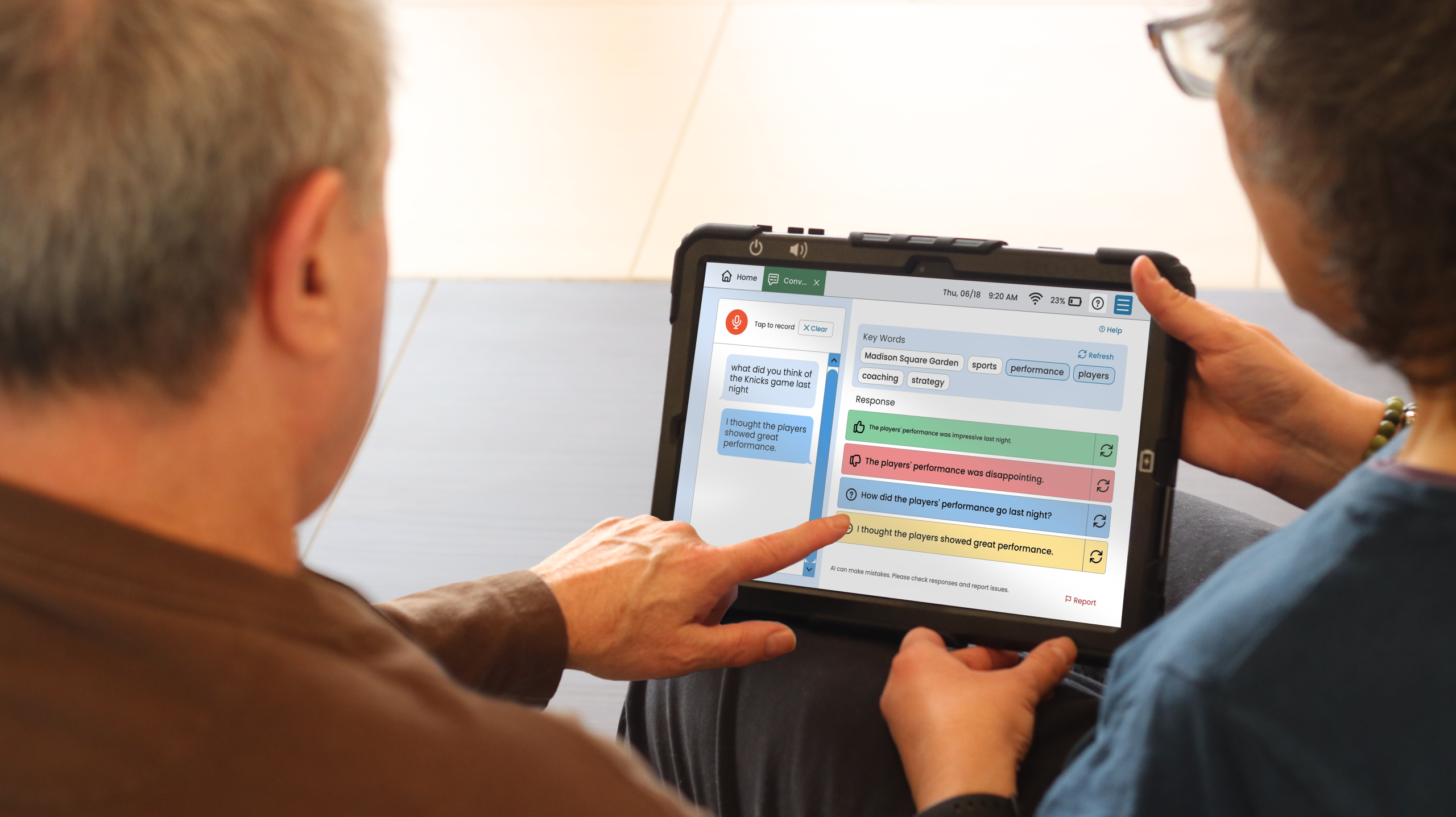
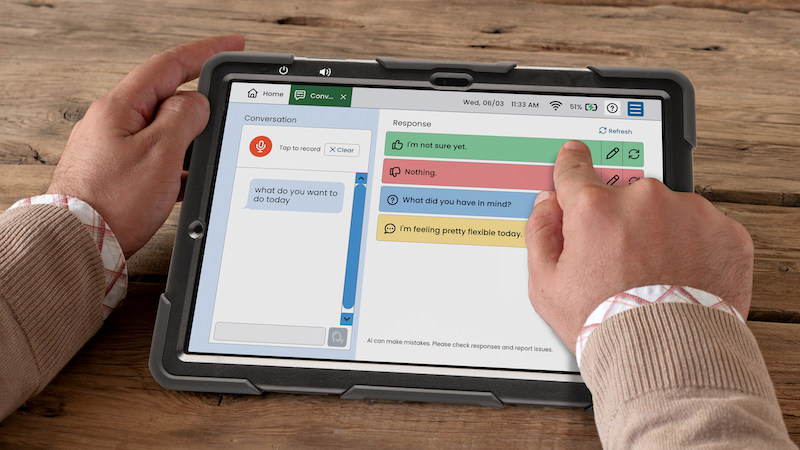
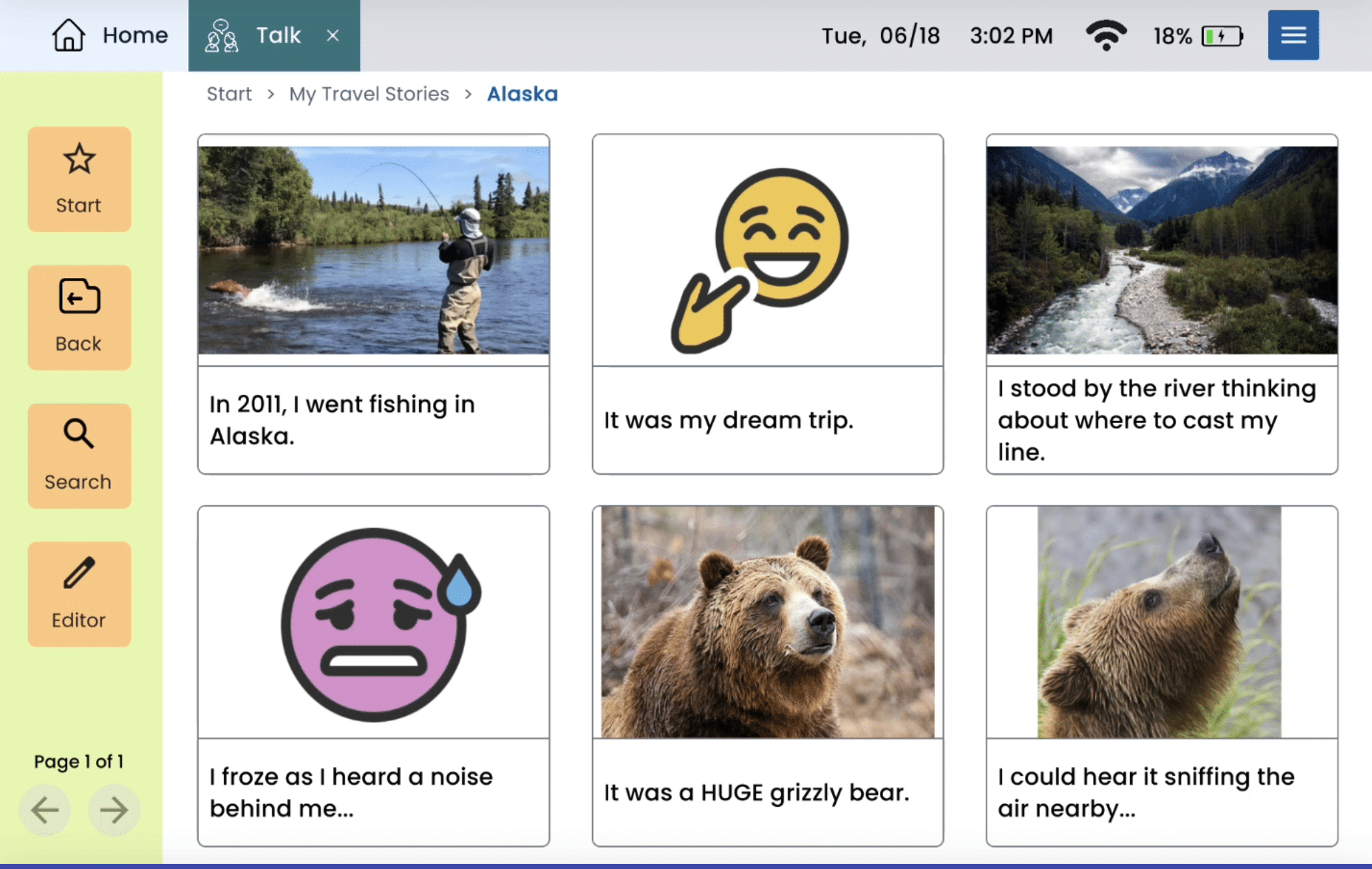
And on days when speaking still feels effortful, a communication device can offer another way to get a thought across in the moment. It’s not a replacement for the words someone is working to reach. Instead, think of it more like a bridge that’s there to keep communication moving while those words are still coming back.
8. Keep practice short and consistent
A few minutes done regularly beats a long session done every once in a while.
Practice doesn’t need to be perfect to count. A few names, one familiar phrase, a song, a two-minute conversation about dinner — it all adds up. Progress with aphasia tends to be gradual, and that’s okay. The goal is connection and confidence, not a flawless performance.
9. Practice with others, not just at home
Practicing with one trusted person is valuable. So is practicing in a group — where the expectations feel different, and so does the connection.
Whether you’re living with aphasia or supporting someone who is, Lingraphica’s Join In Aphasia community can be one of your go-to online meetup groups for connection and support.
Curious to learn more? Our free aphasia webinars cover topics like communication, brain health, and caregiver support.
Aphasia practice at home can be simple. A few minutes, a familiar phrase, a favorite song, or a real-life moment can all make a difference.
Start with whatever feels most manageable today, and go from there.
About Contributor
 Lauren Hermann, MS, CCC-SLP
Guest Contributor
Lauren Hermann, MS, CCC-SLP
Guest Contributor
Contributors
Lauren Hermann, MS, CCC-SLP
Guest Contributor
Categories
Subscribe to newsletter
Share