



“I’d tell other people with primary progressive aphasia what everybody said to me: get a device in your hands early. I know you don’t think you need it now…but there’s so much benefit to being able to build and customize the device so that you can get the most out of it. And you can only do that when you’re at a certain stage.”
– Jason Pine, person living with primary progressive aphasia
Primary progressive aphasia (PPA): an unexpected diagnosis
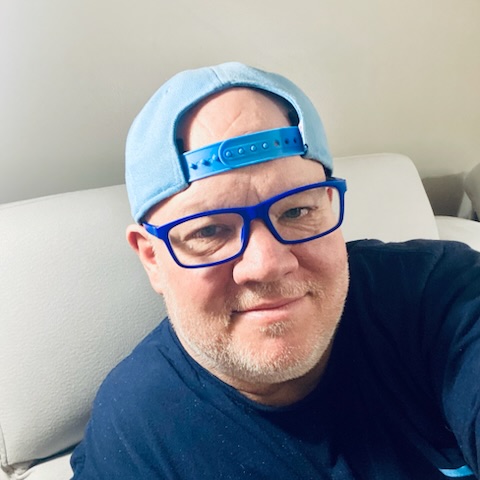
Jason Pine, 54, has always loved bringing people together. For years, he’s helped run a campground in Northern Michigan alongside his wife, Aneta, and a group of friends. Whether he’s hosting a euchre tournament or karaoke night, Jason leads campers to create lifelong happy memories.
But after a heart attack in 2021, Jason noticed he was having trouble finding the words he wanted to say. As someone whose life centered around conversation and community, he knew something wasn’t right. He bounced between doctors, who reassured Jason that his word-finding issues were probably related to the trauma of his heart attack.
Over the following year, he also began mixing up words, verb tenses, and numbers. After a series of additional tests, Jason received a life-changing diagnosis in 2022: primary progressive aphasia (PPA).
“It was devastating,” Jason says. “I remember being in the middle of a ski resort the day after I found out. I was so worried about what this meant for my wife and two young kids.”
Finding a community of people with PPA through Lingraphica
Jason began searching everywhere for more information about primary progressive aphasia. He came across the Lingraphica Community. There, Jason soon found an incredible sense of support amongst others living with PPA.
“Without this community, I don’t know if I’d still be here, to be honest with you,” Jason shares. “The goal [of the Lingraphica Community] is to take away the isolation of PPA. I think you ask anybody that’s been on these groups […] and they don’t feel alone. They don’t feel helpless. And we learn so much about our situation and the disease through those sessions — more than through our doctors or SLPs or anything.”
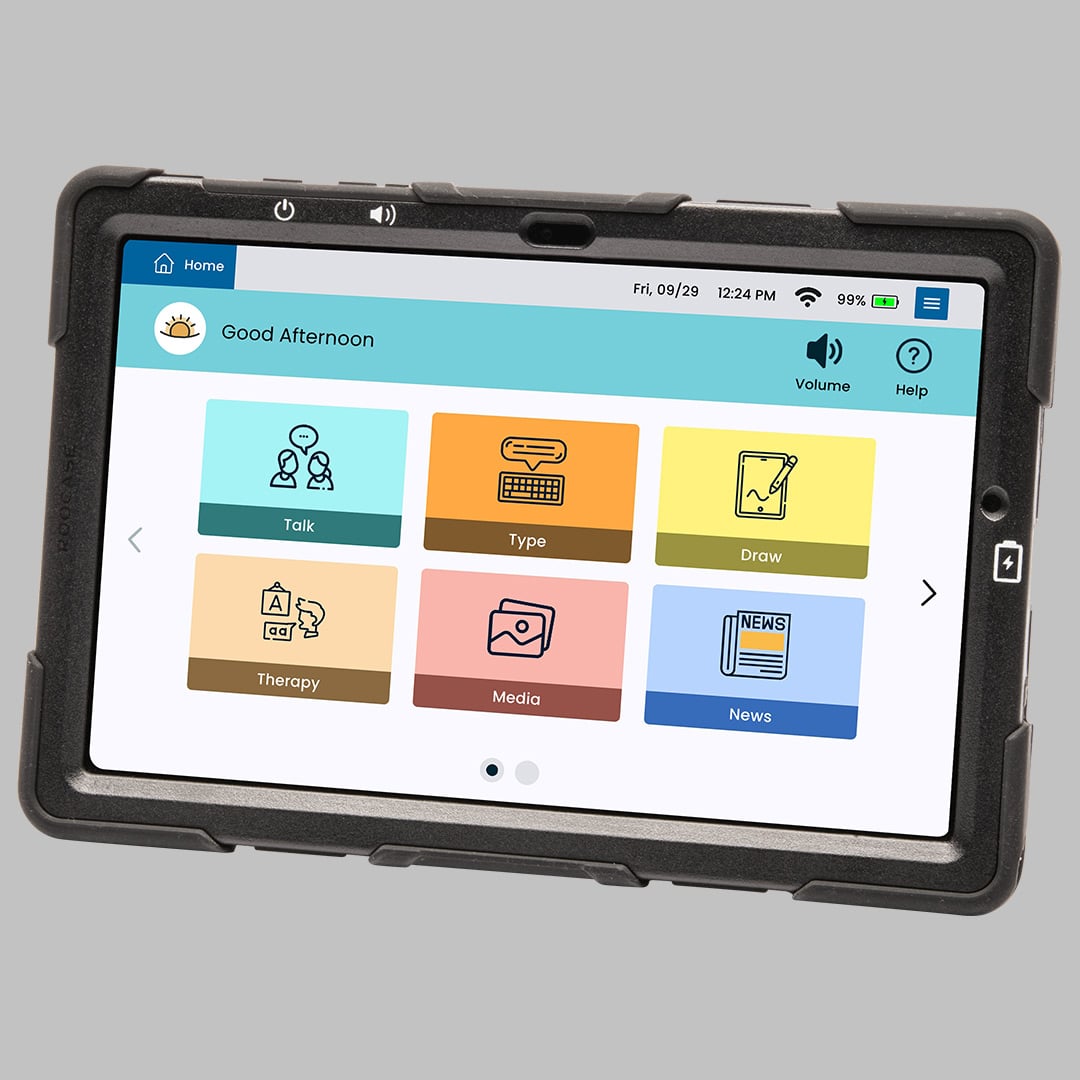
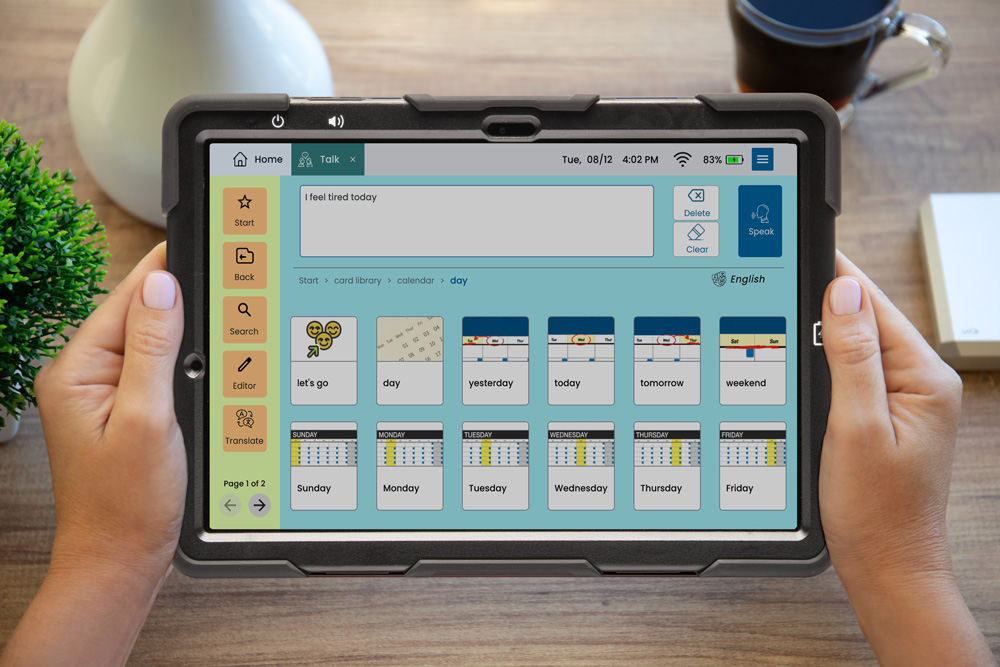
Through the Lingraphica Community, Jason began to meet more people with PPA who were using communication devices (also known as “augmentative and alternative communication” or “AAC devices”). He learned more about why AAC devices are helpful for people with PPA — especially early in the diagnosis.
Research shows that starting AAC early for people with PPA can…
- Help the person stay involved in conversations and daily activities, even as language skills change
- Give the person (and their loved ones) time to practice and get comfortable with the AAC device
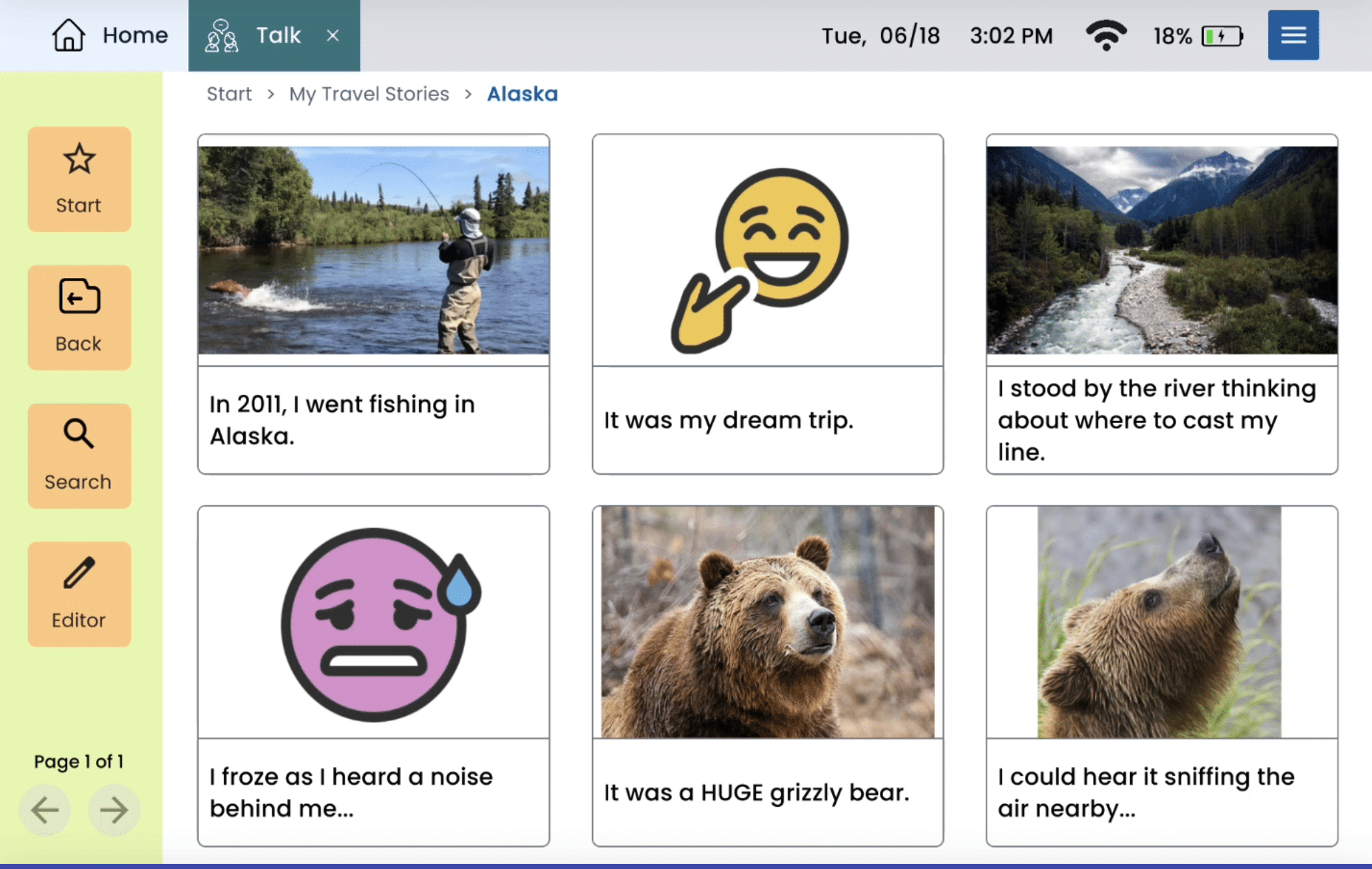
- Allow the best opportunity for AAC personalization before the person’s speech changes — like preserving your voice and stories with pictures, videos, and audio recordings
Starting AAC early can boost confidence and reduce frustration with the device in the future, when it’s relied on more heavily for communication (Fried-Oken et al., 2015).
At first, trying to personalize his AAC device felt difficult and emotional. But as Jason’s language abilities changed, he started to understand just how important his device would become.
For Jason, using the device early wasn’t just about communication — it was an act of love for his family and a step toward protecting their quality of life.
Now, he’s working hard to add more of his favorite stories, restaurants, and even conversation starters to his AAC device. “I feel more hopeful now that I’m relying on the tablet,” he shares.
How Jason uses his AAC device to reduce neurofatigue from PPA
Like many people with primary progressive aphasia, Jason experiences neurofatigue (also called “brain fog”). Jason’s brain needs to work extra hard so that he can communicate, concentrate, and manage everyday tasks. This leaves him feeling exhausted — physically and mentally — after even a short time of talking with people.
Jason finds himself constantly weighing which activities might zap his energy throughout the day — even enjoyable ones, like spending time with friends.
But because he’s not one to be left out of any conversations, Jason quickly discovered that his AAC device could help him find relief from neurofatigue.
Having a “backup option” for speaking helps Jason conserve energy and avoid shutting down if communication becomes harder throughout the day.
“Offloading communication — even just a little — makes such a huge difference for me fatigue-wise,” Jason explained. “Just being able to use the tablet when I need it helps me be able to stay out longer, and to have more conversations. Having that weight lifted off of me is huge.”
From feeling hesitant to becoming an advocate for using AAC
Since his primary progressive aphasia diagnosis, Jason has slowly begun to integrate his AAC device into everyday life and get more comfortable being seen with it in public.
His first real test was a trip to the bank. He used his device to help make a deposit — and relieve the anxiety he felt about getting every word out correctly.
From that point forward, he began looking for more chances to practice and grow more comfortable with using his device.
And after an unexpected trip to the hospital where he struggled to speak because of neurofatigue and pain, he was grateful to have his AAC device with him.
“I was resistant when I first got my AAC device,” Jason admits. “But now, I say get it in your hands as soon as you can. I know you don’t think you need it now…but there’s so much benefit to being able to build and customize the device so that you can get the most out of it. And you can only do that when you’re at a certain stage.”
Jason’s story is proof that even in the face of primary progressive aphasia, communication — and connection — are still possible. All it takes is the right support at the right time.