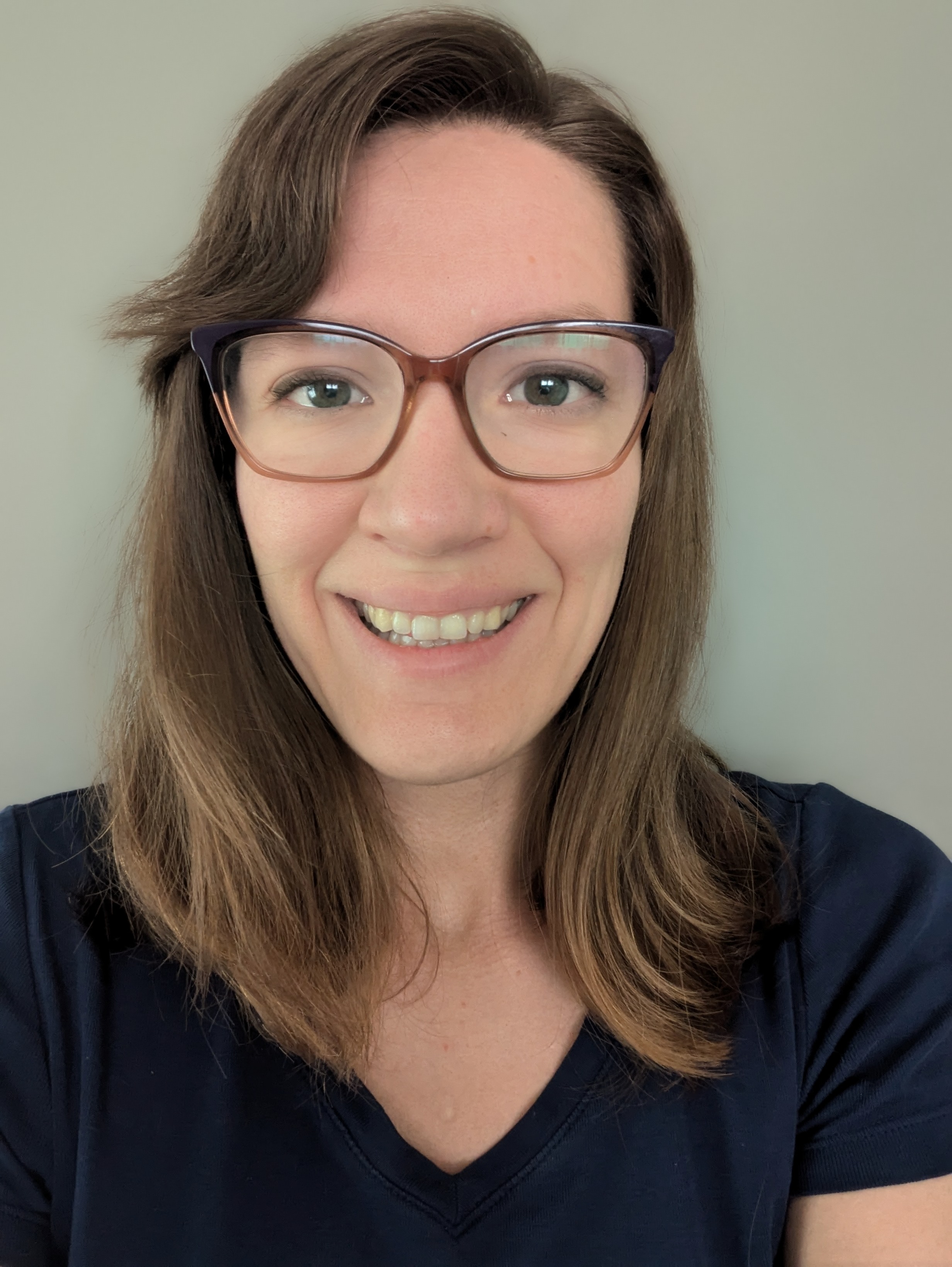




“Because of Lingraphica, I feel much more comfortable with AAC. I’ve grown as a therapist.” – Adelaide Archer, SLP
Finding her confidence with AAC
Adelaide Archer is a speech-language pathologist at a stroke and traumatic brain injury-certified hospital in New Braunfels, Texas. Her caseload spans both inpatient rehab and the outpatient setting, where she works with a wide range of adult patients.
But for years, one thing made her uneasy: AAC.
“At first, I definitely did not feel comfortable with AAC,” she told us.
That uncertainty came into sharp focus when she met Jerry, a man living with global aphasia.
Jerry had already been through months of traditional aphasia therapy with other speech therapists, but progress was slow. Adelaide hesitated to introduce AAC, unsure if it would help or just add another layer of complexity and frustration.
But she could see that Jerry’s communication needs were urgent. He had so much to say, but the words just wouldn’t come.
Adelaide knew she needed to try something different.
Embracing AAC with Lingraphica’s support
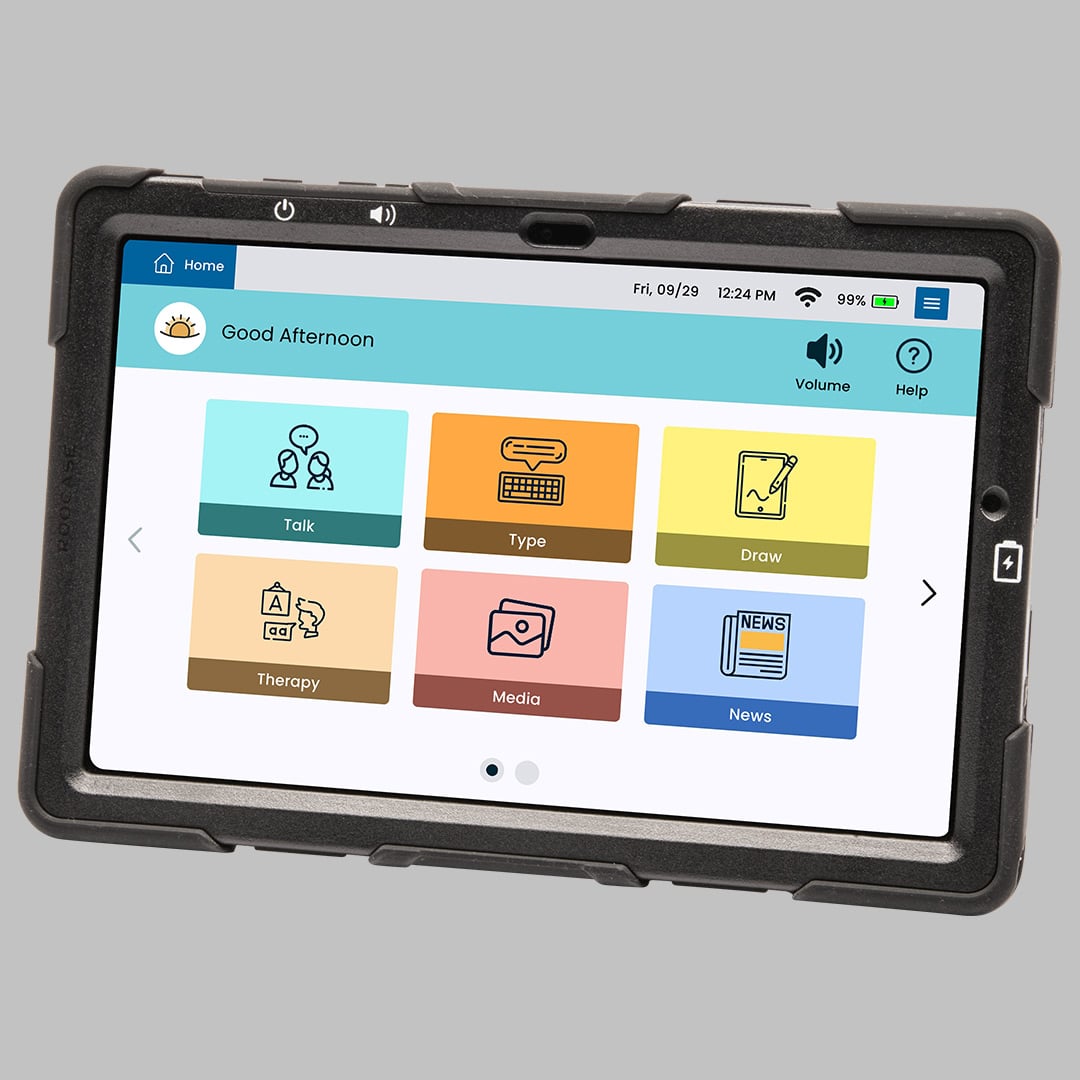
Determined to better serve patients like Jerry, Adelaide took her AAC education into her own hands. She joined the Lingraphica Certification Program (LCP), which gave her access to a loaner device, in-depth training, and a supportive community of SLPs — all for free.
Adelaide started using the device with Jerry in outpatient therapy.
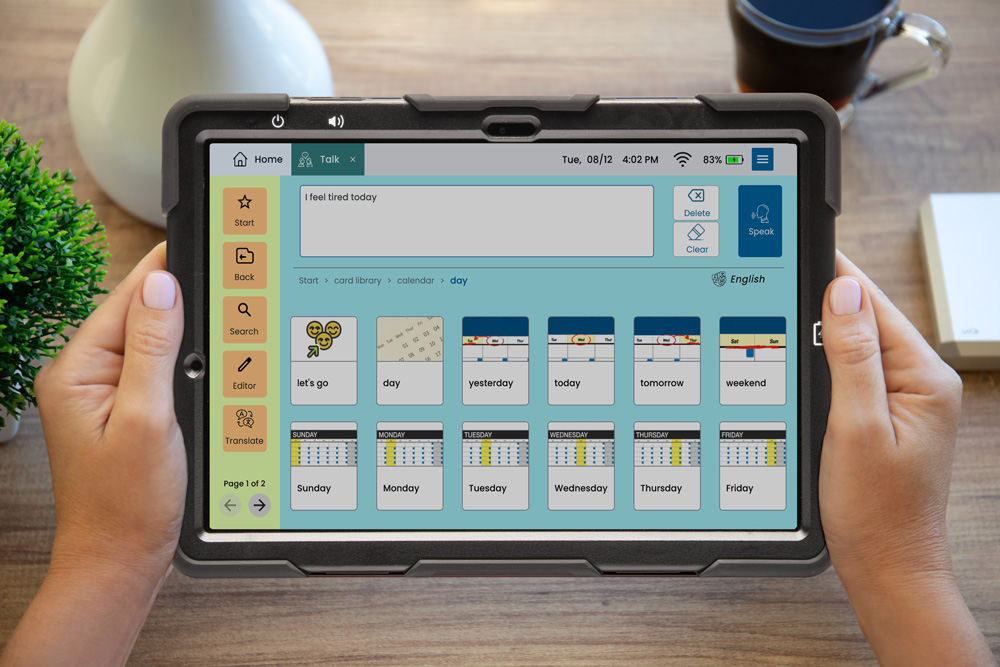
She kept things simple at first, customizing the device to Jerry’s needs and hiding extra features that might feel overwhelming to him. Adelaide eased Jerry in by using the device as a therapy tool in the beginning.
She used the device for sentence completion, yes/no questions, and modeled responses. “This wasn’t any different than pretty much any other rehab that you do, it’s just that it was an alternative voice,” she told us.
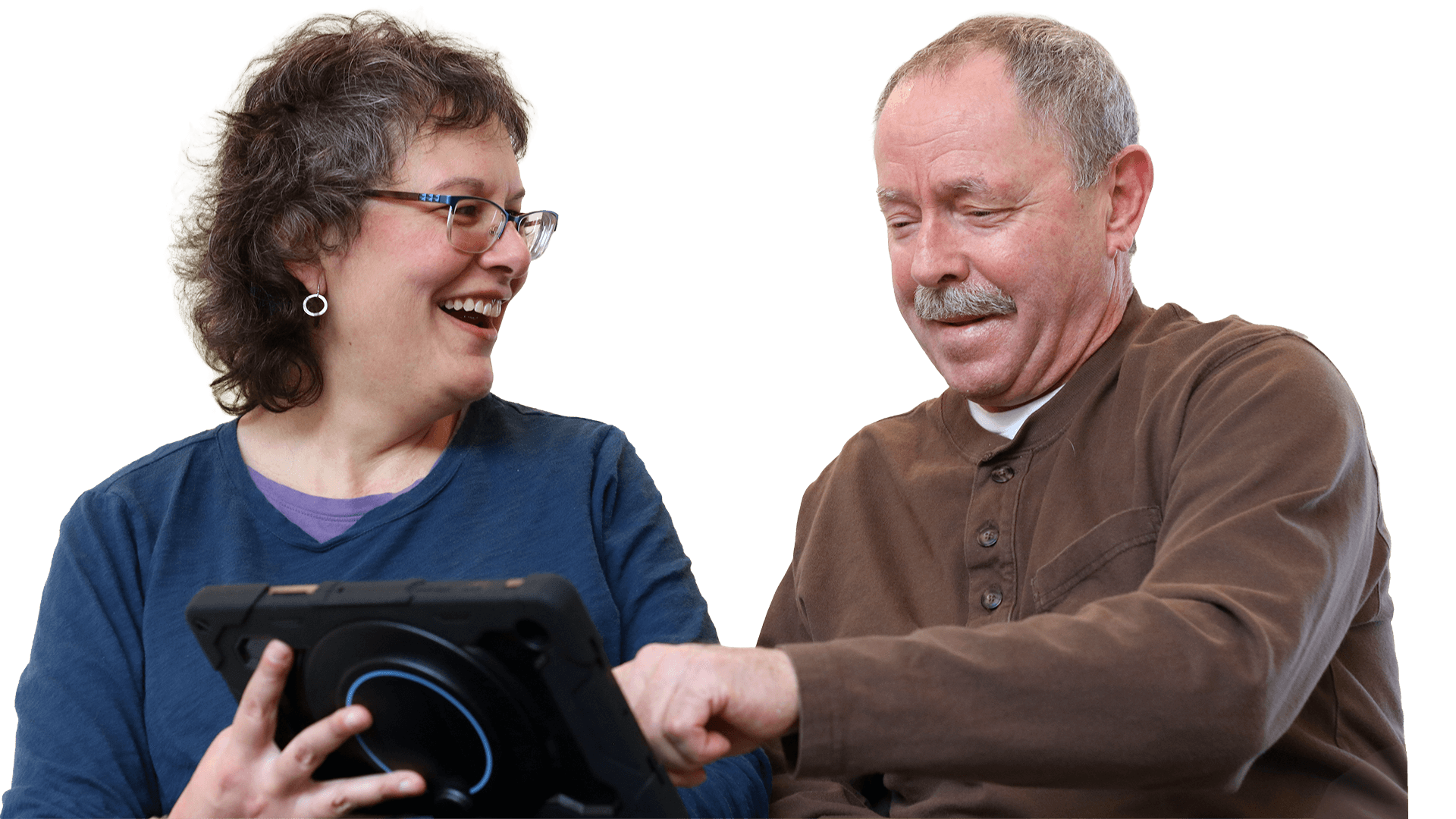
Crucially, Adelaide also involved Jerry’s wife from the beginning of their AAC journey. She taught her how to use the device, edit vocabulary, and support Jerry’s communication at home.
The impact was truly undeniable.
With AAC, Jerry began to communicate wants and needs that had been locked away for months. “His wife was like, ‘I didn’t know that he wanted salad one day,’” Adelaide remembers. “She was so excited.”
One breakthrough moment came at a restaurant. Jerry’s wife stepped away from the table, and when she returned, Jerry had a cup of orange juice in front of him. She had no idea how he ordered it, but he did — either verbally or through the device. That was a huge win.
As Jerry’s confidence grew, so did Adelaide’s.
She started using AAC earlier on with other patients, not just as a “last resort” with patients who had been struggling with limited speech for months or years.
Bringing AAC home
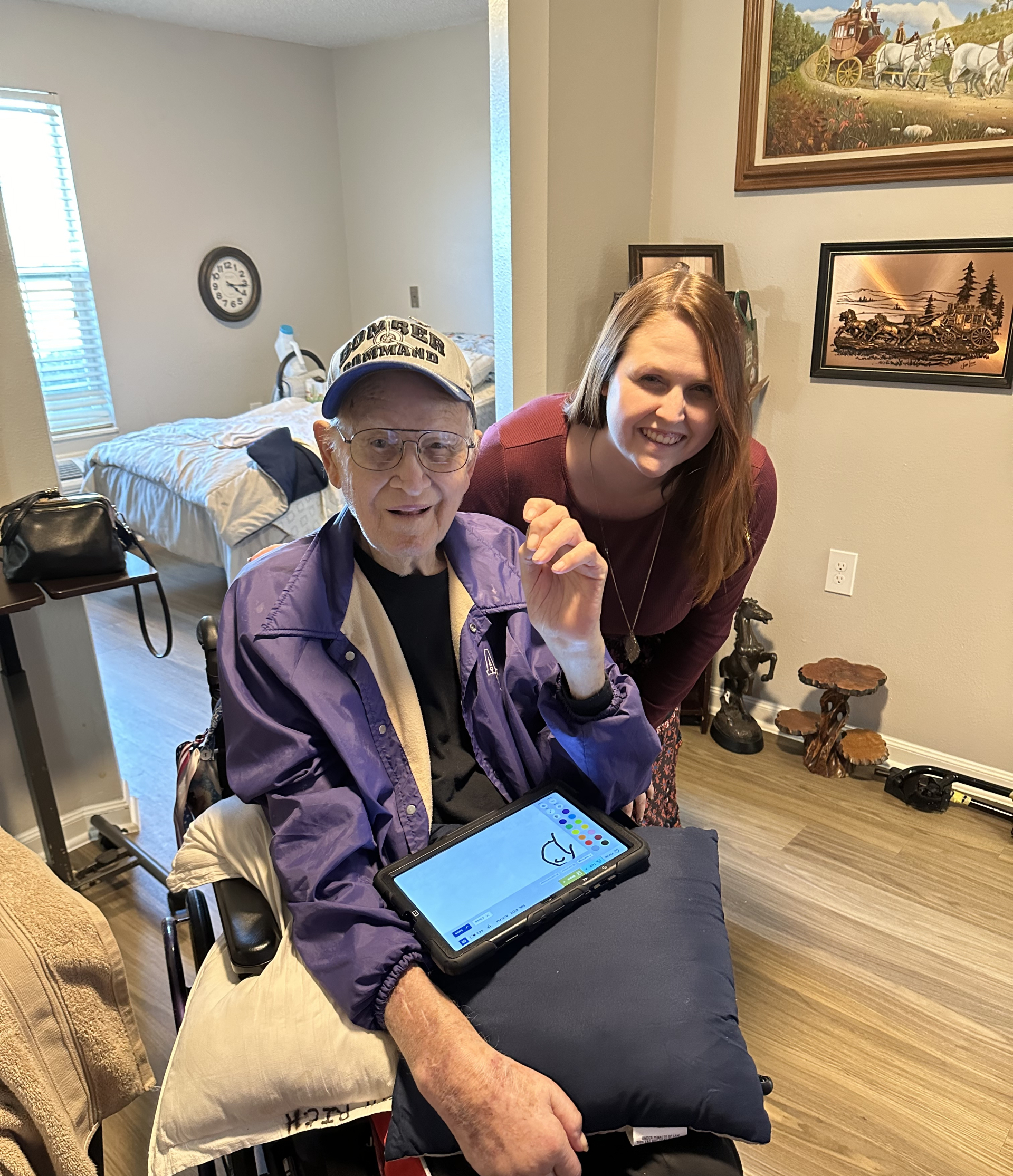
When Adelaide’s own grandfather, Ken, developed dysarthric speech after multiple TIAs and falls, she felt empowered to try an AAC with him.
…and we’re talking about introducing a brand new AAC device to a man who was 100 years old. (No small feat, even though Adelaide says he’d always been tech-savvy!).
Adelaide drove ~2 hours to meet her grandfather, programmed the device with his favorite phrases, showed him how to use the Draw app like his own personal whiteboard, and then did something truly special…
Adelaide and her grandfather chat about his craving for the veggie plate at a local restaurant.
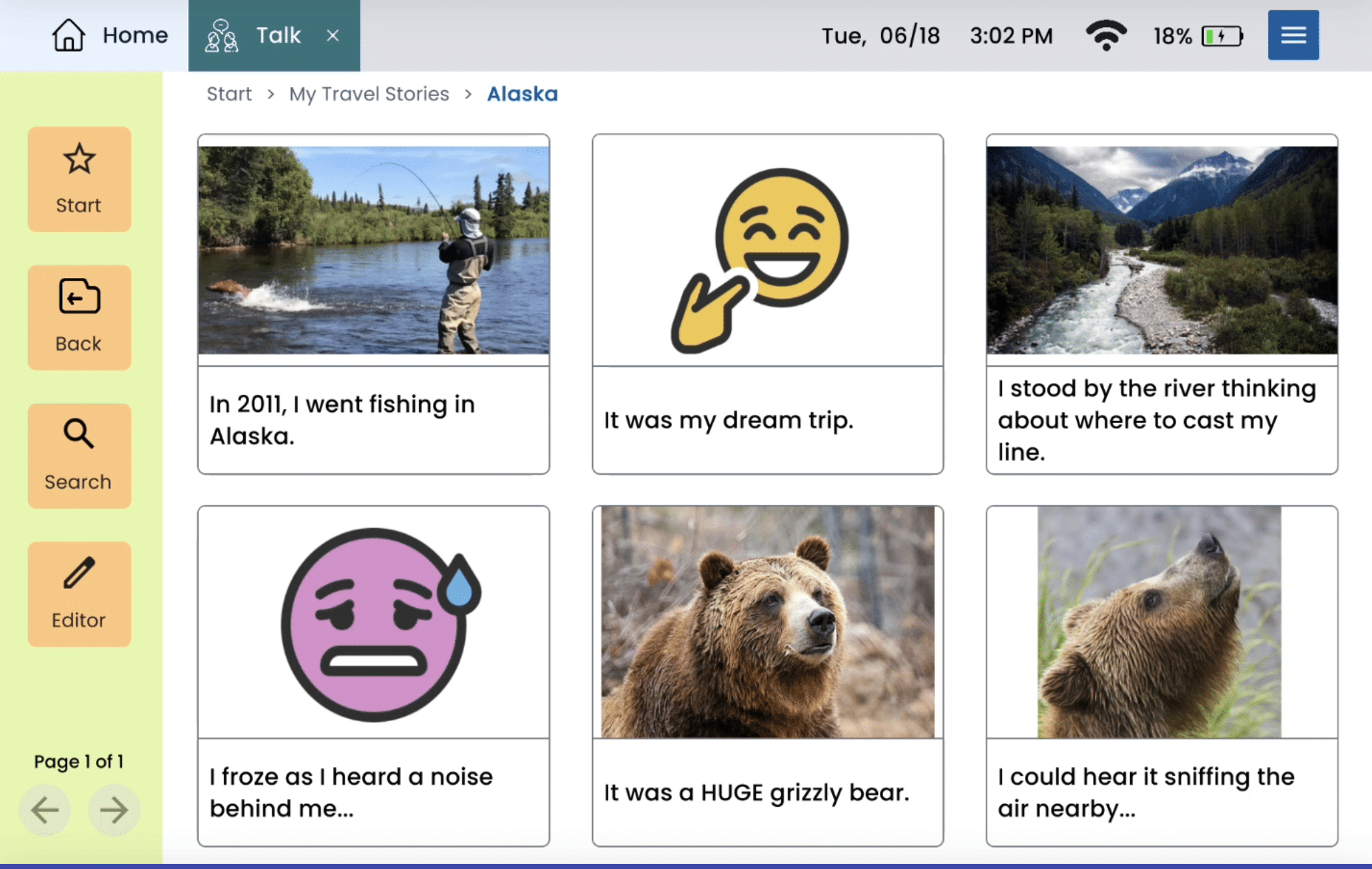
…see, for Ken’s 100th birthday, Adelaide’s family made a video sharing his life story as a gift. It was narrated by his grandkids, and then posted on YouTube for the whole family to watch.
So, Adelaide set up her grandfather’s AAC device so that he could instantly share his life story video with caregivers and visitors.
“For the last two weeks of his life, any nurse who would stop…he shared it,” Adelaide recalled. She said that as their family’s historian, it meant the world to her grandfather to be able to share his story with everyone.
Adelaide today
Now, Adelaide champions AAC for patients and families, especially in rural and underserved areas. She knows she’s not alone:
“Because of Lingraphica, I feel much more comfortable with AAC. I’ve grown as a therapist…It’s been a wonderful, wonderful resource to have.”
AAC is, at its core, a bridge to connection, confidence, and new possibilities.
And that bridge is designed for SLPs, families, and anyone who wants to be heard.