



What is Video Assisted Speech Technology (VAST™)?
Published on Dec 15, 2019
Video Assisted Speech Technology (VAST™) uses multimodal cues — audio, articulation video-visual, and written — to support speech production in people with acquired apraxia of speech. This article explains how VAST™ works, what the research shows, and how to implement it in your clinical practice.
Video Assisted Speech Technology (VAST™) is a treatment approach for acquired apraxia of speech (AoS). It was developed by speech-language pathologist Darlene Williamson, through her work at the Stroke Comeback Center, and in collaboration with her son, Jeff Williamson.
A related approach has been studied under the term “speech entrainment” (Fridriksson et al., 2012), which demonstrated that audiovisual mimicking of a speech model roughly doubled speech output when compared to spontaneous speech in patients with Broca’s aphasia.
VAST™ applies similar principles in a clinical and home-practice context by:
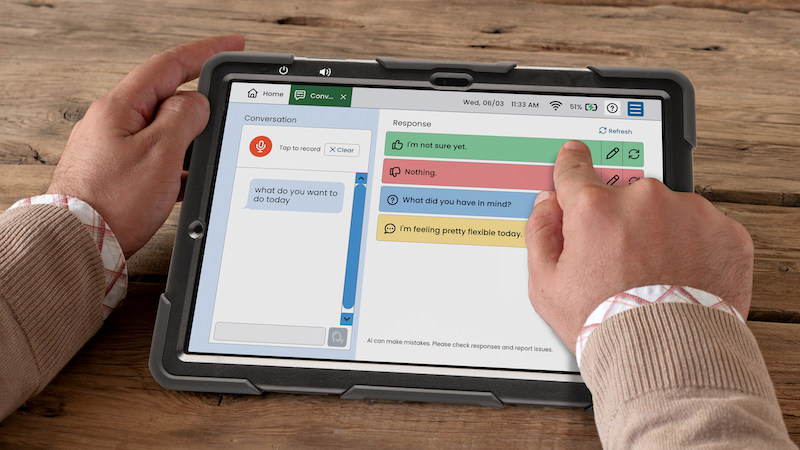
- Using multi-modal stimulation, which includes audio, articulation video-visual, and written cues to facilitate imitation of model production
- Integrating the principles of motor learning by providing opportunity for unlimited repetitions of practice and feedback
- Varying the complexity of target stimuli as appropriate
- Beginning with familiar, serial tasks (counting, days of the week) and expanding to word combinations, contrasts, compound words, phrases, and sentences
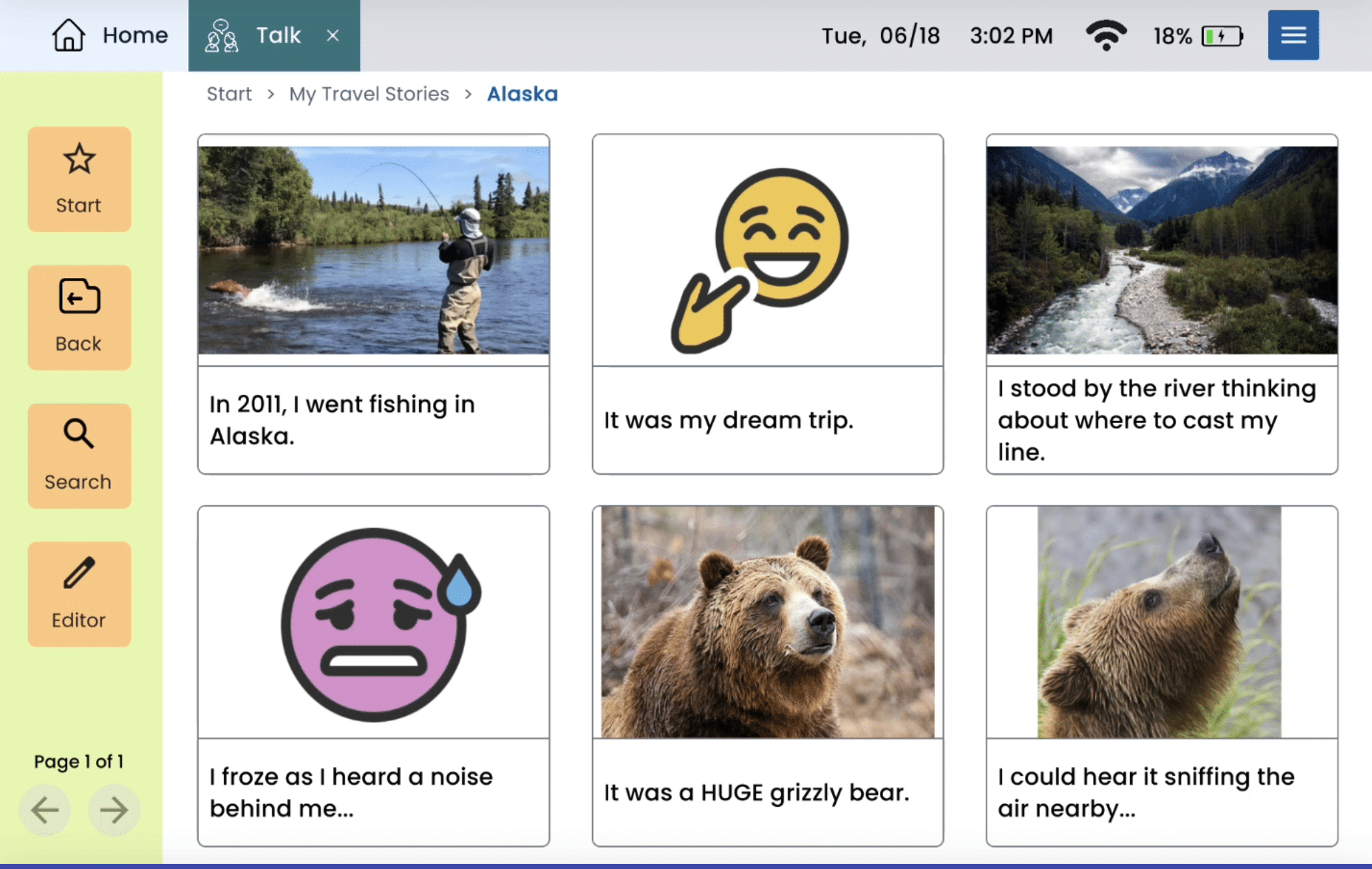
- Incorporating relevant vocabulary and script training as appropriate
- Providing easy access for practice via mobile platforms
Exploring the current evidence on Video Assisted Speech Technology (VAST™)
The evidence supporting VAST™ and speech entrainment is preliminary but promising, consisting primarily of small single-subject experimental designs and uncontrolled case series. No large-scale randomized controlled trials have been conducted on VAST™ specifically. Clinicians should consider VAST™ as one tool within a broader treatment plan, which may also include well-studied articulatory-kinematic approaches such as Sound Production Treatment (SPT).
Key findings from the research include:
- Patients with Broca’s aphasia produced a significantly greater variety of words during audiovisual speech entrainment compared to audio-only or spontaneous speech conditions (Fridriksson et al., 2012).
- When practicing independently with computerized materials, participants improved more quickly with audio + articulation video stimuli compared to audio + static drawing alone. However, the study did not detect a statistically significant difference across participants (Ball et al., 2018).
- All levels of severity may be considered for this approach; however, individuals with more severe AoS will likely continue to have diminished intelligibility.
- A self-administered computer therapy trial for AoS found significant improvement in treated words, with gains largely maintained after withdrawal of intervention, though generalization to untrained words was limited (Varley et al., 2016).
How to Begin Implementing VAST
VAST™ is best used as a supplement to clinician-directed therapy rather than as a standalone intervention. Good candidates typically present with nonfluent speech and sufficient auditory comprehension to follow the audiovisual model.
Lingraphica SmallTalk™ video apps and TalkPath™ Therapy speech articulation video exercises are free to use and a great way to begin implementing this technique among clients who are a good fit.
Lingraphica’s articulation videos are also included on Lingraphica AAC devices inside the “Therapy” tool. You can even create personalized articulation videos for your clients using the Media tool. Both types of videos can be a great option for home practice or for your client to self-cue their speech.
References:
Ball, A.L., de Riesthal, M., & Steele, R.D. (2018). Exploring treatment fidelity in persons with aphasia autonomously practicing with computerized therapy materials. American Journal of Speech-Language Pathology, 27, 454-463.
Fridriksson, J., Hubbard, H. I., Hudspeth, S. G., Holland, A. L., Bonilha, L., Fromm, D., & Rorden, C. (2012). Speech entrainment enables patients with Broca’s aphasia to produce fluent speech. Brain: a journal of neurology, 135(Pt 12), 3815–3829. https://doi.org/10.1093/brain/aws301
Varley, R., Cowell, P. E., Dyson, L., Inglis, L., Roper, A., & Whiteside, S. P. (2016). Self-Administered Computer Therapy for Apraxia of Speech: Two-Period Randomized Control Trial With Crossover. Stroke, 47(3), 822–828. https://doi.org/10.1161/STROKEAHA.115.011939
About Contributor
 Lingraphica Team
AAC Experts
Lingraphica Team
AAC Experts
Lingraphica helps people with speech and language impairments improve their communication, speech, and quality of life. Try a Lingraphica AAC device for free.
Contributors
Lingraphica Team
AAC Experts
Categories
Subscribe to newsletter
Share