




Using AAC, Photos, and Drawings to Communicate Successfully
Published on Jul 17, 2020
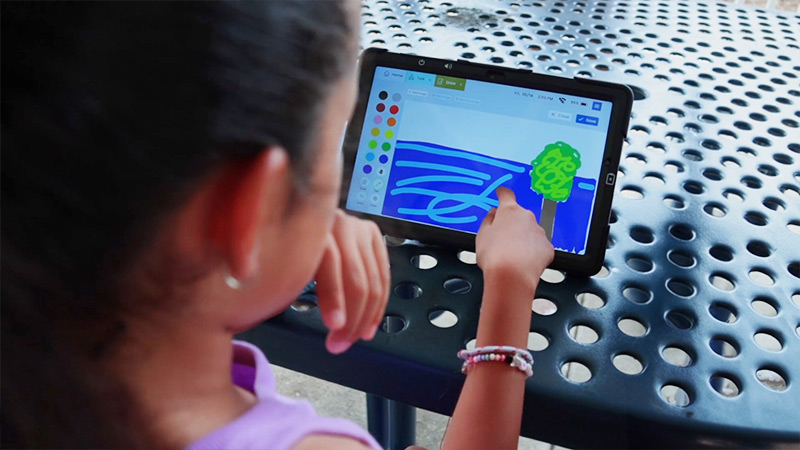
Research suggests that specific AAC design features can make a meaningful difference for people with aphasia during storytelling — and the findings around photos, text, and verbal speech may surprise you. This summary breaks down what the evidence shows and how to apply it with a Lingraphica device in clinical practice.
About this research summary
This summary of “Supportive Narrative Retells for People With Aphasia Using Augmentative and Alternative Communication: Photographs or Line Drawings? Text or No Text?” (Griffith et al., 2014) was written by Dr. Richard Steele, a senior researcher at Lingraphica who retired in 2024. It reflects his interpretation of a published research study and is intended for educational purposes.
Research findings and clinical best practices may change over time. These summaries are generally maintained as part of our educational archive and are not routinely updated. We encourage readers to review the original research publication and consult current evidence when applying findings in clinical practice.
Speech-language pathologists with clinical or patient questions about AAC are invited to consult with our SLP Clinical Education team.
Key Takeaways
- Availability of a high-tech AAC device does not reduce verbal output in narrative retell
- Patients with aphasia can successfully use an AAC device to support storytelling
- The incorporation of text and personally relevant photos were helpful tools for people with aphasia
- Line drawings also support narrative retell when personally relevant photos are not available
Exploring the research
Researchers acknowledge that the design of AAC plays an important role in the user’s proficiency and success. However, evidence showing which features are most beneficial for people with aphasia is often lacking.
Early AAC devices were primarily designed to support people with motor speech impairments and intact language skills, such as those with ALS. As AAC has now become a more common tool for people with aphasia, updated AAC designs have incorporated features such as visual scene displays and a general tendency toward using photographs over line drawings. This research study aimed to examine which features were beneficial for people with aphasia, including the incorporation of text and the use of photographs vs. line drawings.
This research was a case series with four patients with moderate-severe Broca’s aphasia. The goal was for each patient to share four narratives with an unfamiliar listener, with the support of an AAC device.
For each patient, the device was set up in four distinct ways; one for each narrative. The variables included text or no text and photographs or line drawings, each matched with either of the other variables for a total of four configurations.
The participants were encouraged to share their narratives through verbal speech and/or with the assistance of a pre-programmed AAC device.
Interesting findings of the case series showed that all four adults used speech as their primary mode of communication, despite the availability of the device. This supports the notion that AAC does not hinder verbal speech.
However, all participants reported that having the AAC device was helpful in order to repair breakdowns or communicate additional information in their narratives. Three out of four people preferred the presence of text.
Finally, the participants reported that both the photos and line drawings were helpful, but in practice used the photographs more frequently. One point discussed in the research was the use of personally relevant photographs as opposed to general photographs. Personally relevant photos stand out as the preferred option; however, when unavailable, it appears that a non-personally relevant photograph may not hold a clear advantage over a line drawing. The researchers acknowledged that more further studies in the area of AAC design are warranted.
Incorporating the Research into Clinical Practice with Lingraphica
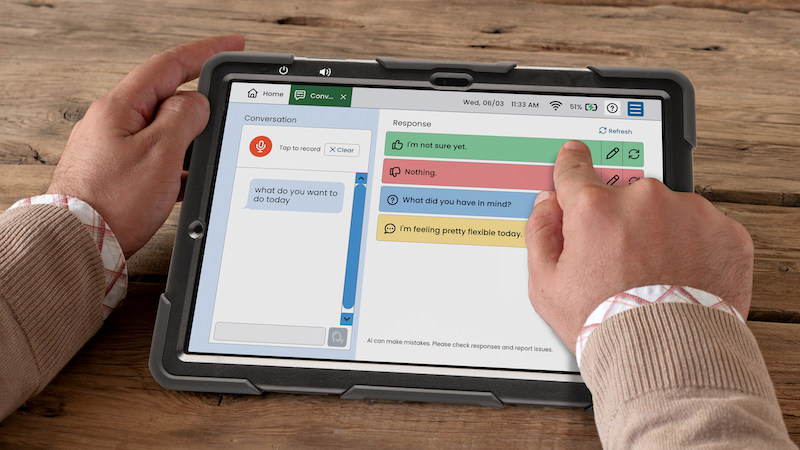
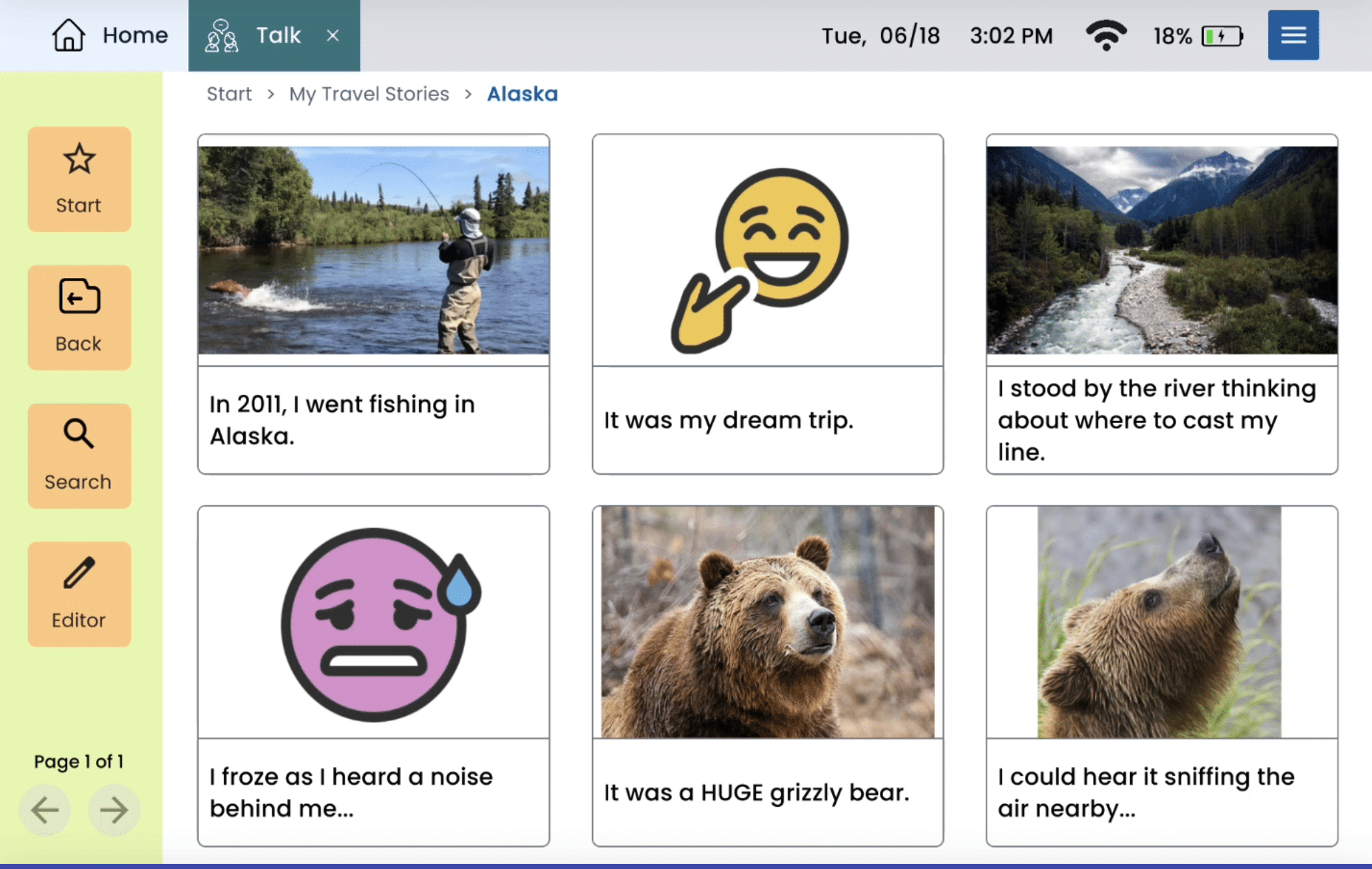
Lingraphica’s AAC devices are already built to incorporate the features mentioned in this research. All icons incorporate text, and the devices come pre-programmed with both photographs and line drawings.
As a clinician, when using a Lingraphica AAC device with a patient, one critical step you can take as highlighted in this article is to begin adding personally relevant photographs immediately. Because these were shown to be preferred by people with aphasia, adding them to the device is likely to motivate your clients to use their devices in meaningful ways.
This article also highlights the practice of narrative retell, which is a tool you can incorporate when working with a Lingraphica AAC device. One recommendation is to work with your patient and their family to identify some key anecdotes from their lives that they enjoy sharing, and input photos and text into the device so that they can share these stories with others. For higher level users, encourage your patients to use a combination of speech and support from the device to maximize their storytelling abilities.
This study is also a great example to share with clients who are hesitant to use technology in favor of focusing solely on verbal speech. This is a great example of real people with aphasia who were able to use their own speech first, but achieved greater communicative effectiveness by incorporating an AAC device.
References
Griffith, J., Dietz, A., & Weissling, K. (2014). Supporting narrative retells for people with aphasia using augmentative and alternative communication: photographs or line drawings? Text or no text?. American journal of speech-language pathology, 23(2), S213–S224. https://doi.org/10.1044/2014_AJSLP-13-0089
Byline: Dr. Richard Steele
Dr. Richard Steele is a co-founder of Lingraphica and helped pioneer the development of communication technologies for people with aphasia and other communication challenges. During his more than three decades with the organization, he contributed to research, product innovation, and professional education, helping translate emerging evidence into practical insights for clinicians and families. Dr. Steele retired from Lingraphica in 2024.
Research Article Disclaimer:
This article was written by Dr. Richard Steele, a senior researcher at Lingraphica who retired in 2024. It reflects his summary and interpretation of a published research study and is intended for educational purposes.
Research findings and clinical best practices may change over time. These summaries are generally maintained as part of our educational archive and are not routinely updated. We encourage readers to review the original research publication and consult current evidence when applying findings in clinical practice.
Speech-language pathologists with clinical or patient questions about AAC are invited to consult with our SLP Clinical Education team.
About Contributor
 Lingraphica Team
AAC Experts
Lingraphica Team
AAC Experts
Lingraphica helps people with speech and language impairments improve their communication, speech, and quality of life. Try a Lingraphica AAC device for free.
Contributors
Lingraphica Team
AAC Experts
Categories
Subscribe to newsletter
Share