



Making the Case for Earlier, Broader AAC Use in Aphasia Rehabilitation
Published on Nov 18, 2026

When should AAC come into aphasia rehabilitation?
Some argue that AAC enters aphasia therapy late, if at all, and families may worry it means recovery is over. In a viewpoint article, Dietz, Wallace, and Weissling describe this pattern and argue that AAC belongs alongside restorative therapy early in post-stroke recovery.
Here’s their case and how to apply it.
About this article summary
This article summarizes a viewpoint article by Dietz et al. (2020).
Research findings and clinical best practices may change over time. These summaries are generally maintained as part of our educational archive and are not routinely updated. We encourage readers to review the original research publication and consult current evidence when applying findings in clinical practice.
Speech-language pathologists with clinical or patient questions about AAC are invited to consult with our SLP Clinical Education team.
Key takeaways
- This is a viewpoint article. The authors report no new data.
- The authors see AAC used too narrowly. In their experience, it’s often limited to basic needs and severe aphasia, and treated as secondary to restorative therapy. They also note that these patterns may be driven in part by reimbursement and medical necessity.
- AAC and restorative therapy can work together. AAC offers a backup when words won’t come and may help with self-cueing, though the language-recovery evidence is preliminary. Proponents of constraint-induced aphasia therapy worry that AAC promotes “learned nonuse” of speech. The authors counter with a theoretical argument: Luria’s theory of inter-systemic reorganization holds that pairing a weak system with an intact one can strengthen it.
- Earlier AAC may build acceptance. The authors suggest people with aphasia and families may see AAC as the end of recovery, and early introduction could change that view.
- Partner-dependent communicators need trained partners. The authors also recommend teaching self-advocacy.
Exploring the research
The authors set out to broaden how SLPs use AAC in post-stroke aphasia rehabilitation. They draw on the Life Participation Approach to Aphasia (LPAA), published studies, and clinical experience.
How often AAC is used: In one cited conference presentation, 13% of 862 post-acute patients with aphasia and apraxia of speech received AAC, and the figure fell to 2% when patients with apraxia of speech were removed from the data (Rogers et al., 2014, as cited in Dietz et al., 2020). In another, about half of caregivers reported receiving AAC education in the first three months after stroke (Elman et al., 2016, as cited in Dietz et al., 2020). The Rogers et al. data comes from 2014, and the Elman et al. data comes from 2016.
How AAC fits with restorative therapy: The authors describe self-cueing, like pointing to a word’s first letter before saying it. Some AAC treatment studies showed gains on aphasia batteries, though these may not carry over to everyday conversation.
Why earlier: The authors compare it to a physical therapist offering a walker before a patient can walk alone. With a reliable backup, they suggest, people may feel more motivated to communicate.
What this article can and can’t tell us: It offers an argument but doesn’t test whether earlier AAC improves outcomes. The authors note that future work needs to test whether gains from AAC training are maintained
What this means for clinical practice
The authors see an early, active role for SLPs in AAC adoption for adults with post-stroke aphasia, across severity levels. They focus on early recovery and don’t name a specific care setting.
Based on the authors’ arguments and recommendations, here are several tips for you to apply at work next week:
Pair AAC with restorative goals. Present AAC as a backup for word-finding breakdowns while restorative work continues.
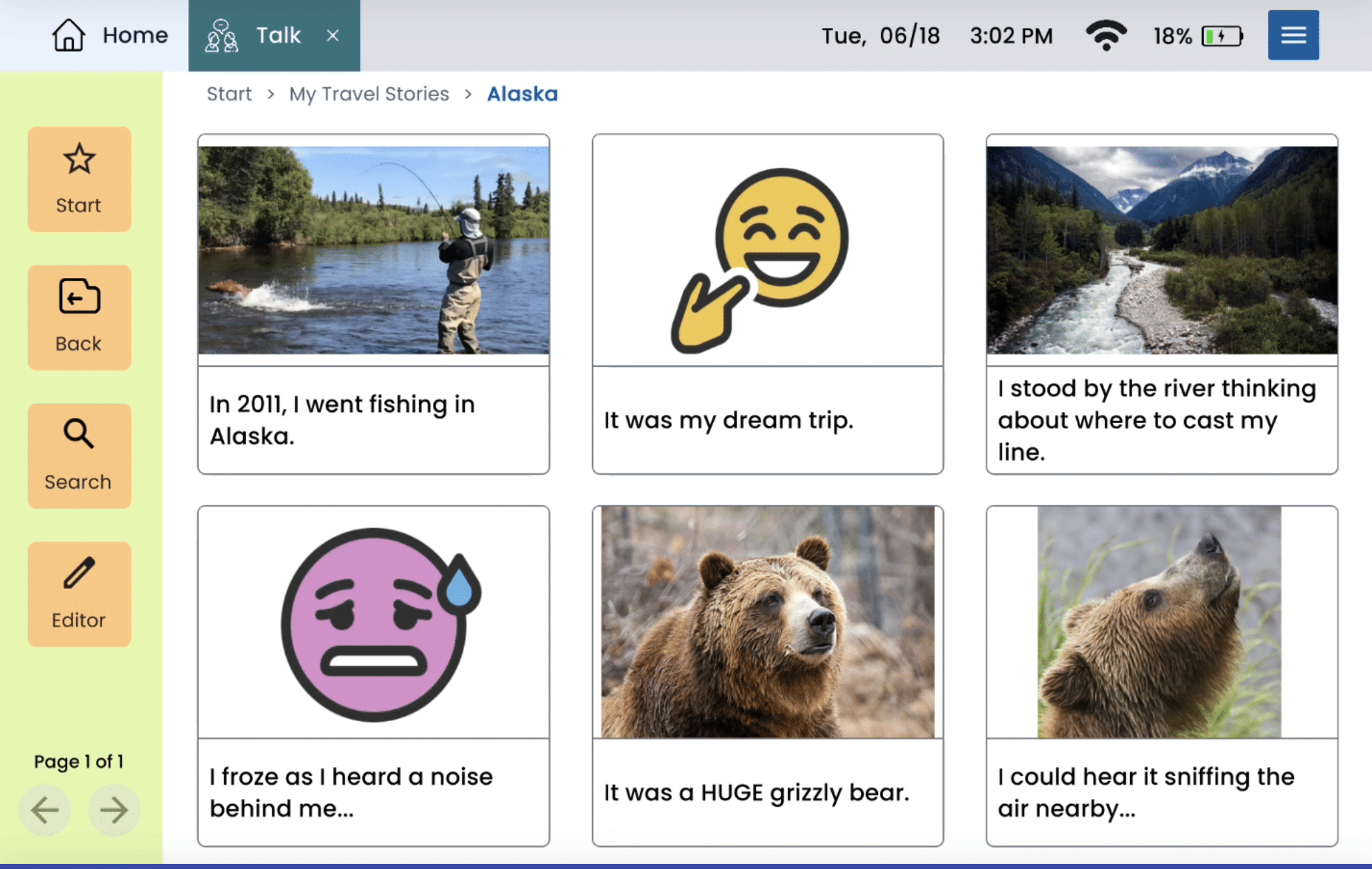
Aim for meaningful communication. Go beyond basic needs, like using phone photos to share a story. The authors note that smartphones have already made adults without disabilities “natural augmented communicators,” so photos and texts may feel familiar.
Encourage self-cueing. Invite clients to write, gesture, or point to a first letter before saying a word if the client has enough letter knowledge, or try drawing or gesture.
Talk openly about the fear. Explain that AAC can sit alongside recovery work.
Train partners and teach self-advocacy. Train the people who support partner-dependent clients, and teach clients to take charge when partners fall short.
Applying the research with Lingraphica
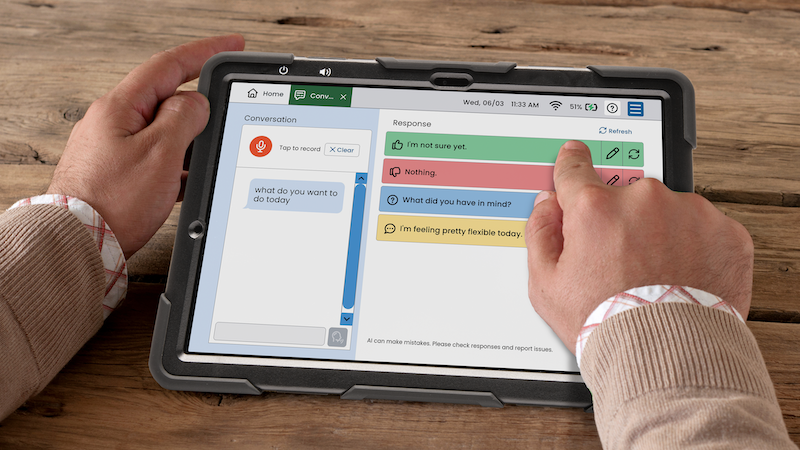
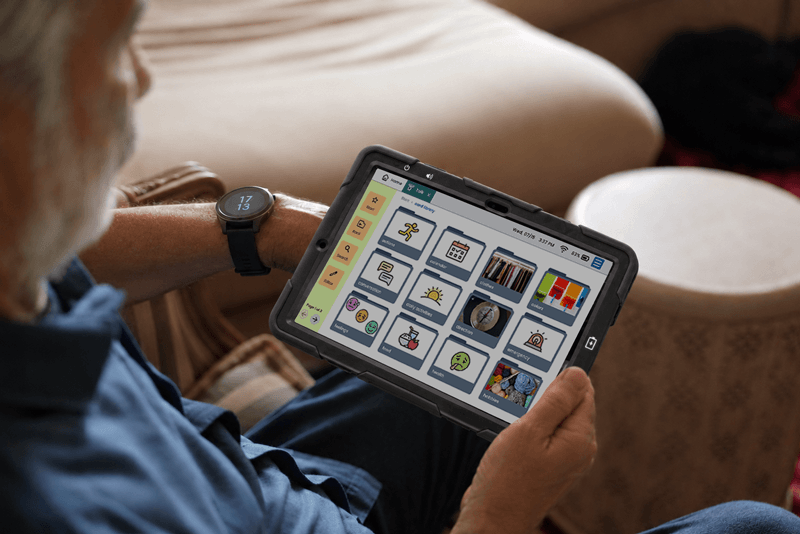
A device trial is one way to put this into practice. To introduce AAC early and involve partners, consider a Lingraphica device trial.
Lingraphica devices weren’t part of this article, but trials include 1:1 training for users and care partners, plus lifetime support after purchase. For hesitant families, Join In Aphasia offers free groups that welcome both AAC users and non-users.
Limitations and clinical considerations
- As a viewpoint, it reflects the authors’ views, and some cited studies are their own.
- Usage figures are dated conference data.
- The language-recovery evidence is preliminary and not yet shown to carry over into everyday conversation.
- It addresses post-stroke aphasia only.
Reference
Dietz, A., Wallace, S. E., & Weissling, K. (2020). Revisiting the role of augmentative and alternative communication in aphasia rehabilitation. American Journal of Speech-Language Pathology, 29(2), 909–913. https://doi.org/10.1044/2019_AJSLP-19-00041
About Contributor
 Lauren Hermann, MS, CCC-SLP
Guest Contributor
Contributors
Lauren Hermann, MS, CCC-SLP
Guest Contributor
Categories
Subscribe to newsletter
Share