





How to choose the right AAC device for your communication needs
Published on Feb 06, 2026

- What should you consider when choosing an AAC device?
- What does the AAC evaluation process look like?
- Quick guidance for SLPs
- What happens during a device trial?
- What to look for in an AAC company
- How to know which AAC device is right for you
- Common questions about choosing AAC devices
- Ready to explore your AAC options?
If you or a loved one are struggling to speak after a stroke, or navigating life with a diagnosis like primary progressive aphasia or autism, finding the right communication support can feel like stepping into a maze. With so many devices, apps, and options available, where do you even begin?
Don’t worry… it doesn’t have to be overwhelming!
In this guide, we’ll walk you through how to choose an AAC device that matches your unique needs so you don’t have to spiral down a Google rabbit hole.
What is an AAC device, and what options exist?
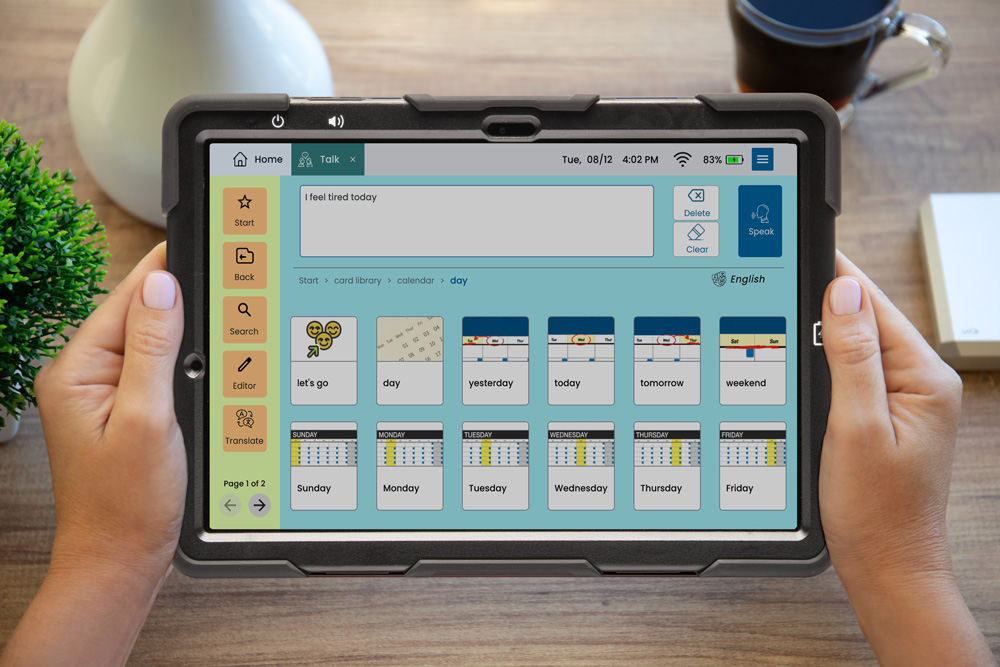
Augmentative and Alternative Communication (AAC) devices help people with speech or language impairments communicate in ways that work best for them. These tools are as diverse as the people who use them, so don’t let age or diagnosis stop you!
AAC can involve:
- Tapping on symbols or icons that “speak” for you
- Typing messages that are read aloud
- Sharing photos or drawings
- Using pre-recorded voice messages
- Combining different methods based on your comfort and skills
And these can come as:
- Dedicated AAC devices (also called “speech-generating devices” or “SGDs”)
- Tablets with specialized AAC apps
- Small, portable devices or larger screens
They can be used via touch, stylus, switches, or even eye-gaze technology.
Think of AAC devices as communication bridges. Some people need a simple footbridge, others need a highway overpass. Both get you where you need to go.
What should you consider when choosing an AAC device?
Think about laptop shopping…
As you stroll through the sea of options, you might focus more on processing power if you’re a gamer. Or maybe portability matters most because you’re always moving between meetings. Some people just want something reliable that won’t die halfway through the day.
It depends on your goals, physical preferences, and environment. The same thinking applies to AAC devices!
Here’s a simple breakdown of what to consider when making the big AAC decision:
Communication goals
What are you trying to express — and where?
- Basic needs (e.g., “I’m hungry,” “Help, please”)
- Deeper conversations with friends or professionals
- Emotion sharing and storytelling
- Specific topics like hobbies, work, or school-related ideas
Also think about your communication settings:
Are you mostly at home? Out in the community? Attending school or appointments?
Physical and sensory access
Your body matters in this decision. Can you tap a screen accurately? Is eye-tracking easier? Would bigger buttons help?
Motor access
If touch is tricky, stylus or switch access might be easier. Mounting the device or using head movement-based access can make all the difference.
Vision and hearing
High-contrast screens, adjustable text size, and audio output can help accommodate low vision or hearing impairments. If you’re sensitive to light or background noise, let your speech-language pathologist (SLP) know.
Cognitive and language abilities
Some people thrive with word prediction, while others prefer simple picture-based setups. Consider:
- How you process information
- Whether reading words or seeing symbols/pictures is easier for you
- If grammar support or spell-check helps
- How familiar or comfortable you are with technology
Environment and lifestyle
Does the device need to go everywhere with you? Or will it mostly stay on a desk?
Other things to think about:
- Battery life (Can it last all day?)
- Durability (Will it handle a few bumps?)
- Weather protection (Do you need a waterproof case?)
- Charging ease (Will a caregiver help charge it?)
Quick Tip: Choose a device that fits your lifestyle, not one that asks you to change your life for it.
Not sure where to start? Take our quick AAC Device Quiz to explore options based on your needs.
What does the AAC evaluation process look like?
Let’s take the pressure off; you don’t have to figure this out alone.
AAC evaluations are typically done by a speech-language pathologist (SLP) who will help you assess:
- Your communication needs and goals
- How you physically and cognitively interact with technology
- Where and how you’ll use the device
- Who’s in your support circle
According to the American Speech-Language-Hearing Association (ASHA), there are no prerequisites to start exploring AAC. If you’re struggling to communicate, you’re already a candidate.
Quick guidance for SLPs
When identifying AAC device candidates, there are no prerequisite skills required to begin exploring AAC. That’s pretty empowering, isn’t it?
However, there are a few key traits you can keep an eye out for to help you identify the strongest candidates for AAC:
A desire to improve communication
They’re motivated to express themselves, connect with others, and regain independence — even if progress is slow.
Supportive communication partners
Whether it’s family, caregivers, or therapists, a strong support system encourages consistent device use and helps bridge early learning curves.
Openness to trying new tools
The willingness to explore unfamiliar technologies or communication methods goes a long way in adapting and customizing an AAC system that works.
Everyone deserves the opportunity to explore AAC, regardless of age, diagnosis, or ability level.
What happens during a device trial?
Most reputable providers offer AAC trials, and that’s a huge win.
You’ll get to:
- Try different devices in real settings (home, school, therapy)
- See what feels natural, like typing, tapping, or drawing
- Involve family members or caregivers
- Test out the features that matter to you
- Decide what works and what doesn’t
You don’t need to get it “perfect” during the trial. This is your time to explore and discover what works for you.
What to look for in an AAC company
Not all companies offer the same level of service, and that support can make or break your experience.
Look for providers who offer:
✔ Free trials – Try before committing
✔ Intuitive software – Easy for users and families
✔ Lifetime support – Ongoing help beyond setup
✔ Personalized guidance – One-size-does-not-fit-all
✔ Caregiver involvement -Your support team matters
✔ Therapy-based solutions – Devices that work with your treatment plan
How to know which AAC device is right for you
Making your final decision involves weighing all the factors we’ve discussed and trusting the assessment and trial process. Here’s a helpful framework for thinking through your choice:
| Decision Factor | What to Consider |
| Communication Goals | Basic vs. complex daily needs, conversation depth, work/social requirements |
| Physical Access | Hand/finger control, vision needs, hearing, positioning |
| Cognitive Abilities | Processing speed, reading level, learning style, attention |
| Environment | Home, community, work/school, noise levels, lighting |
| Support System | Available helpers, training needs, ongoing assistance |
Remember: Perfect vs. perfect for you
There’s no perfect AAC device that works flawlessly for everyone in every situation. Instead, focus on finding the device that’s right for your specific needs, abilities, and lifestyle.
Success with AAC depends on three key elements: the right device, good support and training, and commitment to the learning process. All three work together to create beautifully effective communication.
Trust the professional assessment and trial process, and remember that your personal experience during trials (e.g., how the device feels to use, how family members respond, how well it works in your daily environments) is the most important factor in making your decision.
Common questions about choosing AAC devices
What’s the best AAC device for stroke recovery?
There’s no universal answer; the best device is the one that fits your abilities and goals. An evaluation and AAC device trial will guide the right fit.
How do I know if I even need an AAC device?
If verbal communication is challenging or inconsistent, it’s worth exploring AAC, even if you’re unsure. Anyone with communication struggles can try AAC.
Can I try a device before buying?
Absolutely. Lingraphica and some other AAC companies offer free trials, with no obligation!
Is insurance likely to cover it?
Many AAC devices are covered by Medicare, Medicaid, and private insurance when recommended by an SLP. Your SLP and AAC companies can help with the paperwork.
What if the first device doesn’t work for me?
No worries! It’s normal to try a couple of options. Good AAC companies expect this and support you through the process.
Ready to explore your AAC options?
Choosing the right AAC device is about YOU. Your voice, your comfort, your goals. It’s about finding the tool that helps you feel heard, seen, and understood.
So take your time. Trust the trial process. Ask for help. And most importantly, know that support is available every step of the way.
Ready to explore if an AAC device might be right for you or your loved one? Take our communication device quiz and get matched with options tailored to your needs.
About Contributor
 Lauren Hermann, MS, CCC-SLP
Guest Contributor
Lauren Hermann, MS, CCC-SLP
Guest Contributor
 Lingraphica Team
AAC Experts
Lingraphica Team
AAC Experts
Lingraphica helps people with speech and language impairments improve their communication, speech, and quality of life. Try a Lingraphica AAC device for free.
Contributors
Lauren Hermann, MS, CCC-SLP
Guest Contributor
Lingraphica Team
AAC Experts
Subscribe to newsletter
Share