





- What is AAC?
- The big myth about AAC devices and speech
- How communication devices help speech recovery and development
- Real-world success stories: Adults and children using communication devices
- AAC for autism, stroke, and brain injury: Benefits across all ages
- When should you start using an AAC device?
- The bottom line about AAC and speech
If you’re worried that using a communication device might stop you or your loved one from trying to speak, you’ve come to the right place. Parents might worry that their child may lean too much on the device. Adults recovering from stroke sometimes fear they’ll stop pushing themselves to speak.
But what if we told you we have some excellent news (with proof)?
Decades of research show that speech-generating devices for children and adults don’t stop speech development or recovery.
They actually improve speech.
What is AAC?
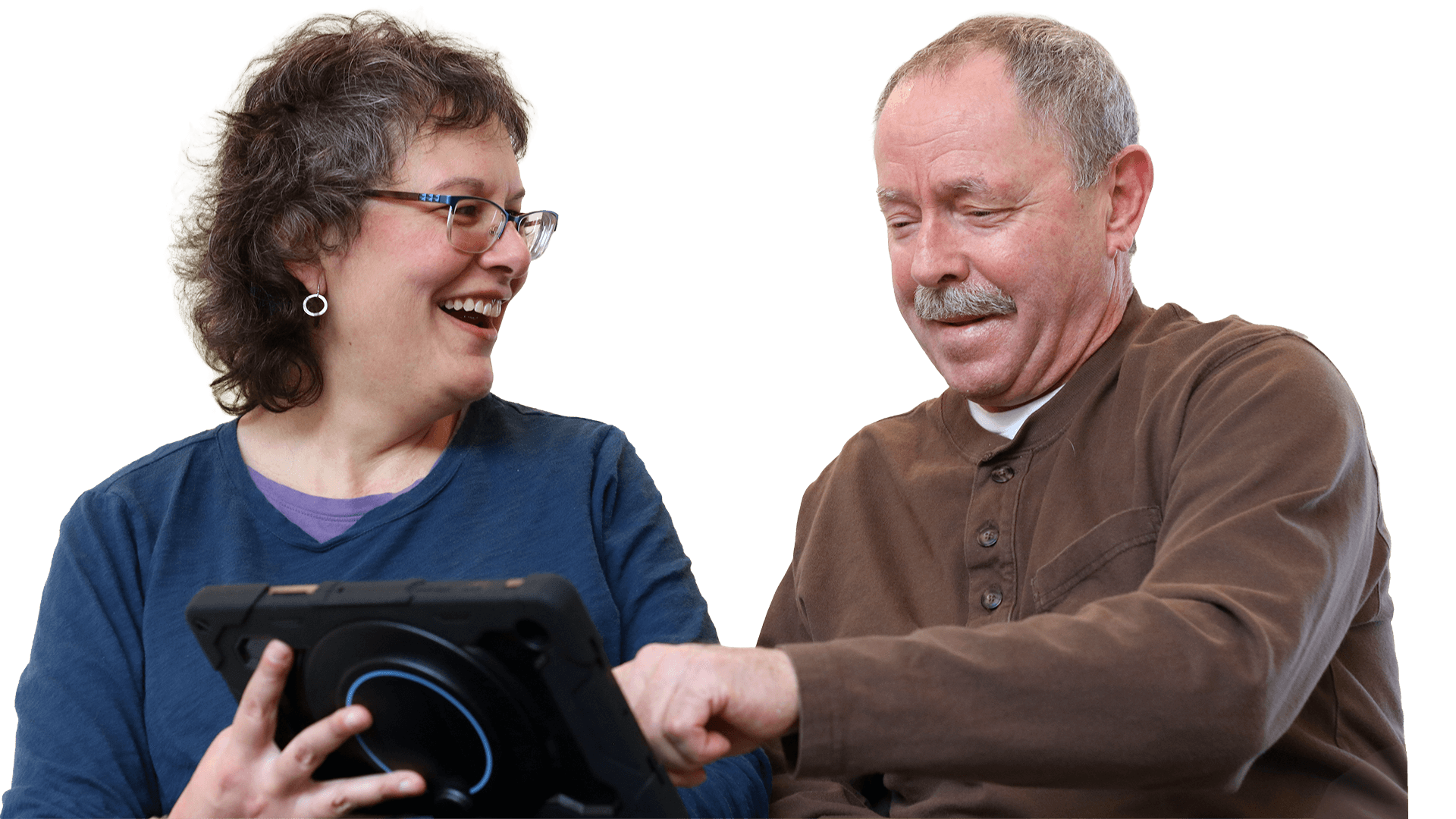
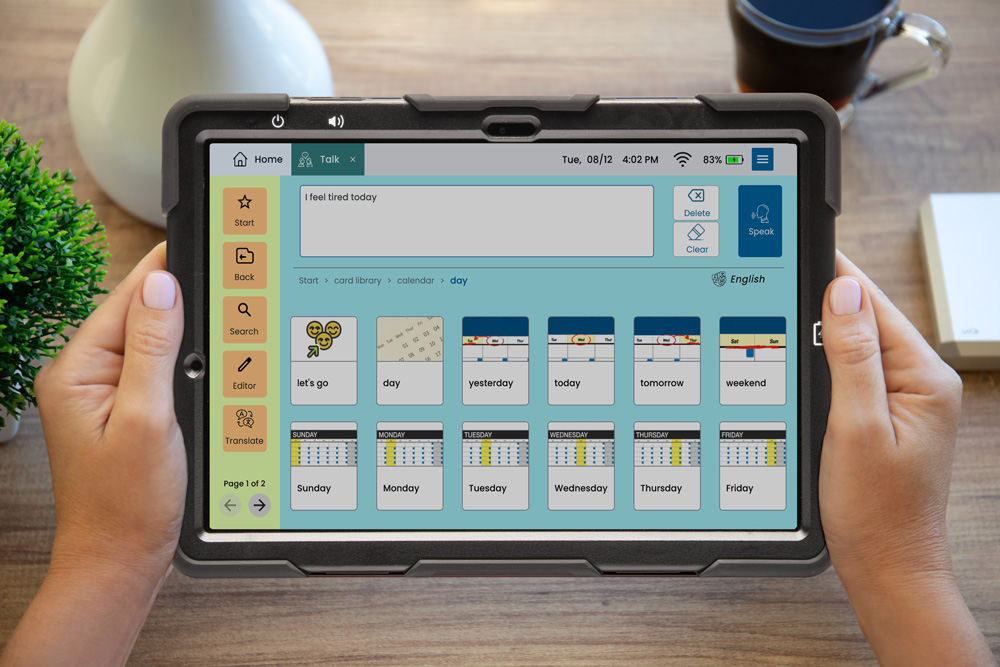
“AAC” stands for augmentative and alternative communication. It’s a tool that people can use to express themselves when speaking is difficult.
If you or a loved one is navigating communication challenges from a stroke, brain injury, autism, or other condition, your goal is probably to encourage speech, not replace it. And that’s okay. AAC is built for exactly that!
The big myth about AAC devices and speech
The Myth: If you use a communication device, you’ll stop trying to speak because AAC becomes a crutch.
What the research actually shows
Researchers have been curious about this, and what they found might surprise you in the best way:
One study looked at 67 people who used AAC devices.
They found:
- 89% of people increased their speech after using AAC
- 11% stayed the same
- 0% showed decreased speech
Did you catch that last bullet point? Not a single person spoke less because of their communication device!
One group of researchers reviewed studies on AAC published across 30 years. They found the same thing: AAC interventions do not prevent or slow down speech production. In fact, most studies showed people spoke more after getting their devices.
Professional bodies like the American Speech‑Language‑Hearing Association and the American Academy of Pediatrics recommend AAC as a proven support for speech and language growth.
This makes perfect sense when you think about how communication really works.
How communication devices help speech recovery and development
Let’s dig into three ways AAC devices help improve speech:
1. AAC reduces communication pressure
When someone struggles to speak, conversations can feel like an exhausting uphill climb. This stress makes talking even harder, and AAC devices change that completely. People can communicate their needs right away, which reduces stress and makes them more willing to try speaking.
2. AAC provides speech models
Communication devices can show (and speak) the right words. For example: someone taps the message, “I want water.” Then, the device says “I want water” aloud. That gives a model to copy. Then, the person often tries words themselves — it’s like having a personalized speech coach available 24/7.
3. AAC builds communication confidence
When you can say something and be heard successfully, you feel good about communicating. That confidence spills over into more use of your voice.
Speech-language pathologists often recommend AAC early in therapy, because it helps children and adults practice communication skills without the pressure to speak perfectly every time.
Real-world success stories: Adults and children using communication devices
Those numbers are powerful, but what do they look like in real life? Let’s meet two people whose speech improved with AAC.
Adult AAC success: Returning to work after stroke
Lori Broussard was Louisiana’s top realtor when she had a stroke at age 48. The stroke caused aphasia and apraxia, making speech incredibly difficult.
Lori worried about her career. As a realtor, she needed to communicate with clients every day. Would a communication device help or hurt her speech recovery?
After just four weeks with her TouchTalk device, Lori noticed huge improvements! Her speech became more fluent as she practiced with the device at home. The device gave her confidence and a “backup plan” to communicate when words were hard to find.
“Having it makes me feel safe,” Lori said. She returned to work just three months after her stroke. This shows that the answer to “Can adults relearn speech with a communication device?” is absolutely yes.
Pediatric success: From silent to speaking
Angela was eager for her 2-year-old son, Noah, to speak. He had been diagnosed with autism recently, and she wanted to do everything she could to support his growth. She’d learned how important this age was for language development, and didn’t want to “wait and see” if he’d begin to catch up with his peers. Angela also hated to see Noah crying from frustration when he couldn’t communicate with her.
When Noah received his Lingraphica device, Angela was amazed at how quickly he was able to navigate it! Angela and his therapy team even noticed Noah scrolling through his AAC device, studying the pictures and words. He loved using it to ask for whatever he wanted: juice, a snack, or picking out a favorite TV show. Soon, Noah’s speech began to take off. Within a few months, he started saying sentences and repeating longer phrases after his AAC device!
These stories show how AAC can open the door – and speech walks through it.
Curious how a device like Lori or Noah’s works? Learn more about our AAC devices here.
AAC for autism, stroke, and brain injury: Benefits across all ages
The benefits of AAC work differently for children and adults, but both groups see speech improvements.
For children and speech development
Research shows that when toddlers with developmental delays receive AAC support, they’re more likely to build larger vocabularies than those who receive speech therapy alone (Romski et al., 2010).
Why? Because AAC gives them a way to practice language before they can say the words.
For adults and speech recovery
AAC for adults recovering from stroke, brain injury, or other conditions has been proven to support their speech therapy goals in several ways.
First, AAC reduces the frustration that can slow recovery. This creates a better environment for healing and learning.
Second, devices provide consistent practice opportunities in between therapy sessions.
Some adults regain significant speech, others rely more long‑term on their AAC device. Both outcomes are positive if they help the person communicate effectively.
When should you start using an AAC device?
The best time to try AAC is as soon as communication becomes hard.
You’ve probably heard of the “wait and see” approach, but research shows that waiting can actually slow progress (Navarro et al., 2020).
Early AAC use brings:
- Less frustration from day one
- A tool to express wants and needs immediately
- Support for speech therapy goals right away
- Communication confidence early on
AAC can be a short‑term tool (until speech improves) or a long‑term one (if speech remains hard) – both are totally fine. The goal is communication, however it happens.
For more detailed answers to common concerns, explore our comprehensive guide to debunking AAC myths.
The bottom line about AAC and speech
Here’s what you need to remember:
- The research is clear: AAC devices don’t stop speech, they support it.
- Early intervention gives the best outcomes.
- AAC works for both children and adults.
- Devices reduce frustration and build confidence.
- Success in communication (even via an AAC device) can lead to more speech attempts.
Whether you’re a parent exploring AAC for your child or an adult recovering from speech loss yourself, a communication device can be a powerful tool for growth.
👉Ready to explore how an AAC device might help?
Start a device trial and watch what opens up!
About Contributor
 Lingraphica Team
AAC Experts
Lingraphica Team
AAC Experts
Lingraphica helps people with speech and language impairments improve their communication, speech, and quality of life. Try a Lingraphica AAC device for free.
 Lauren Hermann, MS, CCC-SLP
Guest Contributor
Lauren Hermann, MS, CCC-SLP
Guest Contributor
Contributors
Lingraphica Team
AAC Experts
Lauren Hermann, MS, CCC-SLP
Guest Contributor
Categories
Subscribe to newsletter
Share