




Caregiving and communication: Tips to support your loved one and yourself
Published on Nov 20, 2025

Caring for someone with a communication challenge can be both rewarding and overwhelming. You may feel proud to help your loved one express themselves, but also frustrated when words don’t come easily…for them or for you.
The good news is that there are simple tools and strategies that can make communication easier and reduce stress.
This post will walk you through ways to support your loved one’s communication and your own well-being, no matter where you are on your communication journey.
1. Understand speech and communication changes
When someone has a stroke, brain injury, or neurological condition like aphasia or Parkinson’s, their ability to speak, understand, read, or write may change. Get familiar with how their medical diagnosis impacts communication.
It’s important to remember:
- You both are navigating a new normal.
- Communication takes time and patience.
- Every person’s recovery and communication journey is different.
Tip: Ask your loved one’s speech-language pathologist (SLP) about their specific type of communication difficulty and the best ways to support them. If you’re not sure how to start speech therapy, see our article: “How to advocate for speech therapy services”
2. Use simple communication strategies
Here are some easy ways to make communication smoother at home:
- Speak slowly and clearly, not louder. Difficulty understanding and difficulty hearing are separate impairments.
- Use short sentences and pause often. Pausing gives your loved one time to process and respond.
- Ask yes/no questions or give 2 choices (ex: Do you want pizza or hamburgers?). This can help to clarify your loved one’s response to questions.
- Repeat or rephrase if something isn’t understood.
- Use visuals or gestures to support your words.
- Stick to one topic at a time.
You can also use AAC tools (Augmentative and Alternative Communication) like:
- Communication boards
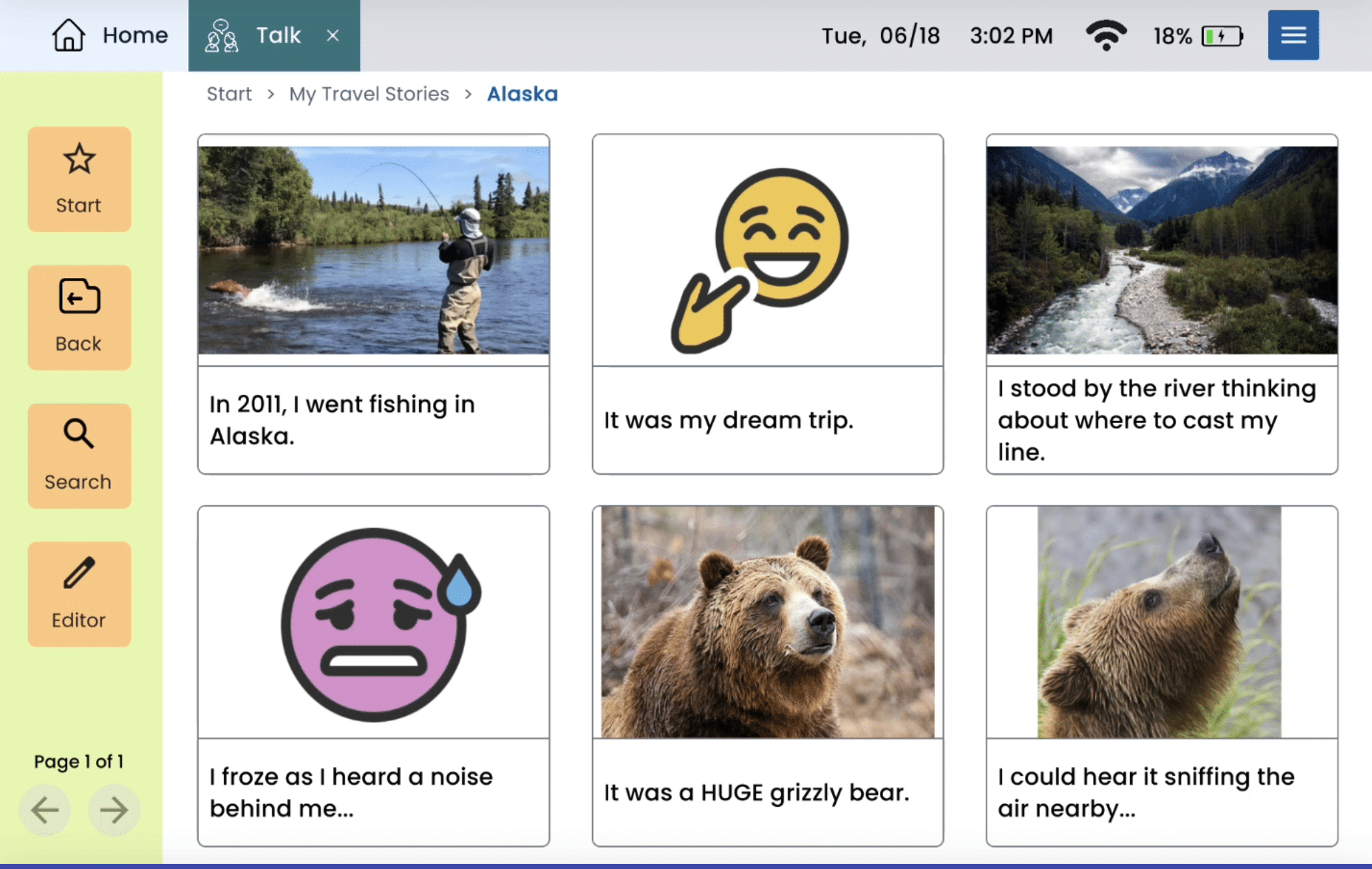
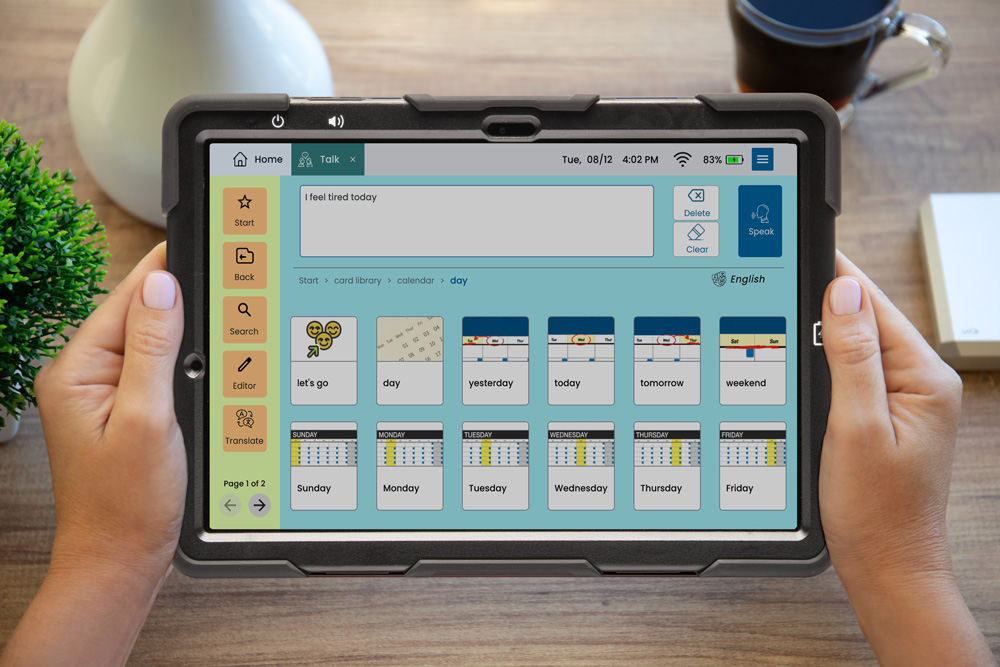
- Speech-generating devices or apps
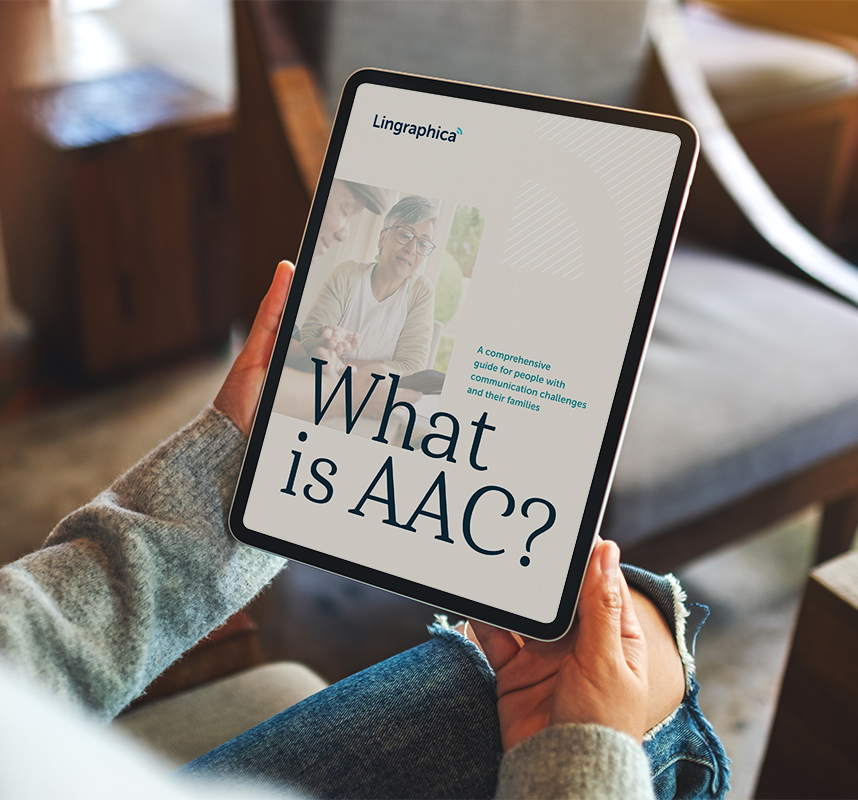
AAC refers to tools, strategies, or technology that helps someone with a speech or language impairment to communicate. These tools can give your loved one more ways to express their thoughts and needs, as well as reduce frustration for everyone. You can learn more about AAC in our past webinar recording: Everyday Examples of AAC.
3. Practice active listening and patience
Sometimes, the best support you can give is time and attention. Active listening is the process of fully concentrating, understanding, responding, and remembering what your loved one is saying.
This helps them feel heard, understood, and supported.
Try to:
- Make eye contact and face your loved one when talking.
- Wait while they find their words, without interrupting.
- Celebrate small communication wins: every word, gesture, or sound matters.
- Stay calm when communication breaks down.
If emotions rise, it’s OK to take a short break and come back later.
4. Build a “communication toolkit”
A communication toolkit can include anything that helps your loved one express themselves.
Examples:
- Photo album with labeled pictures
- List of important phrases or needs (“I’m tired,” “I’m hungry,” “I’m OK”)
- Dry-erase board or notepad
- Communication ID card
- Communication board
- Communication device
Lingraphica’s AAC devices and apps are designed specifically for people with communication challenges — offering easy-to-use tools to help them speak, connect, and feel confident. Learn more about Lingraphica AAC devices here.
5. Take care of yourself, too
You can’t pour from an empty cup. Caregiving is meaningful but can also be stressful. It’s OK, and necessary, to take care of you.
Ways to recharge:
- Join a caregiver support group (online or in person)
- Schedule short breaks (stepping outside for 5 minutes counts!!)
- Ask family or friends for help (don’t navigate this journey alone)
- Talk with others who understand
Remember: when you care for yourself, you’re better able to care for your loved one. Connect with other caregivers on Lingraphica’s online community Join In — a place for individuals with various communication challenges and their care partners to connect, share, and offer support.
6. Communication breakdowns happen… and that’s OK
A communication breakdown occurs when there is a failure in exchanging information, where the message expressed by one person is not understood by the other. Even with all the best tools and intentions, breakdowns can happen.
When they do:
- Take a deep breath.
- Try again in a different way: use gestures, drawings, write keywords, use AAC
- Keep the focus on connection, not perfection.
The goal is understanding, not perfect conversation.
Final thoughts
Communication works best when both people are involved. Caregivers are not just helpers; they’re communication partners who can help decrease communication breakdowns. Small moments of shared understanding can make a big difference.
By using simple strategies, tools like AAC, and self-care habits, you can make each day a little easier… and a lot more meaningful.
About Contributor
 Alex Russell, MS, CCC-SLP
Consumer Education Specialist
Alex Russell, MS, CCC-SLP
Consumer Education Specialist
Alex joined Lingraphica in 2024 as Consumer Education Specialist, where she develops educational content for people with communication challenges and their care partners, including free webinars that help families better understand speech recovery and AAC. She also serves on The Parkinson Council’s board and Diversity Collaborative, and her clinical experience spans home health and community care, teletherapy, assisted living and memory care, mental and behavioral health, and subacute care.
Contributors
Alex Russell, MS, CCC-SLP
Consumer Education Specialist
Categories
Subscribe to newsletter
Share